Wellesley-Pole’s Finest Hour: The Great Re-coinage, 1817

 The Mint with a Pole – Part 4

or

When Wellesley-Pole made money quicker than his son spent it

Intro | Waterloo Medal | Pole & Pistrucci | The Great Re-coinage | Exit & Legacy

cornlaws

Bread Riots outside the House of Commons, 1815

In 1816 the euphoria of victory at the Battle of Waterloo wore off and Britain entered a period of unrest. Corn prices were set at an artificially high level by the Importation Act (1815) – or Corn Laws as they became known – benefitting wealthy landowners at the expense of the poor. A bad harvest, the return of thousands of soldiers from Europe, and demonstrations against working conditions combined to increase tension, leading to repressive counter-measures from the Government. Against this backdrop, the Coinage Bill was passed on 22 June 1816, and Wellesley-Pole was ordered to draw up a plan to replace the silver coinage.

the new coinage pole

Wellesley-Pole seen hard at work for ‘John Bull’ whilst the poor suffer on

Wellesley-Pole’s schedule detailed how he proposed to design, manufacture, and distribute the new coinage. It also outlined a system for recovering the old money for the Bank of England. He started entirely from scratch after realising there was ‘no collection of British coins in His Majesty’s Mint…not a single Proof.’ To ensure this would never happen again, he founded a Museum to house ‘every coin and medal which, from this time forth, shall be struck’. In July 1816 Banks supplied Wellesley-Pole with old coins as a basis from which the new currency could be created.This collection now forms the backbone of the Royal Mint Museum.

banks

Joseph Banks donated coins to enable Wellesley-Pole to set up Mint Museum

The key problem was how to undertake an operation of this magnitude without alerting the nation as to what was afoot – and once the coinage was manufactured – how to distribute it to the four corners of Britain so that it might appear simultaneously on ‘Great Re-coinage Day’. Wellesley-Pole had to do this at a time of immense social unrest, using the most rudimentary of transport and communication systems. Some boxes of coin were shipped to northern ports but the vast majority went by carriage up and down Britain’s roadways – with accompanying detailed instructions to be acted upon at each and every destination. Getting the new coinage to these outlets was one thing, but Wellesley-Pole was also tasked with rounding up all the old silver currency in exchange for new crowns, shillings and sixpences. This redundant money had to return to the Mint by the same arduous process after the two-week exchange period expired.

bank of england

The Bank of England – Pivotal to Wellesley-Pole’s plans

The National Archive reveals that Wellesley-Pole submitted his plan on 16th September. He confirmed an agreement with Governor of the Bank of England that banks throughout Britain would assist in the transfer ‘without looking for any remuneration… Considerable expense must be saved from the many applications that have been made in favour of persons wishing to be employed in the issue and exchange of the new money’. He further curtailed costs by creating accounts with every participating bank for the money distributed to and collected from them. Sir Joseph Banks described his plan as

excellently arranged…I have seen a multitude of public men, but no one whose conduct has been as energetic and so perfectly successful’.

A week later Wellesley-Pole received approval from the Prime Minister Lord Liverpool, subject to proceeding in complete secrecy until the money was ready to be circulated.

bull head

Pistrucci was unable to draw mad King George III from life – This ‘bull head’ image was heavily criticised

Each coin was approved by the Prince Regent prior to manufacture. Wellesley-Pole enthused the coins were ‘absolutely divine’. Every last detail was meticulously planned. Coins were labelled and bagged in sums of £100. Bags were then packed into a sturdy box containing £600 comprised of one bag of half crowns, four bags of shillings and one of sixpences. The destination of each box was labelled and arrangements were made for them to be re-used for the return of old coinage after the exchange was completed. 57 million coins were ready for distribution by January 17th 1817. A few days later Wellesley-Pole called a meeting of the bankers of London proposing:

  1. That all 72 London banks be ‘furnished with money to exchange the silver coin…by opening all their shops to the public at large. Inspectors from the Mint to be established in each shop for selecting…the old coin to be recovered…by which means Bankers would be exonerated from any responsibility.

  2. Every Banker in England, Scotland and Wales to employed in likewise manner but ‘the Country Bankers’ to recommend such persons for inspectors as they conceive to be trustworthy.

Wellesley-Pole earmarked the operation for 3rd February, but the London Bankers, worried about civil unrest, feared that by opening to the general public ‘their property would be endangered’. So the Master of the Mint was compelled to hastily arrange alternative locations for public distribution. He ensured that a comprehensive network of outlets were created in every principle town in England and Wales, which received almost £1.8M by February 3rd.

announcement

Cat out of bag 18th Jan 1817 – Wellesley-Pole announces Great Re-Coinage

The exchange for Scotland was undertaken by the Bank of Scotland who acted under a letter of instruction from the Master of the Mint, so the entire operation hinged on Wellesley-Pole’s meticulous planning.

The Cabinet eventually deferred the exchange until February 13th. But it was completed in 14 days as planned and the old currency ceased to be legal tender on March 1st. These remarkable statistics bear testimony to the success of this operation

Of £2,6000,000 delivered not one bag or box of new coin was mislaid and there does not remain a single complaint of deficiency of money for exchange in every part of Great Britain.  In carrying the measure through, the Mint dealt with over 14000 letters and employed 1000 inspectors. 469 accounts with individual banks were reconciled ‘to the penny’ when the old currency was returned.

By any standard this operation was an astounding success. Because it went without a hitch it was soon forgotten, perhaps the biggest single reason why Wellesley-Pole is  mired in obscurity. It was only when the House of Commons debated currency in 1842, that the enormity of his achievements were highlighted against shortcomings in current procedures.

As we have seen in Pole and Pistrucci the Great Re-Coinage failed to ignite public excitement, and the press preferred to continue their campaign of back-biting and ridicule against both men.

The only reply either man can give in answer to their critics is to emphasise that the silver coinage remained in circulation until 1971 – Yes that’s 154 years!

In my final part I will look at Wellesley- Pole’s departure from the Mint and round up his legacy…..

 IVORYCOACHPASS1- WWP

 So you have seen how, at least for a few years, Wellesley-Pole made money faster than his feckless son Wicked William of Wanstead House was able to spend it. Follow Wicked William to the Epping Hunt, or off to War with Wellington or find out what happened when Wellesley-Pole’s rage got the better of him.

Finally, I have written the remarkable history of Wellesley-Pole’s house

I hope you enjoy this post and would be most grateful to hear any feedback.

Sources Used

  1. Royal Mint Website
  2. The National Archives (Kew) Mint 1/56
  3. Bagot J., George Canning and Friends (London: Murray, 1909)
  4. Senate House Library, Mint Book MS499
  5. Greg Roberts unpublished dissertation The Forgotten Brother (2009)
  6. Image of Sir Joseph Banks by William Wyon courtesy of the Royal Mint Museum


3 Savile Row – Its role in British history


Within These Walls: 6 Layers of History

savilerow

No 3 Savile Row, Mayfair

Let me introduce you to a Grade II listed mansion house in London’s Mayfair that has recently been in the news due to an unsuccessful campaign to prevent its conversion into an Abercromby & Fitch childrenswear store. Knowing the history of this grand old building it is somewhat ironic to find that an American transformation has materialised. For the truth is that this building has some very interesting and important connections.  Since its construction in 1733 this house has been occupied by people who have helped shape the course of British military and cultural history. Let’s go inside…

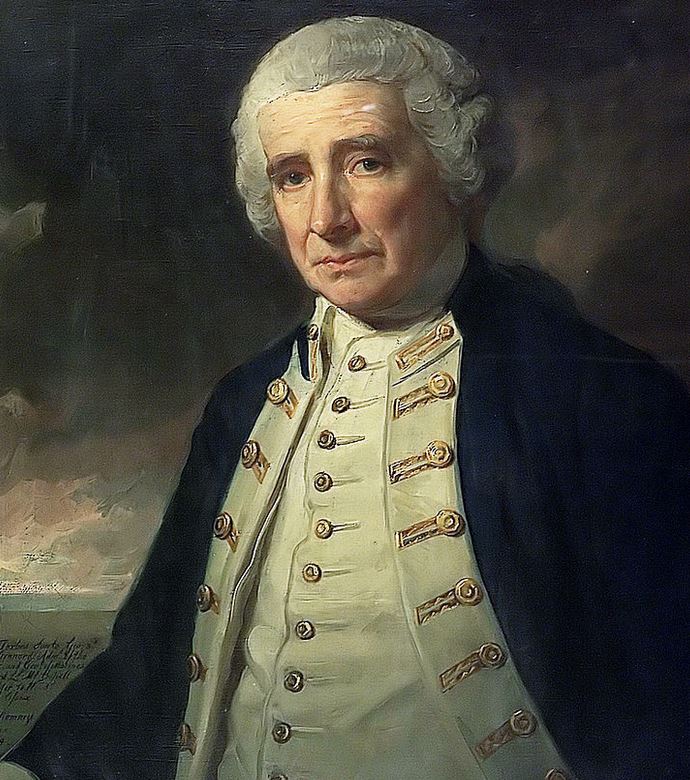
1. Admiral John Forbes (1714-1796)

forbes

John Forbes was Wellesley-Pole’s father in law

John Forbes began his naval career at the age of 13 and progressed up through the ranks until he became Admiral of the Fleet from 1781 until his death. This was an era when a great many servicemen returned from war incapacitated, and disability was not considered a barrier to high office. Even though Forbes was unable to walk and rarely seen in society he still managed to exercise overall control of the British Navy – and he did so by holding meeting as his house at 3 Savile Row, where he had lived from around 1760.

byng

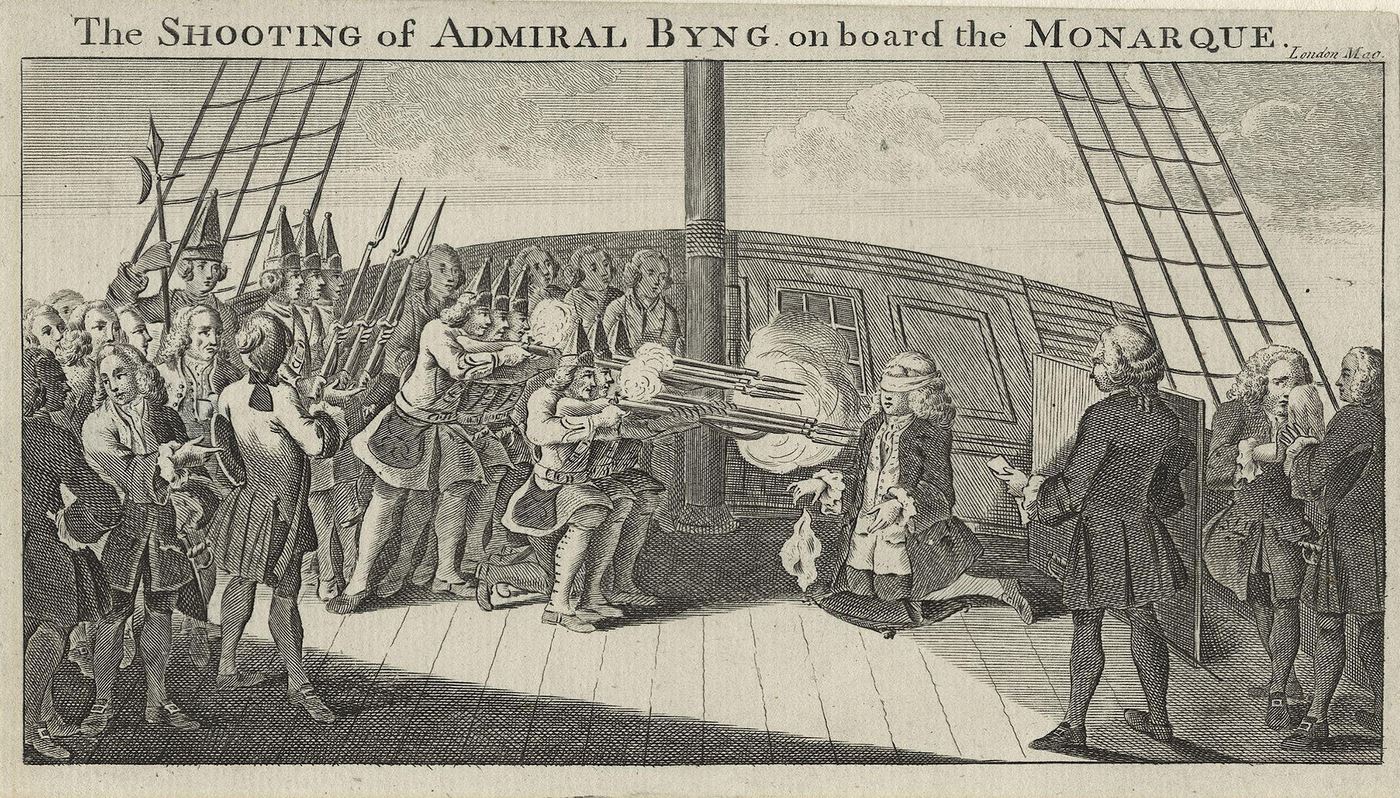
Execution of Admiral Byng (1757)

Forbes most important contribution to British history came when he was involved in the trial of Admiral Byng, who was blamed for the loss of Minorca in 1756. He was tried and found guilty of failing to “do his utmost” to prevent the defeat. When Byng was sentenced to death an appeals for clemency was angrily refused by King George III. Forbes was the only Admiral to refuse to sign Byng’s death warrant though his action failed to prevent Byng’s execution by firing squad on 14 March 1757. Such was the effect upon the public mind that this was the last time a serving naval officer was executed on this charge. Forbes fearless refusal to bow to enormous pressure singled him out as a compassionate man of principle and made him a role model for fairer treatment of naval personnel.

In 1784 Forbes twin daughter Katherine married 3rd Lieutenant William Wellesley-Pole in a ceremony at 3 Savile Row with guests including Arthur Wellesley, later Duke of Wellington. Wellesley-Pole inherited the house in 1797 but decided to rent it out

2. General Robert Ross (1766-1814)

ross

Perhaps Wellesley-Pole’s most famous tenant was Robert Ross a famous British general who is best known across the water in the United States. Irish-born Ross lived at Savile Row until 1805 after returning from action at the Battle of Alexandria (1801). He was subsequently present at the Battle of Corruna (1809) before serving under Arthur Wellesley during the Peninsular War. Despite being seriously wounded at the Battle of Orthes on 27th February 1814, Ross agreed to lead command a British expeditionary force to attack the United States

washington burning

Hard to believe even today – Britain burning down the White House (1814)

Having routed the Americans at Bladensburg (27th August 1814) Ross advanced into Washington DC where he destroyed all the public buildings including the White House. For this act Ross is perhaps the best remembered of all British soldiers ever to set foot on American soil.

death of ross

The death of General Ross

It was not to end well for Ross as he was killed by American snipers near North Point on 12th September 1814. He is buried in the Old Burying Ground at Nova Scotia but has a monument inscribed to him in St Paul’s Cathedral.

3. The Duke of Wellington (1769-1852)

wellington

When Arthur Wellesley returned from 8-years service in India the first place he stayed was with the Wellesley-Pole family in Blackheath, for he was at that time unmarried and had no London home. However, he was to repeat the exercise in 1814 when he triumphantly returned from the Peninsular War following Napoleon’s surrender and exile. It’s very telling that the newly ennobled Duke of Wellington chose Savile Row rather than his own marital home. Imagine if you can the thousands of people who gathered outside, mounting a daily vigil to catch a glimpse of their conquering hero. Wellington remained at Savile Row for a month before returning to Paris.

4. William Wellesley-Pole (1763-1845)

wwp by pistrucci

Wellesley-Pole owned 3 Savile Row between 1797 and 1842. In his role as Master of the Mint Wellesley-Pole presided over the introduction of new silver currency that was to remain in circulation from 1817 right through until decimalisation in 1971.

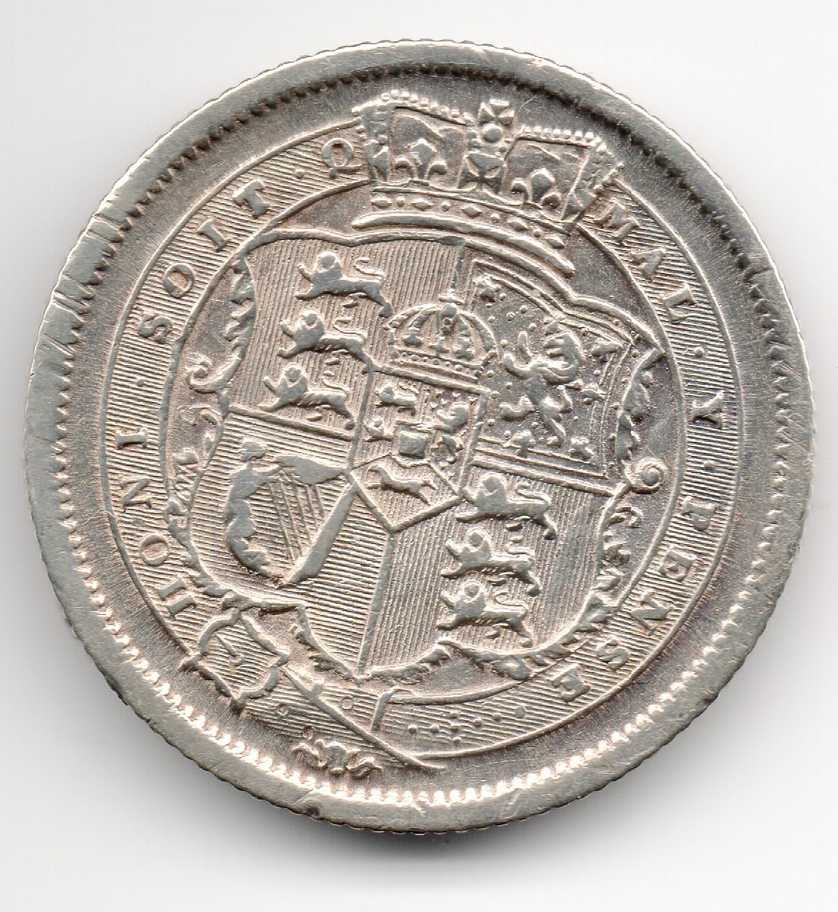
shilling

The humble shilling must surely be on of the greatest symbols of Britishness. Wellesley-Pole he also helped to create the instantly recognisable St George & Dragon motif designed by Benedetto Pistrucci which is still in use today.

double sovereign

5. The Bowler Hat (1849)

bowler hat

Quintessentially British – The bowler hat

Perhaps the greatest stereotypical representation of the English gentleman must be the wearing of a bowler hat. No 3 Savile Row can claim the distinction of being recognised as the place where the bowler hat originated. William and Thomas Bowler are credited with creating the first prototype for the bowler hat in 1850, but it is generally acknowledged that the hat was after a design by British soldier and politician Edward Coke, who was fed up with seeing his gamekeeper’s hats continually knocked off by low-hanging branches when out riding. When he was in Town, Coke lived at 3 Savile Row.

bowler2

Bowler hats have travelled up the social spectrum

Initially very popular with the Victorian working classes, the bowler hat went on to become standard uniform for middle-class businessmen, and by the 1960s it had elevated to the aristocratic realm.

6. The Beatles (1969)

beatles

On January 30th 1969 the Beatles played their last ever public performance on the roof of Apple Records HQ at No 3 Savile Row. Just a year earlier the Beatles paid £500,000 to purchase the mansion and they are said to have spent the best part of 18 months living there leading up to that famous rooftop escapade.

advert

Not surprisingly, to this day 3 Savile Row is still considered a tourist attraction for Beatles fans and there has been a steady clamour for a blue plaque to recognise their use of this building.

Conclusion

Whilst researching this post I came across a reference to Lady Hamilton, Admiral Nelson’s lover, stating that she too once lived at 3 Savile Row. But I have not included her in this blog as I can’t see where she would fit in this timeline, unless she rented the property before General Ross. However, I think there is sufficient here to demonstrate that we should hold Savile Row dear not just because of the Beatles, or to keep American tailoring out of this important British fashion location, but because of its connections to everything British: from the stiff upper lip (Forbes), to military escapades (Ross & Wellington), the British currency (Wellesley-Pole), Quintessentially British headwear (Bowler hat), not to mention The Beatles.

In fact No 3 Savile Row has given us a wealth of characters and symbols that mean a lot to our notion of Britishness.

Kier Holdings paid £20 million for the mansion in 2009 but its fate today remains undecided. Who knows what the future holds…

demo

If they knew their history, these chaps would be wearing bowler hats!

Links

A marvellous set of 1950s photographs showing some amazing interiors of No 3 Savile Row

For more info on General Ross I recommend War of 1812 website

The Daily Telegraph has written a splendid history of the bowler hat

Until such time as Geraldine Roberts Angel and the Cad is published by MacMillan, my main focus on this blog will be Wicked William’s father Wellesley-Pole. There is much to write about Wicked William so stay tuned on that score!

However, you might like to know about Wicked William and the Epping Hunt, or why the Duke of Wellington considered him lamentably idle – alternatively you could always read about the death of a Regency Prizefighter

I hope you have enjoyed this post and would be most grateful for any feedback for any additional information you may be able to provide to fill in the gaps.

‘No one likes us, we don’t care’ – Wellesley-Pole & Pistrucci

The Mint with a Pole – Part 3

Intro | Waterloo Medal | Pole & Pistrucci | The Great Re-coinage | Exit & Legacy

pistrucci image 1826 by cf voigt

Benedetto Pistrucci – Would you mess with him?

Wellesley-Pole’s recruitment of Pistrucci for the Royal Mint in 1815 was both a brave and also deeply unpopular decision. These two firebrands came together under a storm of controversy, yet successfully adopted a classic ‘bunker’ mentality to achieve new heights of numismatic brilliance. Benedetto Pistrucci (1783-1855) was born and educated in Rome. At the age of 15, he was placed with the gem-engraver Nicolo Morelli (1771–1830), whose patrons included the Pope and Emperor Napoleon. His talent for carved cameos was quickly evident as he obtained first prize in sculpture from the drawing academy at Campidoglio. Pistrucci remained in Rome until he was in his forties, producing a combination of portrait cameos and engraved gemstones. Hoping to enhance his reputation further Pistrucci moved to France around 1814. But his arrival coincided with Napoleon’s defeat and exile, so he met the Duke of Wellington and his brother Wellesley-Pole rather than the French Emperor (to whom he had hoped to present a cameo). By the time Wellesley-Pole returned to London to become Master of the Mint, Pistrucci was already there causing ripples of disapproval in artistic circles.

2014GW2957

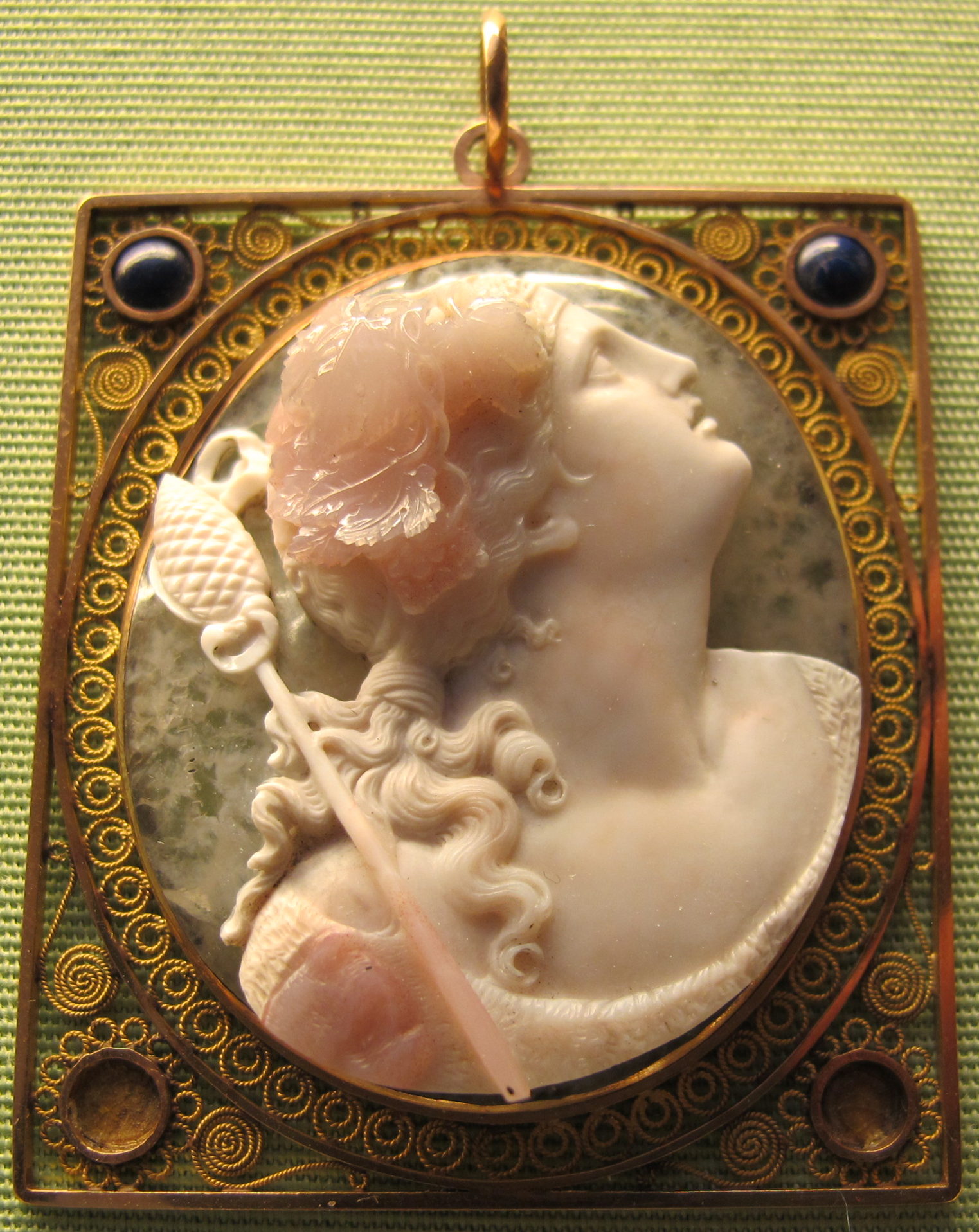
Pistrucci intended this cameo for Napoleon (Paris 1814), but he was ‘Gone Away’

Having spent over a quarter of a century perfecting his skills Pistrucci was supremely confident in his ability and unwilling to reverentially defer to established English artists. In 1815 Pistrucci attended a party at Sir Joseph Banks’ home where a Mr Payne Knight exhibited an engraved gem believed to be an ancient relic, having been purchased some years earlier from Mr Boneli an art dealer from Golden Square. To the astonishment of the assembled guests Pistrucci announced that he had created the gem in his workshop and sold it to Boneli for twenty Roman crowns. This assertion was challenged not only by Boneli (who insisted that Pistrucci had merely polished up an ancient gemstone) but also by several renowned experts present. It was declared that there was ‘no living artist so capable’ as to have manufactured such an item. So Pistrucci offered to make a replica and present it within three months in proof of his claim. He duly delivered a near perfect match, but without the signs of wear and tear evident on the original – and he demanded £50 payment from Payne Knight for his troubles. But Knight refused to pay or to submit both items for independent adjudication.

head of flora

The ‘Head of Flora’ – which Pistrucci claimed to be his own design

So in some circles Pistrucci found himself labelled a forger and a charlatan trying to extort money from a well-known patron of the arts. But all was not lost for he acquired a vital ally in the form of Sir Joseph Banks (1743-1820). Banks was the long-serving President of the Royal Society which had a traditionally paternalistic control over the policies and activities of the Royal Mint. Knowing that Wellesley-Pole was looking for an artist to work on designs for the new coinage Banks introduced Pistrucci – but left the final decision wholly with the Master of the Mint.

wellesley pole

Wellesley-Pole looking calm and collected for a change

Wellesley-Pole soon encountered problems when he brought Pistrucci into the Mint. His Italian friend had initially submitted artwork for approval, including the now famous St George and Dragon design. But when chief engraver Thomas Wyon copied Pistrucci’s model he could not match the original. Wellesley-Pole realised he was on to a winner and paid Pistrucci 100 guineas to create the template himself. This caused ill-feeling at the Mint, which worsened after Wyon unexpectedly died. Wellesley-Pole knew no one could replicate Pistrucci’s work, so he backed his man unequivocally. Pistrucci was employed as an engraver for £500 per annum, offering him accommodation at the Mint. Wellesley-Pole acquired Pistrucci’s services on excellent terms considering that the initial contract for 100 guineas only entailed a week’s work. Pistrucci was permitted to augment his pay by carrying out private commissions, and brought his family over from Rome. However he worked up to 18 hours a day at the Mint in these early years, leaving no time for freelance projects. Staff at the Mint resented Pistrucci because he was an alien. Their antipathy lasted decades during which time he was not allowed to be called ‘Chief Engraver’.

On 11th July 1815 Wellesley-Pole invited 12 members at the Royal Academy, including Sir Thomas Lawrence, John Flaxman, and his close friend Joseph Nollekins to submit designs for the Waterloo Medal. The letter clearly stated

This can only be done by the aid of the First Artists belonging to the Royal Academy

flaxman

John Flaxman (1755-1826) – was not deemed good enough by Wellesley-Pole

But when the Royal Academy nominated Flaxman’s design for the larger Waterloo Medal, Pistrucci refused to copy it, declaring that it went against his artistic principles. Instead he submitted his own proposal which was approved by the Regent. The Regent then asked for his portrait by Lawrence to be copied for the obverse face of the medal. But when Wellesley-Pole went to see him at his studio, Pistrucci had turned Lawrence’s painting to face the wall and pointedly refused to comply even when threatened with dismissal. He said he wanted to create the Regent ‘from life’. It was an awkward situation, for Wellesley-Pole had agreed a fee of £3500 for this commission, £2000 of which had already been paid. Additionally, he was over a barrel regarding the new coinage. Remarkably Wellesley-Pole persuaded the Regent to back down, and Pistrucci got his way. The Royal Society was enraged by the Mint’s rejection of Flaxman and Lawrence’s artwork. A senior British Museum antiquary said ‘a more intimate knowledge of the talent that existed in the Kingdom…would have saved [Wellesley-Pole] from the reproach of unnecessarily insulting the whole body of native artists’.

double sovereign

Pistrucci’s iconic St George & Dragon motif – still in use today. Note his initials (bottom right)

To get some idea of the resentment stirred up by Wellesley-Pole’s appointment and dogged support for Pistrucci you only have to look at the press between 1816 and 1819 where numerous anonymous letters lambasted their partnership. Even though the Great Re-coinage was an unqualified success the barbed comments kept coming. For example the Morning Chronicle of October 29th 1818 stated

The execution of the coin of the Realm…[occurred] through the anti-national bad taste of the Master of the Mint shamefully [working] after the designs of the Italian artist.

wwp coin marks

Despite Wellesley-Pole’s private marks being very small and subtle he was likened to Cardinal Wolsey

Wellesley-Pole was delighted to discover ‘I am empowered to place such private mark as I choose [on all coin], and I have chosen my initials…WWP’. The press accused him of ‘smuggling his initials’ onto the new sovereign and they were quick to publish his reply: ‘I shall be impeached for putting my initials on the coin of the realm, as Cardinal Wolsey was for placing a cardinal’s hat on the coin of Henry VIII!’  Such was the level of vitriol probably originating from jealous and resentful members of the Royal Academy that Wellesley-Pole was compelled to make a statement in the House of Commons setting the record straight. Pistrucci fared similarly when exercising his right to leave a mark on designs used in the new coins

Pistrucci the artrist who executed the die for the Crown piece is determined that his name shall be transmitted to posterity. It is engraved at full length on both sides of the coin!! For this specimen of vanity and presumption he has no precedent

Reports on the design of the Double-Sovereign in 1819 reveal the depth of animosity against both men

Mr Pistrucci whose happy knack of making strong likenesses is well known to the British public has presented a faithful resemblance of himself in the cavalier… with a melting pot instead of a helmet. In the beast on which he is mounted the public will recognise… the Master of the Mint differing however from the Grecian charger… by a striking addition to the length of his ears… so that the whole figure on the new coin resembles a jack-ass. [In fact] the initials W.W.P are impressed on his hind-quarters… so Englishmen in future ages will not look at the jack-ass without thinking of Mr Pole.

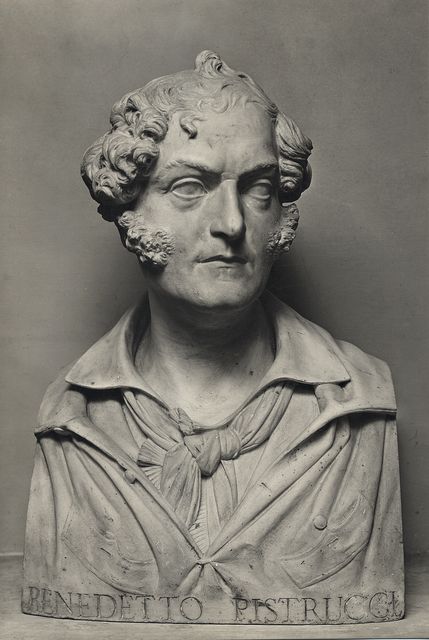
pistrucci bust

In Pistrucci, Wellesley-Pole found a like-minded character. Both men were hot-headed perfectionists unwilling to compromise in pursuit of their goals. Wellesley-Pole correctly identified Pistrucci as the man to revolutionise British coinage and backed his man to the hilt. But the consequence for both men was an estrangement from the established body of artists, and fellow Mint employees. In fact it was the Mint’s unwillingness to accept Pistrucci as Chief Engraver and their pointed omission of his name from their Red Book that led to the 30+ year delay in Pistrucci delivering the dyes needed to produce the larger Waterloo Medal.  Pistrucci complained long and often that he was promised the role of Chief Engraver by Wellesley-Pole and he genuinely feared that the Mint would cast him aside as soon as he was no longer considered essential.  So he dragged his heels for decades and by the time the dyes were presented only the Duke of Wellington remained alive of the leaders involved in the Battle of Waterloo.

Waterloo-medal-A

Though Pistrucci worked at the Mint until 1849, his most productive and inspirational phase was under Wellesley-Pole’s influence and support – between 1815 and 1820. It is fair to say that both men benefitted from each other’s obstinacy and drive for perfection. No one liked them, but luckily for us, they didn’t care because their collaboration produced coins considered to be ‘the finest that had ever been issued in Europe’.

pistricci work

Example of Pistrucci’s earlier cameo work c.1810

Pistrucci was undoubtedly an essential cog in Wellesley-Pole’s machinery at the Mint, but my next part will focus on the incredible logistical achievement of The Great Re-Coinage in 1817…

Sources Used

  1. Greg Roberts unpublished dissertation ‘The Forgotten Brother’ (2009)
  2. Billing A., Gems, Jewels and Coins (London: Bell and Daldy, 1867)
  3. Humphreys H., Gold, Silver and Copper Coins of England (6th Ed, London: Bohn, 1849)
  4. British Library Add. MSS 39791
  5. Hayward J., Waterloo- The Medal, www.greatwarhistoricalsociety.com
  6. Bagot J., George Canning and Friends (London: Murray, 1909)
  7. Images of Wellesley-Pole marks on coins courtesy of The Royal Mint Museum
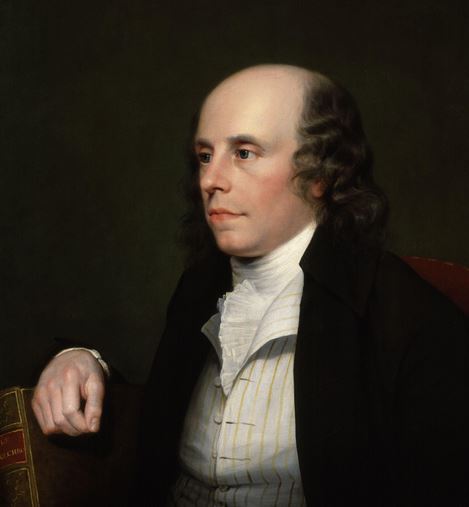
In November 2014 it was announced that Pistrucci’s Waterloo Medal had finally been struck, nearly 200 years after Wellesley-Pole commissioned it. The medal was presented to representatives of Britain’s allies at the Battle of Waterloo in a ceremony held at Apsley House, The Duke of Wellington’s London home

ceremony

Better late then never- Britain’s allies thanked for Waterloo

To find out more about Pistrucci’s Waterloo Medal visit The Royal Mint Museum

Waterloo 200 organisation will produce 500,000 Waterloo Medal replicas as part of events to mark anniversary of Wellington’s victory

For more information Pistrucci’s famous ‘head of flora’ cameo visit the British Museum

Traditionalists will be pleased to see that the Royal Mint are producing a 2015 Sovereign in which Pistrucci’s mark is clearly visible

To find out what Wellesley-Pole got up to after he left the Mint, watch him go to the dogs or if you want to know more about Wellington’s devotion to his staff you may enjoy Wellington & Raglan


Photographs from my Year: 2014

I have never been particularly astute in the art of photography, so it is very pleasing that the advent of smart phones has provided me with ample opportunities to record various events and scenes I have enjoyed in 2014. I hope you wont think me too indulgent for sharing a few with you here

January - Draycot HouseJanuary 2014 – St James, Draycot burial place of Catherine Tylney-Long of Wanstead House renown
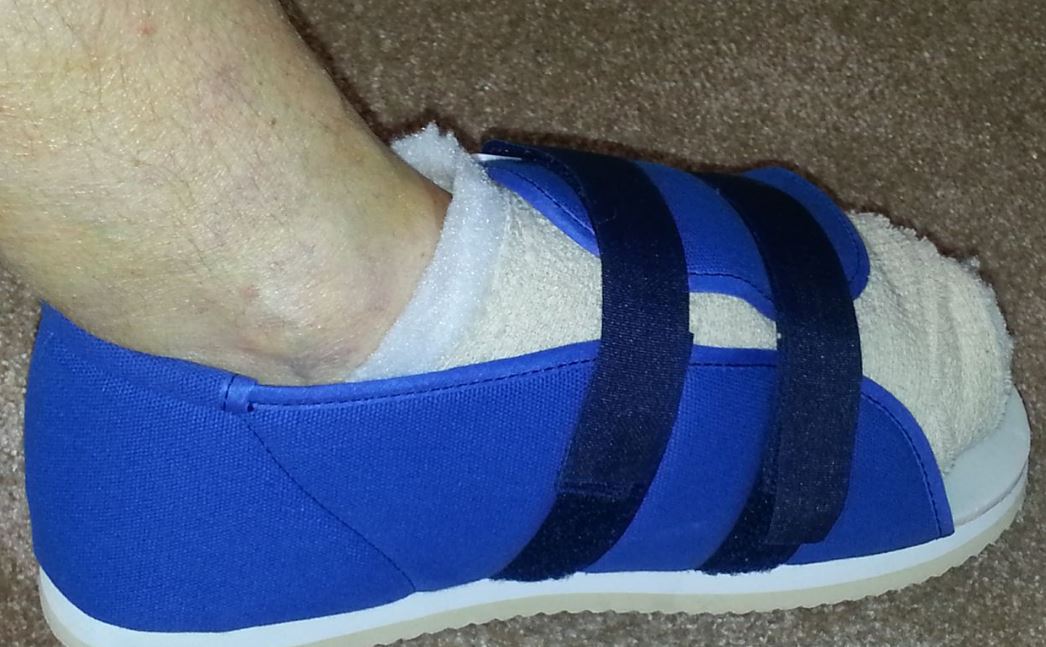
February - Laid UpFebruary 2014 – Laid up at home convalescing
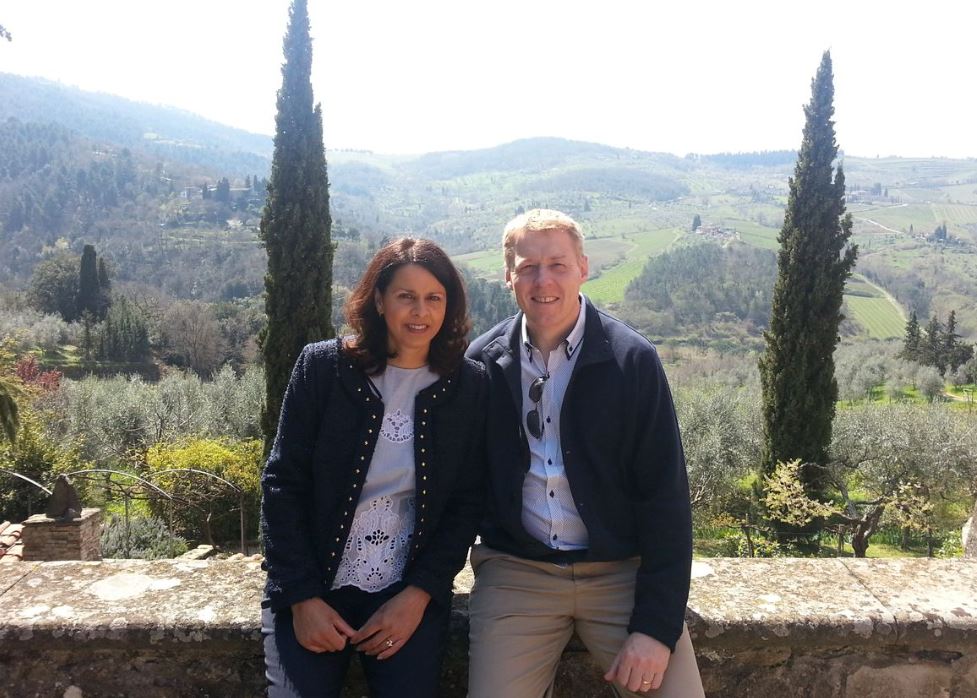
March -TuscanyMarch – On the trail of Wicked William in Tuscany, Italy

April-Kent

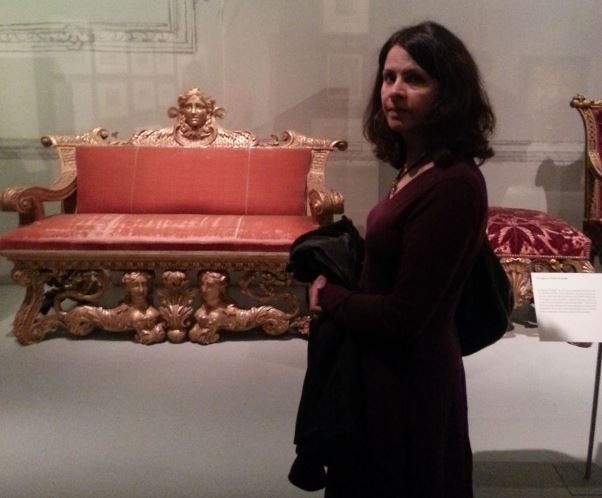
April – sneaky pic of Wanstead House chairs at William Kent Exhibition
May-bluebellsMay – Bluebell Wood at Wanstead Park


June-Kilcooley HouseJune- The very wonderful Kilcooley House in Tipperary, Ireland
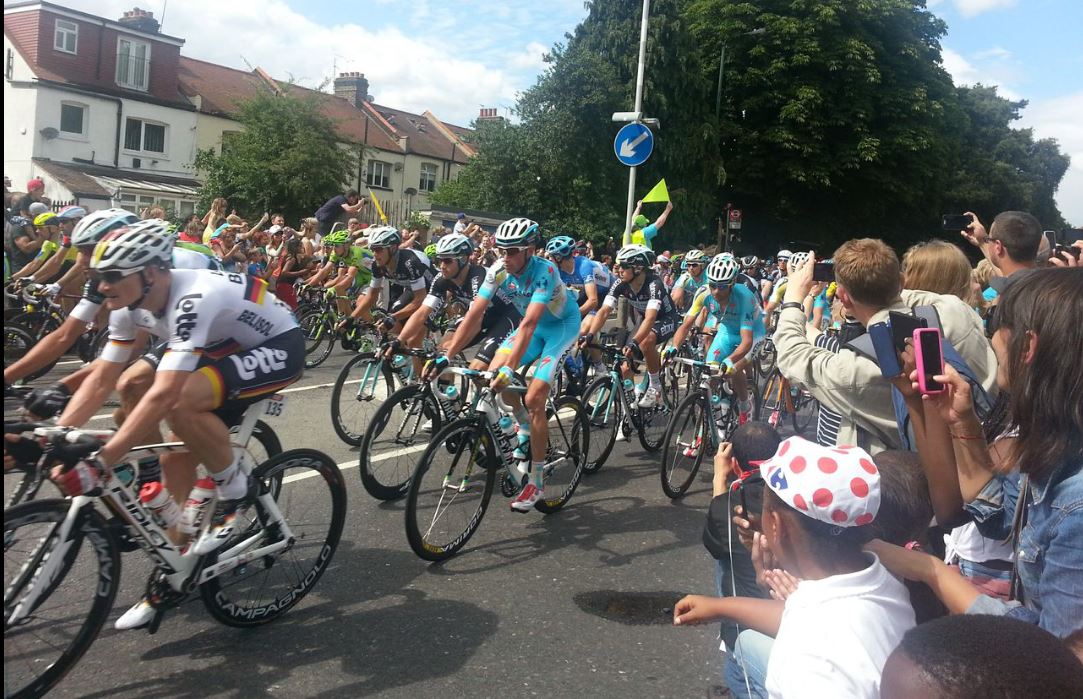
July-TourdefranceJuly – The Tour de France comes to South Woodford… for 28 seconds
August - SwansAugust – Swans in Wanstead Park
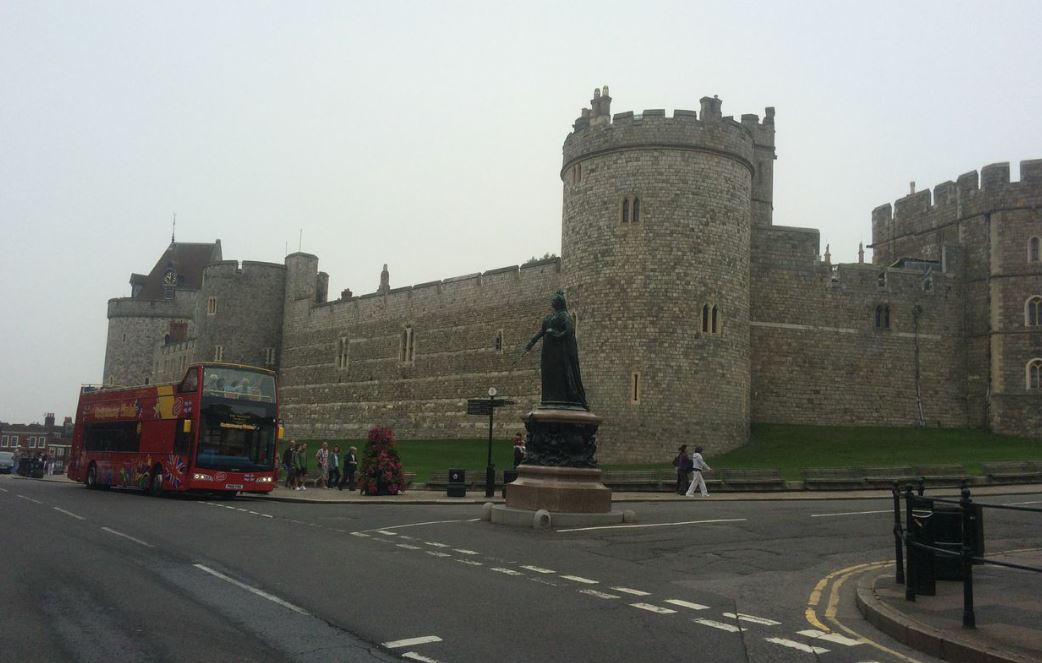
September - WindsorSeptember – A trip to Windsor Castle
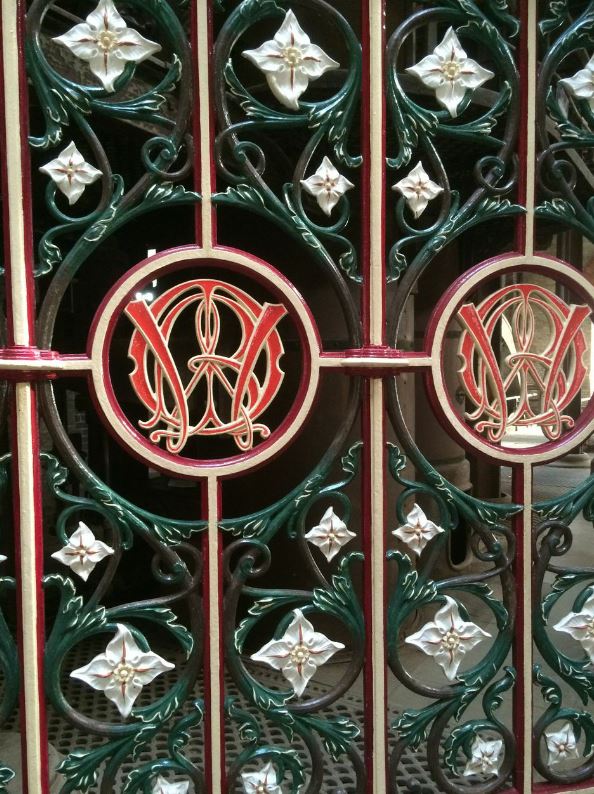
 October - Crossness Engine TrustOctober – Victorian wrought iron design – Crossness Pumping Station

 November - Poppies

 November – Well-intentioned but futile attempt to see the Tower of London poppies

December - Angel

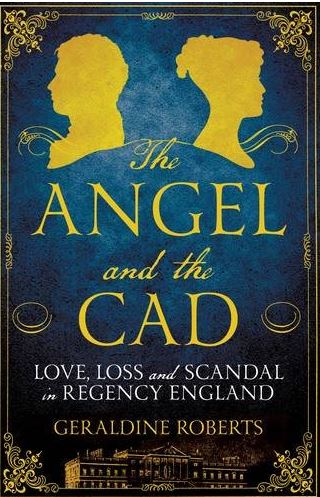
December – MacMillan cover for Geraldine’s book on Wanstead House

Its been a great year and I hope you enjoy these pictures. Thanks for all the feedback and responses regarding my blog, it really has been a great source of encouragement and inspiration.

If you’ve got a year in pictures, why not share it too?


Waterloo Medal: a Wellesley-Pole production

The Mint with a Pole Part 2 – The Waterloo Medal

Intro | Waterloo Medal | Pole & Pistrucci | The Great Re-coinage | Exit & Legacy

waterloo medal

Take a look at Wellesley-Pole’s unique Waterloo Medal
  • The first medal issued by the British Government to all soldiers present at an action.  
  • The first campaign medal awarded to the next-of-kin of men killed in action.
  • The first medal to be individually inscribed

But how did the Waterloo Medal come about?

waterloo battle

Survive this and get an individually inscribed medal!

On 28th June 1815, Wellington suggested ‘giving the non-commissioned officers and soldiers engaged in the Battle of Waterloo a medal.’ His brother Wellesley-Pole interpreted this as an opportunity for the Royal Mint to ‘show the world that this country is as superior in her [arts], as she has lately been proven to be in the skill and valour of her arms’. Accordingly on 11 July, he wrote to the Royal Academy inviting designs for two proposed medals.

One in Gold, of the largest size…will probably be given to each of the Sovereigns in Alliance with the Prince Regent, to their Ministers and Generals…The other… of small size to be given to every Officer and Soldier … who was present at the Battles

Wellesley-Pole was caught up in the euphoria of the victory against Napoleon and his impatience to get underway was immediately apparent. He restricted the design competition to the larger medal after mint employee Thomas Wyon put forward a cameo of the Prince Regent, copied from Sir Thomas Lawrence’s famous painting, which was approved for the smaller medal. Wellesley-Pole was so impressed that he promoted 23-year-old Wyon to Chief Engraver on 13th October. It was a typically bold move, showing his readiness to support those he believed in, even if it made him unpopular.

names list

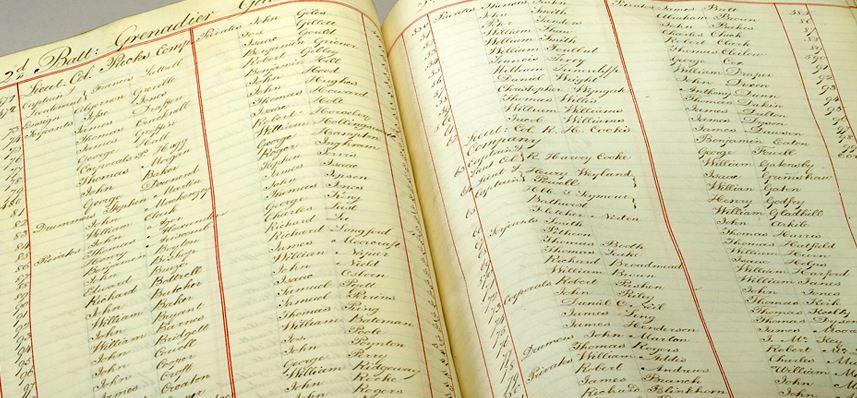
A list of Waterloo participants was meticulously compiled

At the end of August, Wellesley-Pole detailed how the operation was to be coordinated. He had already sent a flurry of letters to the regiments asking for a comprehensive list of eligible soldiers. He also incentivised Mint staff by offering £100 prize money for finding a way to modify milling machines to allow the edges of medals to be individually inscribed. The level of detail of Wellesley-Pole’s instructions provides a fascinating insight into his methods.

The Moneyers’ work begins tomorrow morning (31 Aug) …and if the Rolling and Cutting continue without intermission for 10 hours each day, Sundays excepted…The Cutting may be finished on Monday night (4th Sept). The Blanks will begin Milling on Monday morning (4th Sept); they will be finished ready for annealing on Thursday evening (7th September). The annealing will be done on Friday the 8th Sept…There must be six sets of Marking Machines made for Lettering the Medals – 18 Sets of Letters are wanting for the Machines… When the two Machines are at work the Lettering may be completed in 30 days, viz at the rate of one piece a minute, for each machine working 10 hours a day. The six sets of Marking Machines will be ready for working on the 11th September. Supposing we begin to letter on Monday the 12 Sept, the Lettering may be finished by the 20th October….Mr Wyon will be ready with his Dyes by the 10th of Oct. If we work 8 Presses at the rate of a Piece per minute for each Press (working 10 hours a day) the Forty Thousand Medals will be struck in Ten days, and be ready for delivery on the 9th of November.

He demanded total commitment from all concerned. It is almost like a team talk.

I rely upon the…the utmost exertions… to complete the work. The whole grace of the distribution of the medals would be lost if any unavoidable delay was to take place in their issue; and, in the very perfect state of the machinery of the Mint, no excuse could be allowed to us by the public in such an event. You will be so good as to let it be generally understood that…no branch of the manufacture is to relax its efforts under an idea that it will be ready before any other branch is prepared to carry forward the work. Every person is to act as if the whole measure depended upon his individual exertions.

works at the mint

Wellesley-Pole was a great believer in teamwork

Progress was delayed after a fire at the Mint in September, then a late decision by the Prince Regent to strike the medals in silver instead of bronzed copper. The Bank of England received a request for 60 thousand ounces of fine silver on 19th January 1816, and incredibly the finished product was ready to ship by 3rd March. Wellesley-Pole wrote

I propose packing the Medals in Boxes marked on the outside so as to specify the Corps or Regiment to which the Medals within may belong; and there will be packed in each Box a copy of the List transmitted … The Name of each Officer and Man is impressed upon the edge of the Medal destined for him, and care will be taken to pack the Medals in the order in which the Names stand on the several Lists…I am in hopes that we shall be enabled to deliver finished Medals… at the rate of about 1000 per day from this time forward.

In all, just under 40,000 medals were awarded, with the vast majority sent out without fault in quality or individual inscription. Such a monumental logistical achievement was to prove a trial run for what was to follow at the Royal Mint under Wellesley-Pole.

pole signature

Another project successfully signed off by Wellesley-Pole

After the work was finished, Wellesley-Pole ordered 50 individually-inscribed medals as gifts to Ministers, senior Mint officials and friends. Everything was transparent and above-board: ‘The Deputy Master of the Mint will be so good as to pay the expense of these Medals and charge it to [my] private account’.

Yet Wellesley-Pole’s hard work met with some controversy as Peninsular War veterans felt justifiably aggrieved that those who were present at Waterloo—many of them raw recruits, who had never seen a shot fired in anger—should receive such a meaningful prize; while they, who had served the whole war, received nothing beyond a Parliamentary vote of thanks. If you know anything about Wellesley-Pole at this stage, such understandable yet also unfair criticism is about par for the course.

So Wellesley-Pole’s administrative brilliance and innovative team-building ethos at the Mint was once again subsumed by suspicion and hostility that seems to have dogged his entire career.

Never could this be better demonstrated than in Part 3 where Wellesley-Pole joins forces with another unpopular firebrand, namely Benedetto Pistrucci…

Sources Used

[1] Gurwood J., Wellington Supplementary Dispatches, (10 Volumes – London: Murray, 1871)

[2] British Library Manuscripts Add.MSS  39791

[3] Hayward J., Waterloo: The Medal, www.greatwarhistoricalsociety.com

[4] Royal Mint Museum (image of Waterloo Medal ledger)
The Mint with a ‘Pole’ (1814-1823)

Introduction: How and why Wellesley-Pole became Master of the Mint

Intro | Waterloo Medal | Pole & Pistrucci | The Great Re-coinage | Exit & Legacy

maryborough

An outcast redeemed: William Wellesley-Pole (c.1814)

When Wellesley-Pole took up office on 29th September 1814, this was to be the first and only time that the Master of the Mint qualified as Cabinet rank. In this period the Government was dominated by peers with only exceptional outsiders breaking into their elite circle. By any standards Wellesley-Pole’s appointment was unusual. He was neither a peer (nor even a supporter) of Lord Liverpool’s administration – yet he was handed an unexpected seat in the heart of government doing a job previously considered second-rate. So why was Wellesley-Pole brought in from the cold, and what motivated Lord Liverpool to make the role of Master of the Mint a Cabinet position? To answer this we must go back 2 years:-


perceval death

Spencer Perceval’s murder: the opening shot in a ministerial crisis

The Battle of 1812

Lord Liverpool came to office in the summer of 1812 in the aftermath of the assassination of prime minister Spencer Perceval. But he did so at the expense of the Richard Wellesley who spectacularly fell from grace after his memo critical of Perceval’s war effort was leaked to the press at the worst possible time:

press leak

Richard Wellesley’s attack on Perceval coincided with announcement of his death

Initially Lord Liverpool proposed Wellesley-Pole to join the Cabinet as Minister for War, which would have put him in charge of Arthur [Lord Wellington]’s campaign in Spain. But the Prince Regent felt placed in an awkward position and refused to accept Wellesley-Pole because ‘he could not reward one brother, and abandon the other’. Heavy of heart Wellesley-Pole wrote to Liverpool on May 21st

I shall ever retain a just sense of your great kindness towards me [but] I could not serve without subjecting myself to difficulties and inconveniences which I am bound by every principle of affection to my brother to avoid.

Meanwhile in the Peninsula Wellington took the news badly, pronouncing himself ‘confoundedly vexed’ that Wellesley-Pole chose to follow his brother out of office, instead of staying and fighting for his place. Wellington’s antipathy towards Liverpool was such that he broke contact with London during its state of flux declaring ‘I will not tantalise you by entering on our plans for the remainder of the campaign.’ Ironically for all sides Wellington’s victory at Salamanca in July 1812 actually served to cement Liverpool’s shaky administration, putting an end to any realistic prospect of Richard Wellesley seizing power.

salamanca

Wellington’s victory at Salamanca just about saved Lord Liverpool’s administration

Cometh the hour, cometh Wellesley-Pole (1814)

The main reason Wellesley Pole was asked to re-join the Government was because of an urgent need to improve relations between Liverpool’s administration and the Wellesleys. After 1812, Liverpool’s government was insulated by the inability of opposition groups to unify against them. However, when Napoleon surrendered and was exiled in 1814, Arthur (by now Duke of Wellington) made it clear to the Prime Minister that he would not support an administration that excluded his brothers. The risk of being at odds with the hero-of-the-hour was too great; bridges must be built. So, after his triumphant return to England in June, Liverpool acceded to Wellington’s request to bring Wellesley-Pole into the Cabinet.

wellington2

With victories like this, you can ask for anything

On this occasion Wellesley-Pole clearly benefitted from patronage via the Duke of Wellington, but Liverpool’s decision to place him in charge of the Mint was really not a token gesture. In fact it was a pragmatic and eminently sensible move. Liverpool already had a personal association with the Mint, serving as Master between 1799 and 1801. His father Charles Jenkinson chaired a long-running Select Committee dedicated to enhancing Mint practices. Currency reform was vital, becoming more acutely necessary as the war reached a conclusion. Replacing the silver currency required the Mint, the Exchequer, Prime Minister, bankers, and the Prince Regent to work in harmony. The aim was to preserve the banking system whilst it underwent a vital blood transfusion. These unique circumstances may explain Liverpool’s decision to elevate Master of the Mint to Cabinet rank. He knew Wellesley-Pole met the criteria required, having worked closely with him before. Wellesley-Pole was a good administrator, loyal and discreet, had Exchequer experience, and (best of all) commanded the Prince Regent’s respect.

Appointing Wellesley-Pole therefore enabled Liverpool to appease the Duke of Wellington, but it also gave him the ideal person to tackle serious and urgent problems which threatened to destroy Britain’s post-war economy.

The State of the Mint to 1814

In 1787 the Mint began a slow process of modernisation. Jenkinson’s Select Committee examined the state of the coinage and existing working practices. He was assisted by Sir Joseph Banks (1743-1820), President of the Royal Society – a post he held for 42 years. The Royal Society traditionally exercised control over currency manufacture. The Mint comprised of disparate departments with strict, almost medieval, working practices. The Royal Society acted like a glue to keep these elements working together and to oversee innovation and improvement.

 banks

Sir Joseph Banks (1743-1820) was to become Wellesley-Pole’s greatest fan

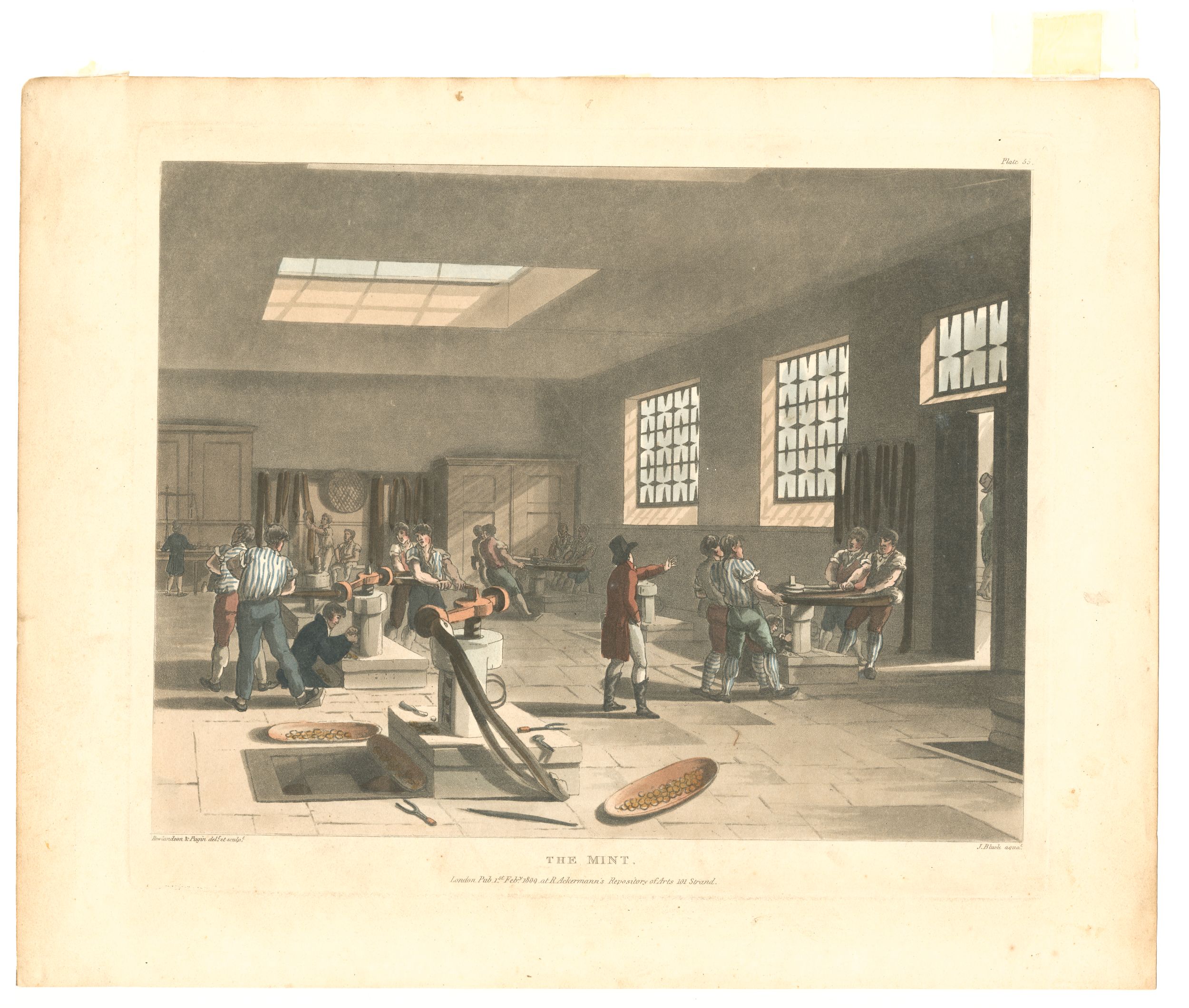
When Jenkinson’s Committee was established, it was so long since silver coins had been mass-produced that Mint employees feared the know-how was lost. Eventually in 1804 a system was perfected for producing standard weights and alloy mixtures. Around the same time, Matthew Boulton invented a steam-driven coining press. He operated from a factory in Birmingham, supplying copper coinage throughout Britain and Ireland. To modernise the London operation a new Mint was constructed at Tower Hill incorporating steam technology, which was completed in 1810.

royalmint1830

The new Royal Mint at Tower Hill

Boulton’s steam press system and use of highly-skilled engravers overcame the problem of counterfeit copper coins. Also an Act of Parliament in 1803 introduced draconian fines for simple possession of fraudulent coins. But forgery of silver currency continued unabated. Up until this time the best engravers only worked on large value coins. No regard was given to the quality of lower denominations. ‘From the Mint’s point of view the manufacture of coin had to satisfy two, and only two, criteria: coin must be of proper fineness and of accurate weight.’ It is little wonder that forgers thrived.

back from elba

Napoleon’s brief trip home, 1815

Almost as soon as Wellesley-Pole began his duties, Napoleon escaped from Elba and hostilities with France resumed. During this period Wellesley-Pole asked the Commons to approve the construction of houses ‘to accommodate… persons who had been ‘imported’ from Birmingham, for the purpose of managing the machinery of the new Mint. At a meeting with Banks to discuss new currency designs, Wellesley-Pole was introduced to an Italian engraver named Benedetto Pistrucci, of whom we shall hear more.

The Battle of Waterloo was to present Wellesley-Pole with his first opportunity of proving his worth, and he did not waste it. Tune in for part two to find out how the Waterloo Medal was conceived, the extraordinary speed in which it was manufactured, and its unique innovation.

For more information about this exciting era in the history of the Royal Mint please visit their website or the Royal Mint Museum, whose director Dr Kevin Clancy is a widely renowned and respected numismatist.

If you are interested in Wellesley-Pole, you may be interested to read about his ‘creation’ of Royal Ascot

You might like to know how Lord Liverpool got the better of the Wellesleys (again), or why The Duke of Wellington considered Wellesley-Pole’s son (Wicked William) ‘lamentably ignorant and idle’

Finally, the growing legions of Wellesley-Pole fans undoubtedly wondering why he’s never been written about should be thrilled to bits to know that our hero is very much a ‘best supporting character’ in Geraldine Roberts’ forthcoming book Angel and the Cad : Love, Loss & Scandal in Regency England

Sources Used:

[1] Butler I., The Eldest Brother: The Marquess Wellesley 1760-1842 (London: Hodder & Stoughton, 1972)

[2] British Library Manuscrips Add.MSS 37296

[3] Longford E., Wellington: Years of the Sword (London: Panther, 1971).

[4] Craig J., The Royal Society and the Royal Mint in, Notes and Records of the Royal Society of London, (London: The Royal Society, V19, No 2– Dec 1964).

[5] Selgin G., Steam, Hot Air & Small Change: Matthew Boulton and the Reform of Britain’s Coinage,in Economic History Review (London: Blackwell, 2003)

[6] Challis C., A New History of the Royal Mint (Cambridge: CUP, 1992)

[7] Hansard, 25/Apr/1815

Rushout’s Wanstead 1824-1832

Anne Rushout | Rushout’s Wanstead | Rushout on Tour

Anne Rushout was a friend of Catherine Tylney-Long, the heiress of Wanstead House.

Here are some images of Wanstead, painted by Lady Anne Rushout

wansteadgrove3

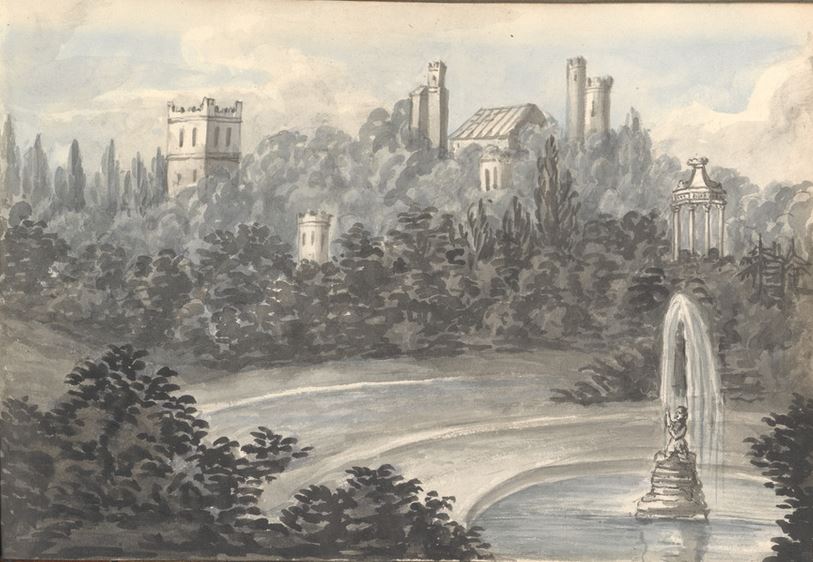
Wanstead Grove c.1829 from the long ornamental lake


wanstead grove temple view

Looking down towards the Temple – which now stands in a garden in Grove Road


Wanstead Grove Panorama

Panorama of rear of Wanstead Grove and the Temple


Wanstead Grove Gazebo

Gazebo in grounds of Wanstead Grove c.1829


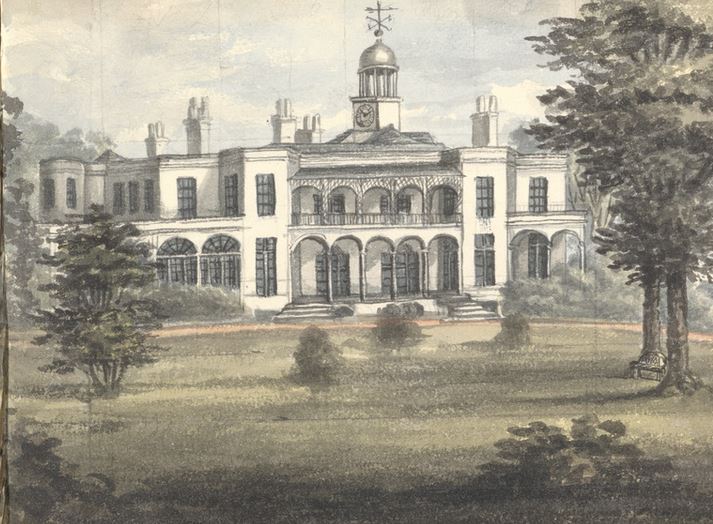
Wanstead Grove 1825

Front elevation of Wanstead Grove


Wanstead Grove West - rear1825

Delightful rural setting to rear of Wanstead Grove


rear of Grove Cottage

Rear of Grove Cottage – once stood at of junction Nutter Lane/Leicester Road


Grove cottage 1825

Grove Cottage…. beautiful


From portico of Wanstead Grove 1825

View from the portico of Wanstead Grove – towards George Lane


from flower garden wanstead grove

c.1829 Flower Garden on Grove Estate


Mr Monk Cottage Wanstead May 1829

Mr Monk’s Cottage, Wanstead – I wonder where this was?


Nightingale Place 1829

Nightingale Place (1829) – Curve of Nightingale Lane towards the pub already evident


Lodge at Wanstead Grove 1828

The Lodge at Wanstead Grove – front part of which may still survive in resident’s back garden


From dining room at Wanstead Grove

Not a bad view from Lady Anne’s dining room at Wanstead Grove


flower garden wanstead grove

Another view of the flower garden Wanstead Grove


Cottage near Snaresbrook

‘Cottage near Snaresbrook’ c 1829


All images courtesy of Yale University – Accessed on line November 8th 2014

If you are interested in tales of Wanstead you might like to read about Wicked William’s Hunt – part 4 of a brief history of the Epping Hunt


Lady Anne Rushout – Wanstead’s Forgotten Artist

Anne Rushout | Rushout’s Wanstead | Rushout on Tour

Rushoutpic1

Lady Anne Rushout (1768-1849)

Modern day Wanstead likes to give a nod and a wink to former local citizens who have played a role in shaping its history. We know all about statesmen Winston Churchill and Sir William Penn, of Sheridan the playwright and of course ‘Wicked’ William Wellesley. But curiously, Wanstead seems distinctly reluctant to celebrate its feminine connections – For example Wikipedia’s ‘notable residents’ of Wanstead list rather embarrassingly contains just one woman, soap-star Jesse Wallace, listed on the basis that she once lived the area!

The most undeservingly neglected lady in Wanstead’s history must be Lady Anne Rushout, who lived at Wanstead Grove from 1817-49.

Plimer 3 graces - Anne on Right 1809

Anne (left), with Harriet (centre) & Elizabeth (right)

Anne was the eldest daughter of John Rushout, Baron Northwick of Northwick Park (1738-1800) and spent a happy childhood with sisters Harriet (c.1770) and Elizabeth (1774). She was well educated: a keen artist, botanist, diarist and poet, celebrated for her grace and beauty. Yet she was not a conventional young woman, & refused to comply with the male-dominated society in which she lived.

ladies of llangollen

The Ladies of Llangollen – a bluestocking shrine

From a very early age Anne was interested in bluestocking literature, making several trips to Wales to visit the famous Ladies of Llangollen, and keeping a commonplace book filled with feminist prose. It is not known if Anne was lesbian, as her family attributed her strong aversion to marriage to the unfortunate death of her fiancé days before their wedding. I have searched the archives without success to corroborate this claim. But it seems likely that Anne came from a very liberal-minded and supportive family, who propagated this story to protect her reputation.

Wanstead Grove 1825

Wanstead Grove – designed and built by Anne Rushout

In 1817 Anne’s uncle George Bowles died, and she inherited Wanstead Grove. Originally purchased in 1759 by Humphry Bowles, it came with approximately 60 acres named the Grove Estate. It was rare for assets to pass to a female relative at this time, and more unusual still that Anne decided to demolished the house, sell off its ‘out-dated’ works of art, and construct a new magnificent mansion in its place.

Wanstead Grove was built between 1818 and 1824. As its completion coincided with the demolition of Wanstead House, it is likely that various fixtures and fittings sold to satisfy Wicked William’s creditors were snapped up by Anne to augment her new home. In fact Anne bought the very first item offered at the Wanstead House auction in 1822, attending most days afterwards – to pick and choose art and furnishings according to her taste.

In effect therefore, when Wanstead lost a behemoth of a mansion, it gained a successor at Wanstead Grove – which became the single most dominant property in the area. More importantly, Wanstead Grove and its beautifully laid out grounds were completely Anne’s creation – thus demonstrating that women were perfectly capable of operating in the hitherto exclusively male sphere of architecture and design.

Anne spent a great deal of her life at Wanstead Grove and was very much part of local society. Far from being reclusive she was always very charitable, leaving significant bequest to the poor of Wanstead after her death in 1849.

Wanstead Grove is long gone now, having been demolished in 1889 to make way for the Counties Estate. Some remnants of the formal gardens remain, such as the Temple (which once stood at the edge of a picturesque lake) and can be seen annually on Open House Day

But the real legacy Anne Rushout has left Wanstead can be seen in three volumes of drawings she made between 1824-1832, which can be found in the British Art collection at Yale University. She records a splendidly rural and naturally beautiful Wanstead at the end of the Regency era. All of these images are freely searchable over the internet, but I have decided to collate them together in two sections covering Wanstead, and further afield.

Disappointingly, Yale University describes Lady Anne as an ‘amateur artist’. This can only be because she was a woman, for it seems to me that her output and quality of work merits far more than label of a ‘hobby’. I hope that Yale and the people of Wanstead will reassess Lady Anne Rushout as an important proto-feminist, writer, and artist – worthy of full recognition and respect.

Further Information

Frustratingly for historians, Anne Rushout’s diaries covering 1791-1827 have been missing since the 1950s. As a frequent visitor to Wanstead House during Wicked William’s era of extravagance, she could have provided some valuable insight into what went on behind closed doors.

However, Anne’s journals 1828-1849 are in the possession of Senate House Library in London & her ‘commonplace book’ for the period 1776-1832, which is an extensive scrapbook of ephemera and jottings about fashionable life, can also be found at Yale University.

An excellent on-line history of Wanstead Grove complete with images of the Temple can be found here.

The Counties Resident Association has produced a great history of the Grove Estate

Kelly McDonald has written about Anne Rushout’s connection with Bersted Lodge

Anne Rushout on UK Tour – Some Regency Era Sketches

Anne Rushout | Rushout’s Wanstead | Rushout on Tour

Here are some images of various UK locations, painted by Lady Anne Rushout (1768-1849) of Wanstead Grove.

Anne Rushout was a friend of Catherine Tylney-Long, the heiress of Wanstead House. Click here to pre-order Geraldine Roberts’ book Angel and The Cad, which is based on our research, to be published by Pan MacMillan in June 2015

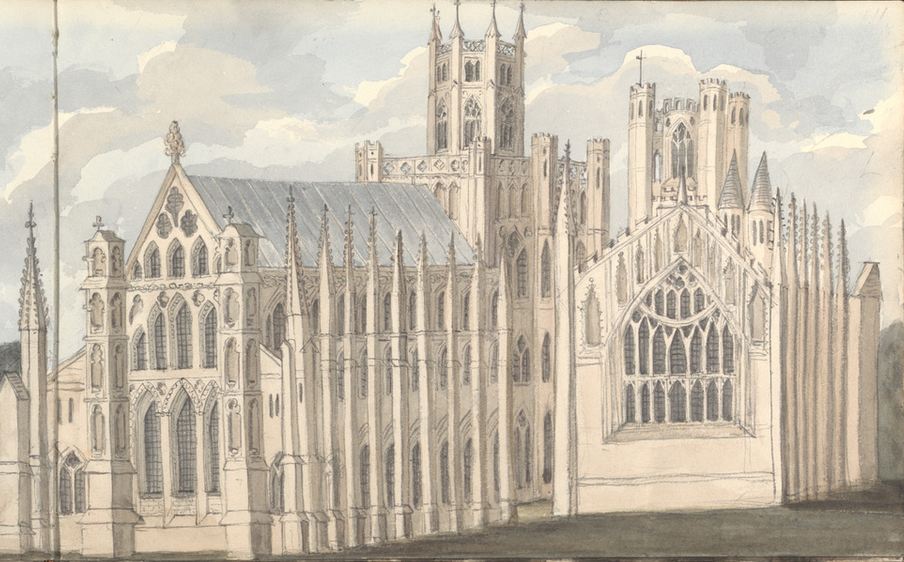
ely cathedral 1824

Ely Cathedral- 1829


The Mersey towards Toxteth Park on right 1829

The River Mersey looking towards ‘Toxteth Park- on the right c.1832


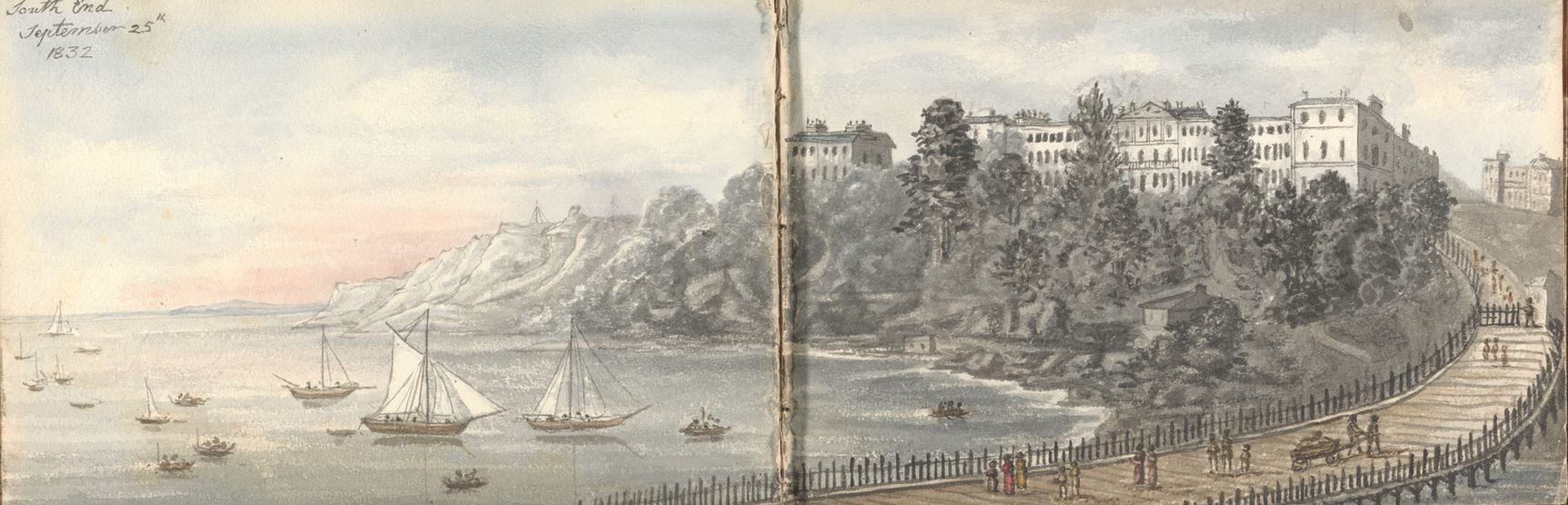
Southend 1832

Southend-on-Sea 1832 – still looks familiar


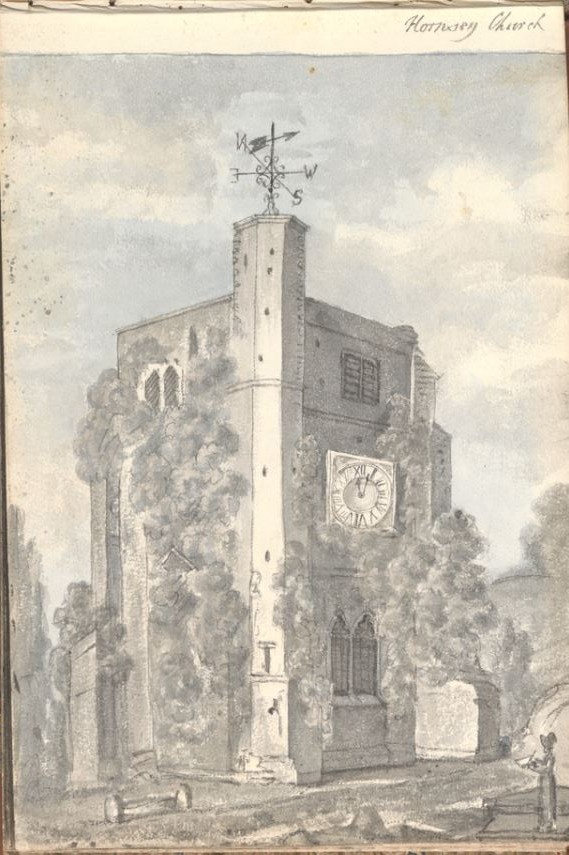
Hornsey Clock

Nice little self-portrait of Anne Rushout outside Hornsey Church


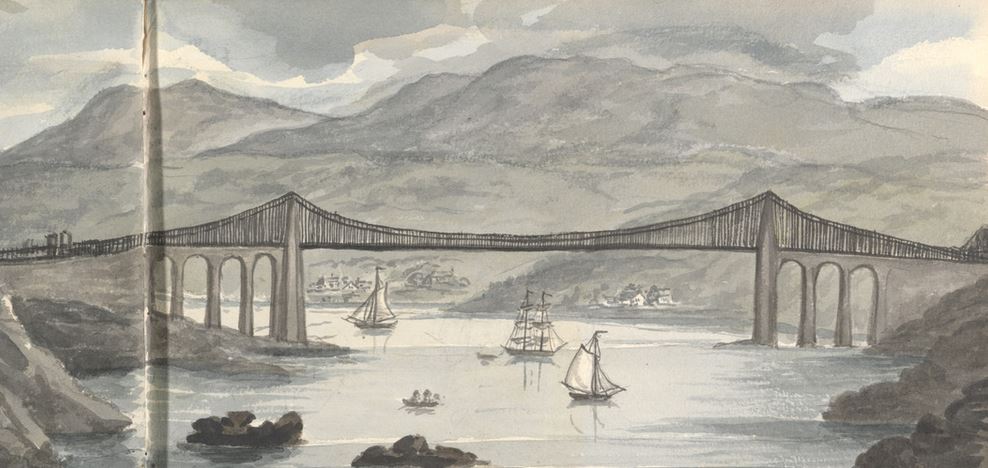
Menai Bridge 1830

The Menai Bridge (1830)


Ludlow Castle 1830

Ludlow Castle (1830)


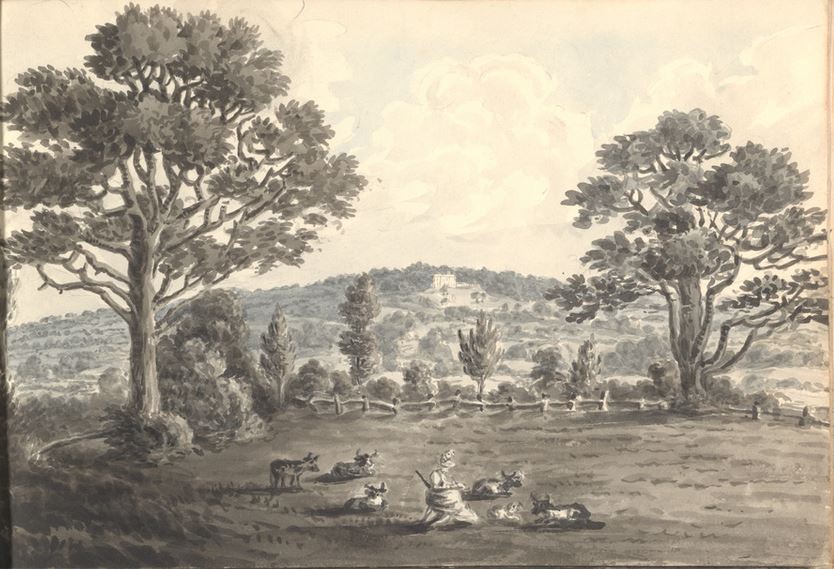
Looking towards claybury 1826 self portrait

Essex, looking towards Claybury from Woodford – Lady Anne in foreground


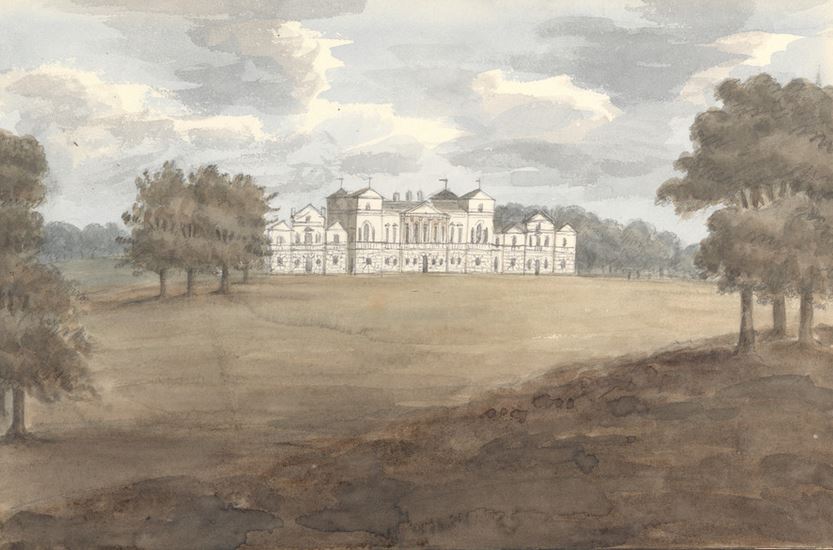
Holkham2 - August 1824

Holkham House, June 1824


hatfield 1832

Hatfield House – 1832


Gwrych Castle 1830

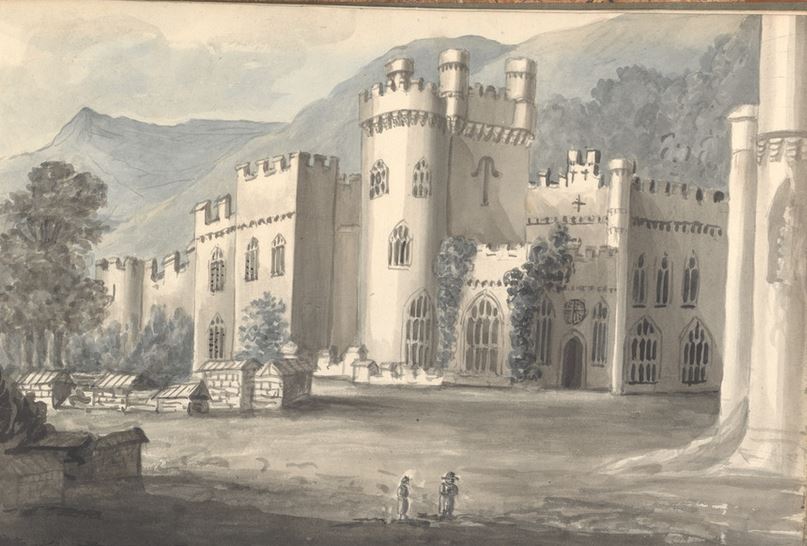
Gwrych Castle 1830


finborough hall july 30 1824

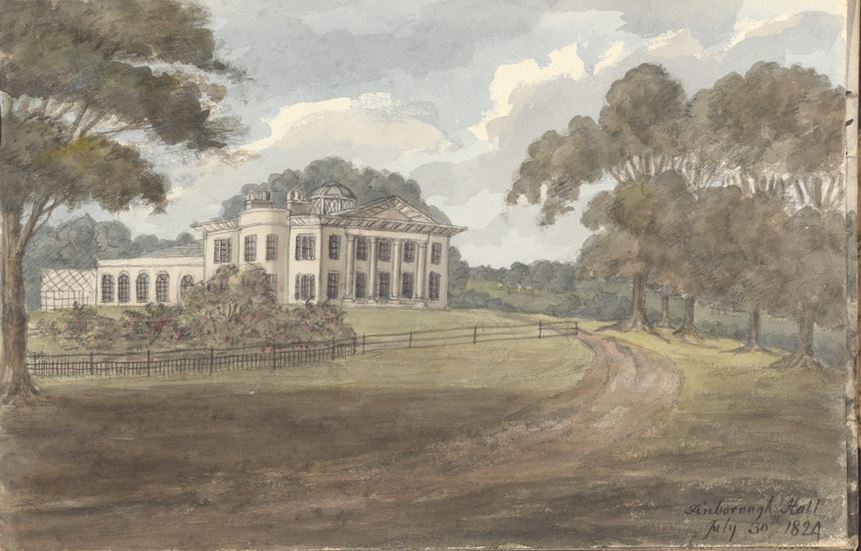
Finborough Hall, 1824


Eastmor Castle 1829

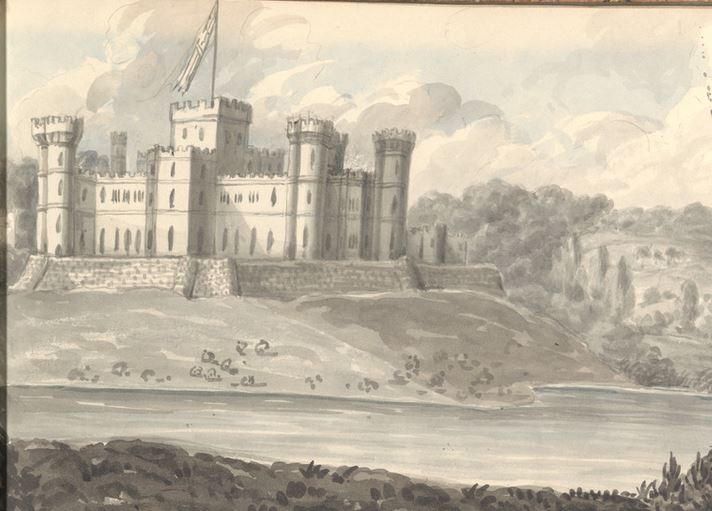
Eastnor Castle, Herefordshire (1824)


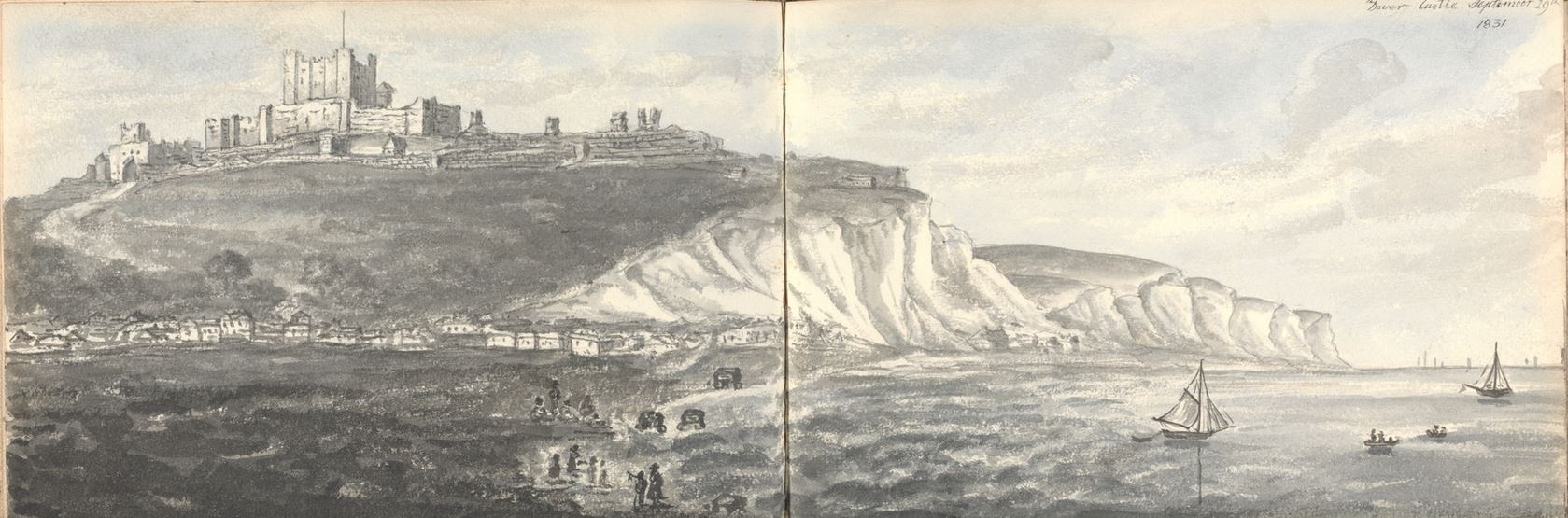
Dover castle 1831

Dover Castle (1831)


Bridge and Caslt at Conwy

Bridge & Castle, Conwy (1830)


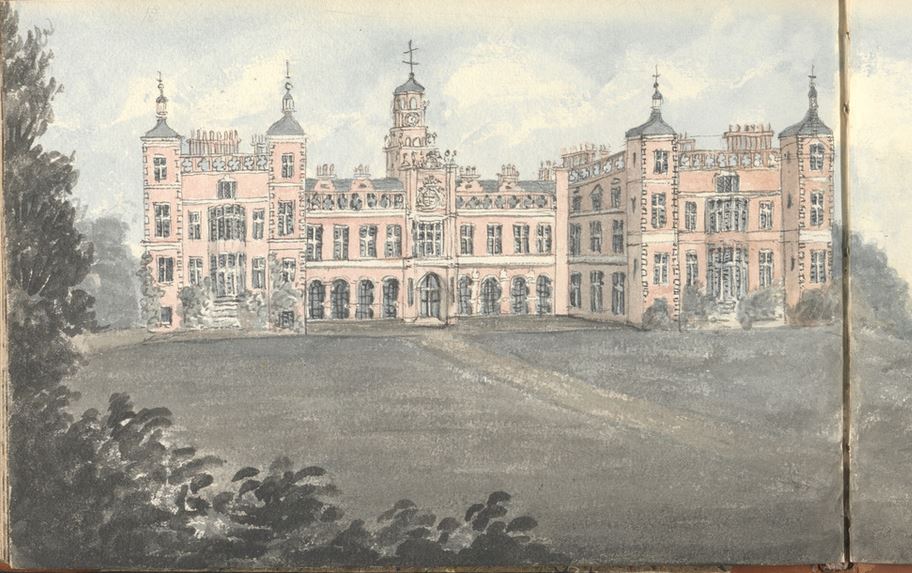
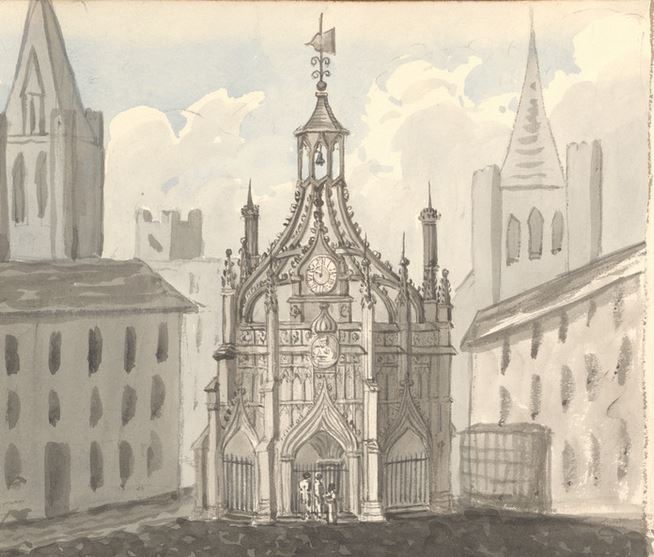
chichester 1828

Chichester, 1828


brighton pavilion 1828

An oblique view of Brighton Pavilion, 1828


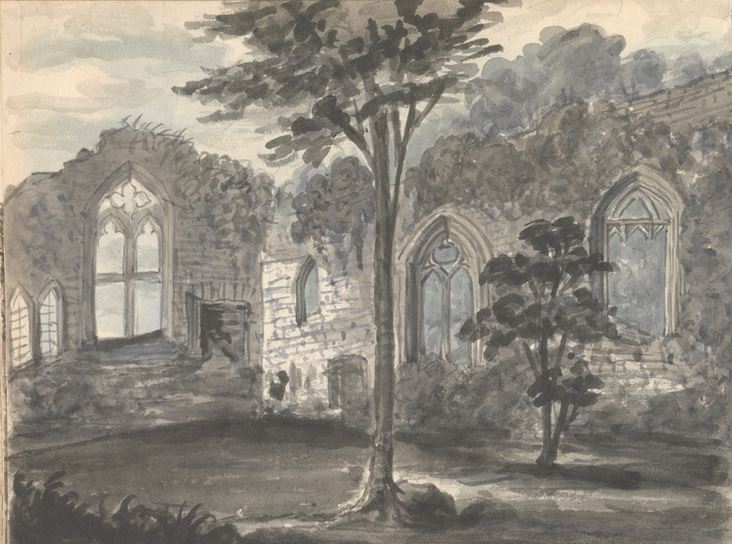
Birkenhead Abbey 1830

Birkenhead Abbey ruins, 1830


bearsted lodge 1831

Bersted Lodge, near Bognor  (1831)


Alton Towers 1830

Alton Towers sans rollercoasters (1831)


All images courtesy of Yale University – Accessed on line November 8th 2014

Death of a Regency Prize-Fighter

boxingring

During my recent research into Royal Ascot I stumbled across an 1830 newspaper report relating to the death of pugilist Tom Shelton, a sportsman considered ‘one of the brightest stars’ of the Regency era.

shelton 2

Weighing in at 12 stone 7lbs – Tom Shelton

Tom Shelton’s boxing career is described in great depth in Pearce Egan’s Boxiana – Volume 2 (1824) and again in Volume 3 (1829) where his decline in stature (as age set in) is well recorded.

Born in Wrotham in Kent on May 1st 1787, Tom Shelton began life as a canal worker in and around the Thames estuary. It was hard labour for small pay, so by the age of 16 Shelton entered the ring for the first time at St Giles’ Fields for a prize of just five shillings. He was initially considered to be a ‘miller’ in style, meaning that he was not afraid to trade blow for blow with his opponent – but showed little regard for his own safety. But very soon ‘The Navigator’ (as he was named) became widely renowned as a ‘scientific boxer – a truly great man in the ring- a good in-fighter, but a left-handed hitter’. Boxiana describes a number of gruelling contests in which Shelton fought bravely to the finish. It is both awe-inspiring and sickening to read about the punishment he endured over a great many bouts between 1812 and 1825. For example on more than one occasion Shelton fought on with multiple broken ribs.

tom shelton 1

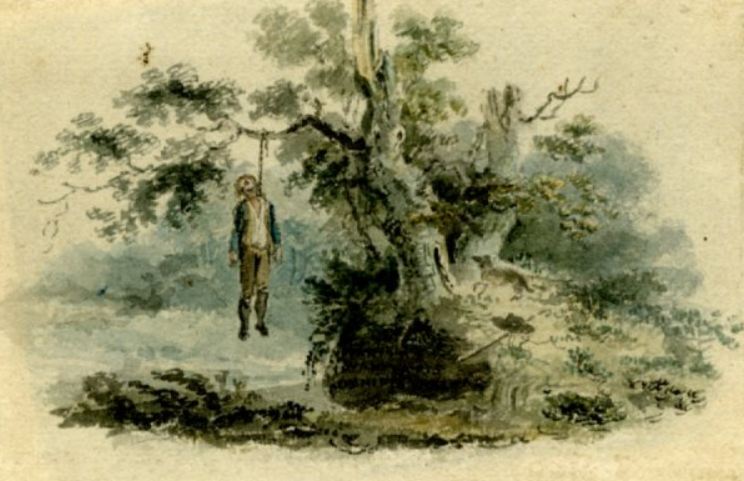
However the most harrowing tale of all relates to an incident occuring outside the ring, which all-but foreshadowed Shelton’s untimely end. In the summer of 1812, at the age of 25 Shelton found himself in Hampstead on a drinking binge with a friend. As the day wore on the men began to gamble, the stakes for which became increasingly serious as they became more inebriated. Boxiana relates that when Shelton actually lost the clothes off his back

The last desperate stake was HIS LIFE. The destructive effects of gaming were never seen in a more horrid point of view, than in this transaction between Shelton and his associate… It is scarcely possible to admit of the reality of the circumstance… to witness one man staking his life with perfect indifference as to the event, and viewing the other equally as callous, not only in winning the life of a fellow creature, but claiming the performance of the contract, with all the barbarity of a Shylock.

 suicide

There but for the grace of unlucky good samaritan Mr Croker

When Shelton lost this final throw of the dice, his dreadful friend ordered him to hang himself from the nearest tree. Considering this to be the right thing to ‘fulfil the character of an honourable gambler’ he immediately proceeded to do so. Fortunately, a passer-by named Croker intervened to take Shelton down, thereby saving his life. Croker was rewarded with two black eyes and a broken nose for his troubles. Consequently, on 14th September 1812 Shelton was tried and found guilty of assault. Just before sentence was passed his wife Mary suddenly stood up to address the bench, stating that from this prosecution ‘she was ruined in her little shop and business, and her four young children deprived of subsistence’. She added that, ‘excepting some such irregular fits and frolics, Shelton was a good husband, and laborious and attentive to his duties’. Remarkably, the judge was greatly impressed by this act of matrimonial loyalty and Shelton was discharged.

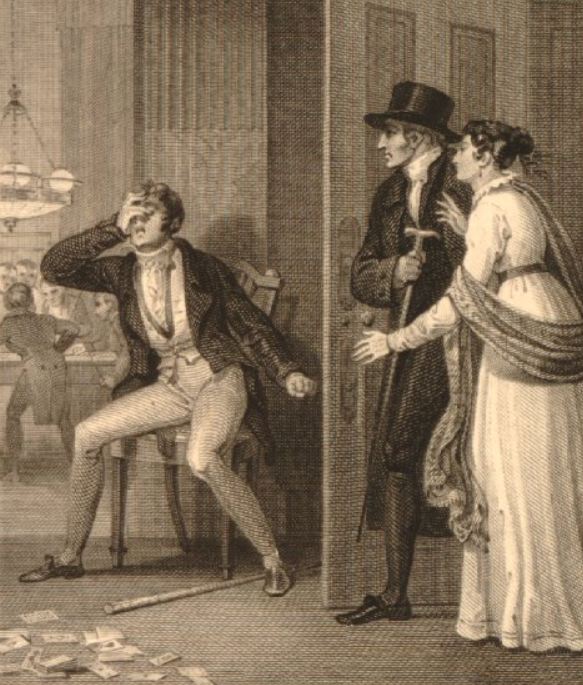
gamester reformed

‘Honour’ in gambling – what a frightening concept

It is really quite appalling to consider how close Shelton came to killing himself as a result of heavy drinking and gambling. However, it was not that Shelton had suicidal tendencies – rather that he was following a convention going back to medieval times whereby a wager was considered enforceable as a legal contract. In short Shelton went too far because he was drunk, but could never relinquish his respect for the boundaries of ‘honourable gambling’, even if his life depended on it.
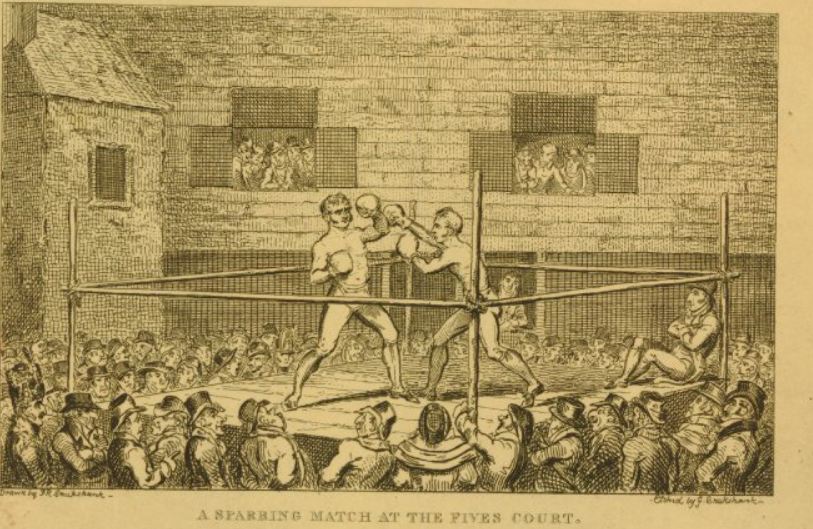
sparring at the fives court

The Fives Court – where Shelton often gave boxing exhibitions

During his boxing career, Shelton often took part in organised displays, involving sparring contests with various other well-known pugilists, and he regularly acted as a second in other bouts. As his career reached its conclusion, there are several newspaper reports describing benefit nights held in his honour. So it would seem that Shelton was a widely liked and respected sportsman.

Shelton became a pub landlord around 1820, and as his career drew to a close used his pubs for boxing events, and later dog-fighting contests. But his association with sport and the wagering involved in the outcome meant that gambling remained very much part of Shelton’s persona. By 1829 Boxiana recorded him as a man in decline, hardly surprising as Shelton was into his 40s and no longer in the top bracket of prize-fighters. He was very much yesterday’s man, and perhaps the loss of celebrity led to more serious and prolonged involvement in gambling.

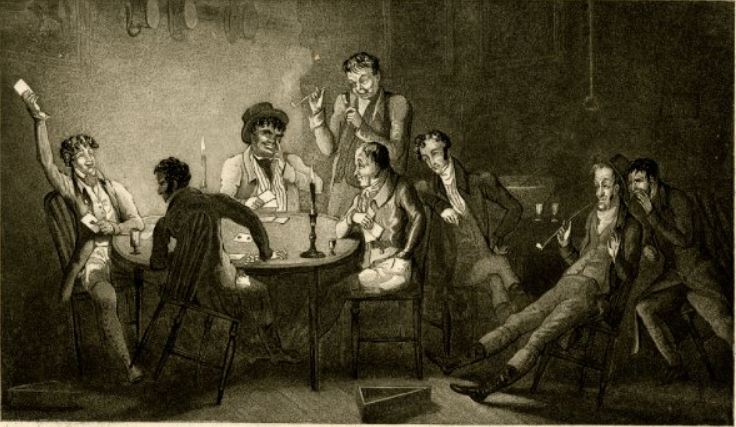
fleecedatcards

 When his career ended, Shelton went back to the tables

On Monday 22nd June 1830 Tom Shelton returned to The Ship in Montague Street, Bishopsgate, having been absent from duty for over a week. After dinner with his family and smoking his pipe, Tom confided in his wife that he had lost £800 gambling at Ascot Races. This was a colossal sum of money, perhaps 10 times what Shelton could earn annually. He said he had already tried and failed to secure an advance from employers Trueman & Hanbury. In consequence of this, Shelton was now compelled to surrender himself to Whitecross Debtors Prison on Wednesday morning, with his destitute family in tow.

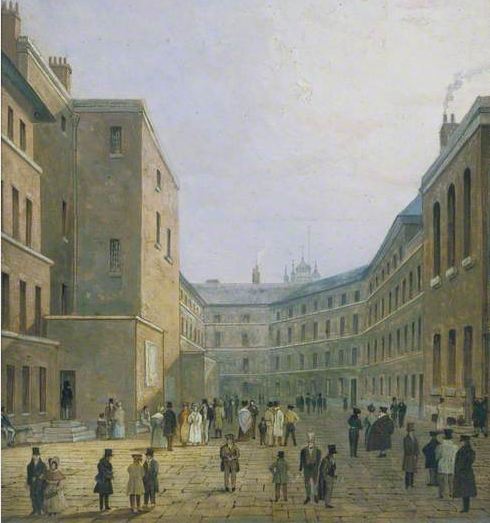
whitecross debtors prison

Life was grim for families inside Whitecross Debtor’s Prison

Not for the first time, Mary Shelton tried to rally her husband at his time of need. Despite his recent neglect of both family and business responsibilities, she argued that they were both young and able to work, & that by ‘giving up gambling and using honest and persevering industry, he might get through all his difficulties.’ Apparently soothed, Shelton asked his wife to get him a gin and water before retiring to bed. But when she was gone he produced a bottle of prussic acid from his coat pocket, swallowed the contents, and was dead before she returned.

This story of a family ruined by gambling addiction resonates very strongly today. For, at the end of the Regency period questions were raised about the dangers of unrestricted gambling and the effect it was having upon society. Then, like now, the spectre of poverty and alcohol dependency quite often played a role in the process of ruination for gambling addicts.

As early as 1828 the Morning Post decried the proliferation of gambling transactions throughout Windsor during Royal Ascot, stating that

It is high time that some serious notice be taken of these base proceedings for it is most shameful and scandalous, that in a small town like Windsor, so near our chief seats of learning, and moreover the residence of the British Monarch, these vitiating receptacles should with impunity be allowed to remain

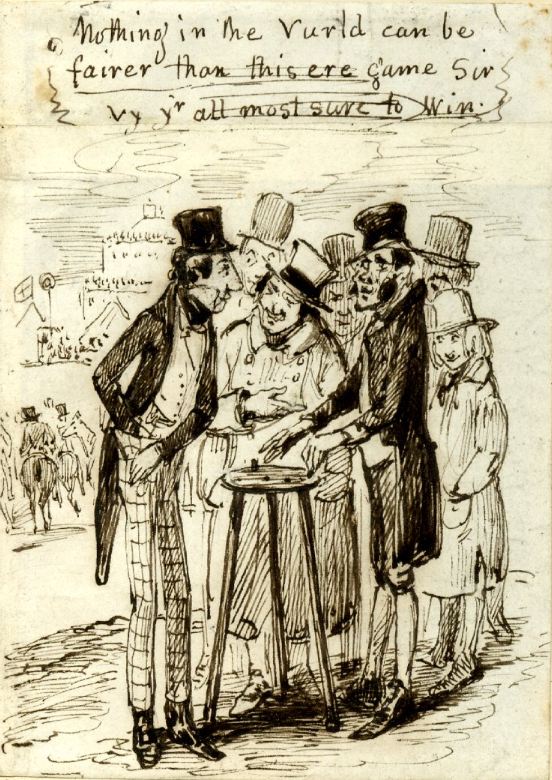
 gambling table
A common ruse was the thimble table – turning gambling into pure deceit

Though Shelton’s death and inquest were widely reported it was only a matter of days before it became old news. The following week’s headlines moved on to Mr Stevenson, a ‘sporting gentleman’ who threw himself from a window ‘under the excitement of feeling arising from his having lost £7000 on the Derby – He was not expected to survive.’ In fact it was not until the Gaming Act of 1845 that bets were finally deprived of ‘legally binding’ status, relieving men like Tom Shelton from the shackles of so-called ‘honourable’ behaviour when settling debts.

I have tried to find out what became of Shelton’s family. Considering the stigma associated with death by suicide, the inquest was a very sympathetic one. Emphasis was placed on Shelton’s previous suicidal tendency, and a string of witnesses testified to the unbalanced state of his mind, meaning that a verdict of death by insanity was quickly arrived at, to give his grieving widow some crumb of comfort. The only remaining clue I could find relates to the activities of a London prize-fighter active in the 1840s named Tom Shelton – perhaps this was one of his sons following his footsteps into the ring.

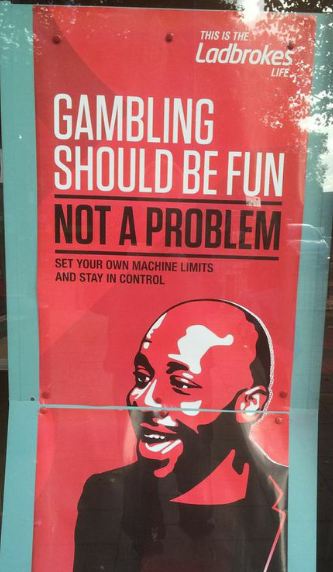
ladbrokes

Are we more civilised today? Gambling is policed by…. the gambling industry

In the most deprived areas of modern Britain betting shops proliferate, gorging themselves not on the rich but the poorest element of our society. Not just live sports but daytime TV is riven with readily accessible options for having a flutter, – there seems to be no escape. In the late Regency era gambling was equally pervasive; at card tables, sporting events, or practically anywhere likely to attract crowds. You would be faced with all manner of games of chance, many of which were rigged to ensure that losses would ensue. Then, just like today, gambling was tacitly accepted – and nothing done to counter its effects. Whilst we can forgive our ancestors for their inability to control the effects of gambling, I don’t know how we can explain modern day arrangements – whereby gambling seems to be regulated by the gambling industry itself. This smacks of putting children in charge of the sweet shop, and as long as it continues the misery and waste resultant of reckless gambling will continue unabated.

For more information on the growth and development of Boxing in the Regency period, I would heartily recommend David Snowdon’s Eganesque Blog and his accompanying Pierce Egan twitter account

For a cautionary tale of modern day gambling, see this very moving BBC report on jailed accountant David Bradford, and the effect it has had upon his thoroughly decent family.

For all else related to problem gambling, the following websites may offer help

http://www.gamcare.org.uk/          http://gamblersanonymous.org.uk/

 This blog is copyright Greg Roberts, and I hope you will inform me if intending to reproduce any part of it for your own use.
I would welcome any comments, suggestions or advice you may wish to provide and thank you for visiting my blog

If you are interested in Regency sport, you might like my history of ‘Royal Ascot’ or to find out about Wicked William and the Epping Hunt