Wellesley-Pole’s Finest Hour: The Great Re-coinage, 1817

 The Mint with a Pole – Part 4

or

When Wellesley-Pole made money quicker than his son spent it

Intro | Waterloo Medal | Pole & Pistrucci | The Great Re-coinage | Exit & Legacy

cornlaws

Bread Riots outside the House of Commons, 1815

In 1816 the euphoria of victory at the Battle of Waterloo wore off and Britain entered a period of unrest. Corn prices were set at an artificially high level by the Importation Act (1815) – or Corn Laws as they became known – benefitting wealthy landowners at the expense of the poor. A bad harvest, the return of thousands of soldiers from Europe, and demonstrations against working conditions combined to increase tension, leading to repressive counter-measures from the Government. Against this backdrop, the Coinage Bill was passed on 22 June 1816, and Wellesley-Pole was ordered to draw up a plan to replace the silver coinage.

the new coinage pole

Wellesley-Pole seen hard at work for ‘John Bull’ whilst the poor suffer on

Wellesley-Pole’s schedule detailed how he proposed to design, manufacture, and distribute the new coinage. It also outlined a system for recovering the old money for the Bank of England. He started entirely from scratch after realising there was ‘no collection of British coins in His Majesty’s Mint…not a single Proof.’ To ensure this would never happen again, he founded a Museum to house ‘every coin and medal which, from this time forth, shall be struck’. In July 1816 Banks supplied Wellesley-Pole with old coins as a basis from which the new currency could be created.This collection now forms the backbone of the Royal Mint Museum.

banks

Joseph Banks donated coins to enable Wellesley-Pole to set up Mint Museum

The key problem was how to undertake an operation of this magnitude without alerting the nation as to what was afoot – and once the coinage was manufactured – how to distribute it to the four corners of Britain so that it might appear simultaneously on ‘Great Re-coinage Day’. Wellesley-Pole had to do this at a time of immense social unrest, using the most rudimentary of transport and communication systems. Some boxes of coin were shipped to northern ports but the vast majority went by carriage up and down Britain’s roadways – with accompanying detailed instructions to be acted upon at each and every destination. Getting the new coinage to these outlets was one thing, but Wellesley-Pole was also tasked with rounding up all the old silver currency in exchange for new crowns, shillings and sixpences. This redundant money had to return to the Mint by the same arduous process after the two-week exchange period expired.

bank of england

The Bank of England – Pivotal to Wellesley-Pole’s plans

The National Archive reveals that Wellesley-Pole submitted his plan on 16th September. He confirmed an agreement with Governor of the Bank of England that banks throughout Britain would assist in the transfer ‘without looking for any remuneration… Considerable expense must be saved from the many applications that have been made in favour of persons wishing to be employed in the issue and exchange of the new money’. He further curtailed costs by creating accounts with every participating bank for the money distributed to and collected from them. Sir Joseph Banks described his plan as

excellently arranged…I have seen a multitude of public men, but no one whose conduct has been as energetic and so perfectly successful’.

A week later Wellesley-Pole received approval from the Prime Minister Lord Liverpool, subject to proceeding in complete secrecy until the money was ready to be circulated.

bull head

Pistrucci was unable to draw mad King George III from life – This ‘bull head’ image was heavily criticised

Each coin was approved by the Prince Regent prior to manufacture. Wellesley-Pole enthused the coins were ‘absolutely divine’. Every last detail was meticulously planned. Coins were labelled and bagged in sums of £100. Bags were then packed into a sturdy box containing £600 comprised of one bag of half crowns, four bags of shillings and one of sixpences. The destination of each box was labelled and arrangements were made for them to be re-used for the return of old coinage after the exchange was completed. 57 million coins were ready for distribution by January 17th 1817. A few days later Wellesley-Pole called a meeting of the bankers of London proposing:

  1. That all 72 London banks be ‘furnished with money to exchange the silver coin…by opening all their shops to the public at large. Inspectors from the Mint to be established in each shop for selecting…the old coin to be recovered…by which means Bankers would be exonerated from any responsibility.

  2. Every Banker in England, Scotland and Wales to employed in likewise manner but ‘the Country Bankers’ to recommend such persons for inspectors as they conceive to be trustworthy.

Wellesley-Pole earmarked the operation for 3rd February, but the London Bankers, worried about civil unrest, feared that by opening to the general public ‘their property would be endangered’. So the Master of the Mint was compelled to hastily arrange alternative locations for public distribution. He ensured that a comprehensive network of outlets were created in every principle town in England and Wales, which received almost £1.8M by February 3rd.

announcement

Cat out of bag 18th Jan 1817 – Wellesley-Pole announces Great Re-Coinage

The exchange for Scotland was undertaken by the Bank of Scotland who acted under a letter of instruction from the Master of the Mint, so the entire operation hinged on Wellesley-Pole’s meticulous planning.

The Cabinet eventually deferred the exchange until February 13th. But it was completed in 14 days as planned and the old currency ceased to be legal tender on March 1st. These remarkable statistics bear testimony to the success of this operation

Of £2,6000,000 delivered not one bag or box of new coin was mislaid and there does not remain a single complaint of deficiency of money for exchange in every part of Great Britain.  In carrying the measure through, the Mint dealt with over 14000 letters and employed 1000 inspectors. 469 accounts with individual banks were reconciled ‘to the penny’ when the old currency was returned.

By any standard this operation was an astounding success. Because it went without a hitch it was soon forgotten, perhaps the biggest single reason why Wellesley-Pole is  mired in obscurity. It was only when the House of Commons debated currency in 1842, that the enormity of his achievements were highlighted against shortcomings in current procedures.

As we have seen in Pole and Pistrucci the Great Re-Coinage failed to ignite public excitement, and the press preferred to continue their campaign of back-biting and ridicule against both men.

The only reply either man can give in answer to their critics is to emphasise that the silver coinage remained in circulation until 1971 – Yes that’s 154 years!

In my final part I will look at Wellesley- Pole’s departure from the Mint and round up his legacy…..

 IVORYCOACHPASS1- WWP

 So you have seen how, at least for a few years, Wellesley-Pole made money faster than his feckless son Wicked William of Wanstead House was able to spend it. Follow Wicked William to the Epping Hunt, or off to War with Wellington or find out what happened when Wellesley-Pole’s rage got the better of him.

Finally, I have written the remarkable history of Wellesley-Pole’s house

I hope you enjoy this post and would be most grateful to hear any feedback.

Sources Used

  1. Royal Mint Website
  2. The National Archives (Kew) Mint 1/56
  3. Bagot J., George Canning and Friends (London: Murray, 1909)
  4. Senate House Library, Mint Book MS499
  5. Greg Roberts unpublished dissertation The Forgotten Brother (2009)
  6. Image of Sir Joseph Banks by William Wyon courtesy of the Royal Mint Museum


3 Savile Row – Its role in British history


Within These Walls: 6 Layers of History

savilerow

No 3 Savile Row, Mayfair

Let me introduce you to a Grade II listed mansion house in London’s Mayfair that has recently been in the news due to an unsuccessful campaign to prevent its conversion into an Abercromby & Fitch childrenswear store. Knowing the history of this grand old building it is somewhat ironic to find that an American transformation has materialised. For the truth is that this building has some very interesting and important connections.  Since its construction in 1733 this house has been occupied by people who have helped shape the course of British military and cultural history. Let’s go inside…

1. Admiral John Forbes (1714-1796)

forbes

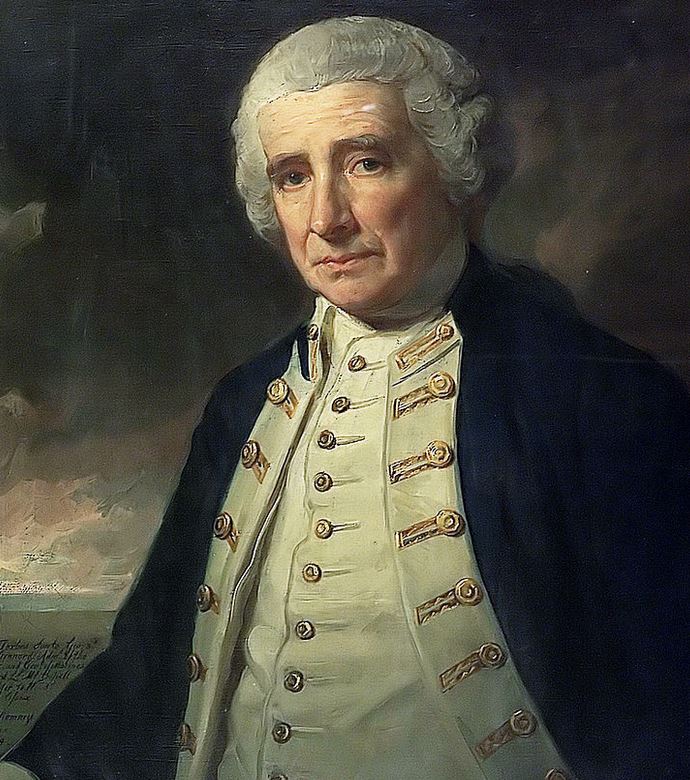
John Forbes was Wellesley-Pole’s father in law

John Forbes began his naval career at the age of 13 and progressed up through the ranks until he became Admiral of the Fleet from 1781 until his death. This was an era when a great many servicemen returned from war incapacitated, and disability was not considered a barrier to high office. Even though Forbes was unable to walk and rarely seen in society he still managed to exercise overall control of the British Navy – and he did so by holding meeting as his house at 3 Savile Row, where he had lived from around 1760.

byng

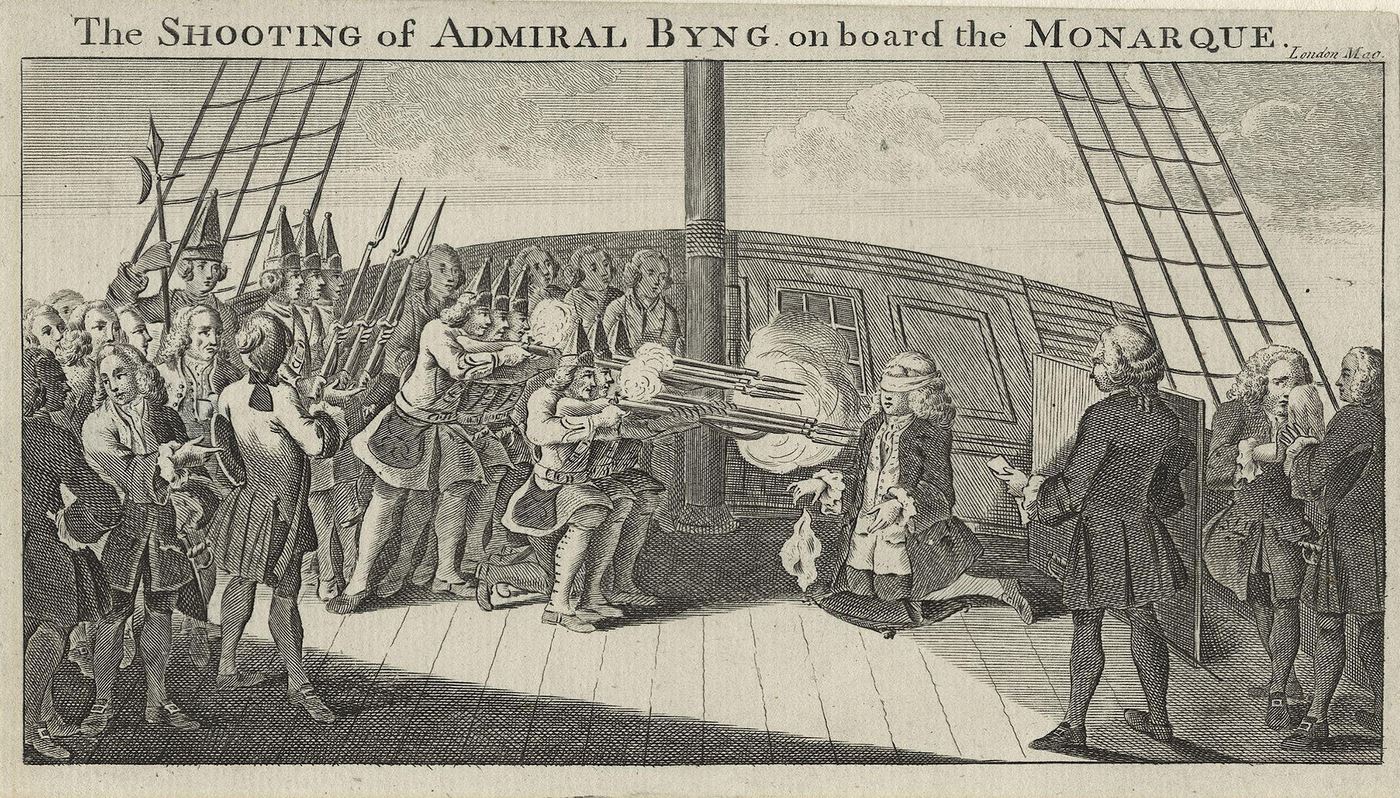
Execution of Admiral Byng (1757)

Forbes most important contribution to British history came when he was involved in the trial of Admiral Byng, who was blamed for the loss of Minorca in 1756. He was tried and found guilty of failing to “do his utmost” to prevent the defeat. When Byng was sentenced to death an appeals for clemency was angrily refused by King George III. Forbes was the only Admiral to refuse to sign Byng’s death warrant though his action failed to prevent Byng’s execution by firing squad on 14 March 1757. Such was the effect upon the public mind that this was the last time a serving naval officer was executed on this charge. Forbes fearless refusal to bow to enormous pressure singled him out as a compassionate man of principle and made him a role model for fairer treatment of naval personnel.

In 1784 Forbes twin daughter Katherine married 3rd Lieutenant William Wellesley-Pole in a ceremony at 3 Savile Row with guests including Arthur Wellesley, later Duke of Wellington. Wellesley-Pole inherited the house in 1797 but decided to rent it out

2. General Robert Ross (1766-1814)

ross

Perhaps Wellesley-Pole’s most famous tenant was Robert Ross a famous British general who is best known across the water in the United States. Irish-born Ross lived at Savile Row until 1805 after returning from action at the Battle of Alexandria (1801). He was subsequently present at the Battle of Corruna (1809) before serving under Arthur Wellesley during the Peninsular War. Despite being seriously wounded at the Battle of Orthes on 27th February 1814, Ross agreed to lead command a British expeditionary force to attack the United States

washington burning

Hard to believe even today – Britain burning down the White House (1814)

Having routed the Americans at Bladensburg (27th August 1814) Ross advanced into Washington DC where he destroyed all the public buildings including the White House. For this act Ross is perhaps the best remembered of all British soldiers ever to set foot on American soil.

death of ross

The death of General Ross

It was not to end well for Ross as he was killed by American snipers near North Point on 12th September 1814. He is buried in the Old Burying Ground at Nova Scotia but has a monument inscribed to him in St Paul’s Cathedral.

3. The Duke of Wellington (1769-1852)

wellington

When Arthur Wellesley returned from 8-years service in India the first place he stayed was with the Wellesley-Pole family in Blackheath, for he was at that time unmarried and had no London home. However, he was to repeat the exercise in 1814 when he triumphantly returned from the Peninsular War following Napoleon’s surrender and exile. It’s very telling that the newly ennobled Duke of Wellington chose Savile Row rather than his own marital home. Imagine if you can the thousands of people who gathered outside, mounting a daily vigil to catch a glimpse of their conquering hero. Wellington remained at Savile Row for a month before returning to Paris.

4. William Wellesley-Pole (1763-1845)

wwp by pistrucci

Wellesley-Pole owned 3 Savile Row between 1797 and 1842. In his role as Master of the Mint Wellesley-Pole presided over the introduction of new silver currency that was to remain in circulation from 1817 right through until decimalisation in 1971.

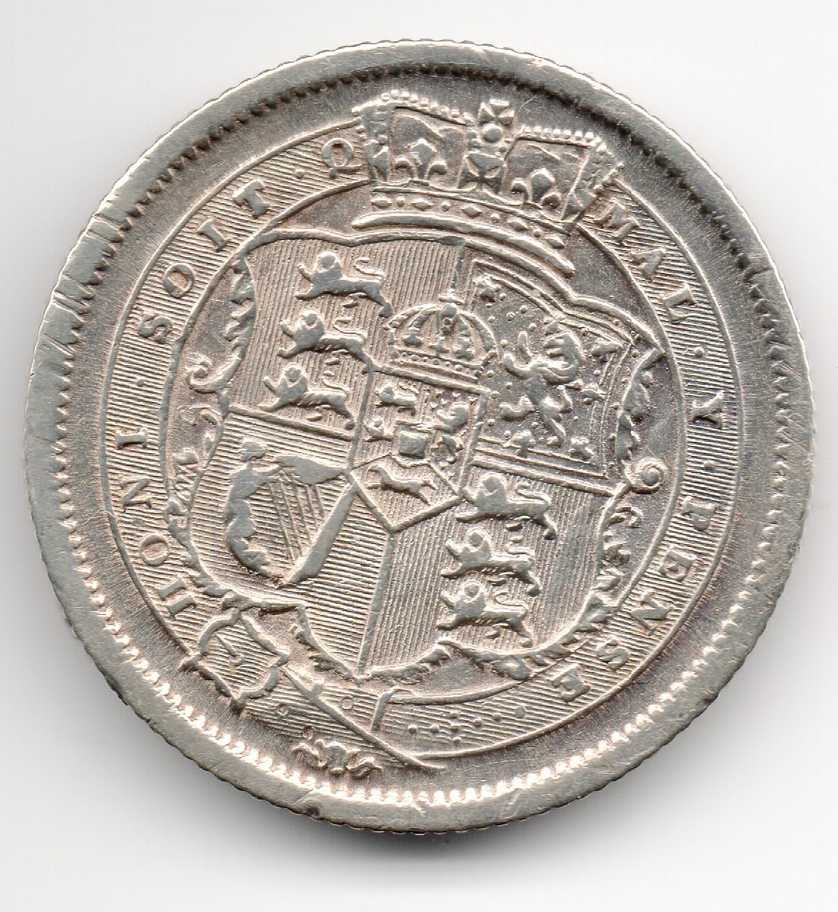
shilling

The humble shilling must surely be on of the greatest symbols of Britishness. Wellesley-Pole he also helped to create the instantly recognisable St George & Dragon motif designed by Benedetto Pistrucci which is still in use today.

double sovereign

5. The Bowler Hat (1849)

bowler hat

Quintessentially British – The bowler hat

Perhaps the greatest stereotypical representation of the English gentleman must be the wearing of a bowler hat. No 3 Savile Row can claim the distinction of being recognised as the place where the bowler hat originated. William and Thomas Bowler are credited with creating the first prototype for the bowler hat in 1850, but it is generally acknowledged that the hat was after a design by British soldier and politician Edward Coke, who was fed up with seeing his gamekeeper’s hats continually knocked off by low-hanging branches when out riding. When he was in Town, Coke lived at 3 Savile Row.

bowler2

Bowler hats have travelled up the social spectrum

Initially very popular with the Victorian working classes, the bowler hat went on to become standard uniform for middle-class businessmen, and by the 1960s it had elevated to the aristocratic realm.

6. The Beatles (1969)

beatles

On January 30th 1969 the Beatles played their last ever public performance on the roof of Apple Records HQ at No 3 Savile Row. Just a year earlier the Beatles paid £500,000 to purchase the mansion and they are said to have spent the best part of 18 months living there leading up to that famous rooftop escapade.

advert

Not surprisingly, to this day 3 Savile Row is still considered a tourist attraction for Beatles fans and there has been a steady clamour for a blue plaque to recognise their use of this building.

Conclusion

Whilst researching this post I came across a reference to Lady Hamilton, Admiral Nelson’s lover, stating that she too once lived at 3 Savile Row. But I have not included her in this blog as I can’t see where she would fit in this timeline, unless she rented the property before General Ross. However, I think there is sufficient here to demonstrate that we should hold Savile Row dear not just because of the Beatles, or to keep American tailoring out of this important British fashion location, but because of its connections to everything British: from the stiff upper lip (Forbes), to military escapades (Ross & Wellington), the British currency (Wellesley-Pole), Quintessentially British headwear (Bowler hat), not to mention The Beatles.

In fact No 3 Savile Row has given us a wealth of characters and symbols that mean a lot to our notion of Britishness.

Kier Holdings paid £20 million for the mansion in 2009 but its fate today remains undecided. Who knows what the future holds…

demo

If they knew their history, these chaps would be wearing bowler hats!

Links

A marvellous set of 1950s photographs showing some amazing interiors of No 3 Savile Row

For more info on General Ross I recommend War of 1812 website

The Daily Telegraph has written a splendid history of the bowler hat

Until such time as Geraldine Roberts Angel and the Cad is published by MacMillan, my main focus on this blog will be Wicked William’s father Wellesley-Pole. There is much to write about Wicked William so stay tuned on that score!

However, you might like to know about Wicked William and the Epping Hunt, or why the Duke of Wellington considered him lamentably idle – alternatively you could always read about the death of a Regency Prizefighter

I hope you have enjoyed this post and would be most grateful for any feedback for any additional information you may be able to provide to fill in the gaps.