Could this be the face of ‘Wicked William’ Long-Wellesley?

        A few weeks ago I was asked to pass an opinion upon the subject of a painting acquired by Plymouth-based art dealers Parade Antiques. It was the portrait of a man in his mid-twenties which was recently discovered in the attic of a house at St Ives (Cornwall). The canvas itself was in poor condition; minus frame, artist’s signature or any other distinguishing mark to shed light on his identity.

Could this be William Long-Wellesley?

        It was only after John Cabello (Parade Antiques) had this portrait restored that he noticed a striking resemblance between his mystery man and Arthur Wellesley (Duke of Wellington,1769-1852), who was Britain’s hero at the Battle of Waterloo. Mr Cabello immediately suspected he was looking at an image of ‘Wicked William’ Long-Wellesley, the Duke’s wastrel nephew, best recalled for the destruction of Wanstead House. In Cabello’s opinion this painting is highly reminiscent of Sir Thomas Lawrence (1769-1830), who was a leading English portrait painter of the Regency period and the fourth president of the Royal Academy. 

       But what would a portrait of the black sheep of the Wellesley family be doing in a Cornish attic? And if it can be attributed to Lawrence (or one of his associates) why was it left to fester in such a decrepit state for nigh on two centuries? Most importantly, can we find any visual evidence to connect the cocky-looking man displayed in this picture to the illustrious Wellesley family?

 1. What would Long-Wellesley have been doing in St Ives?

      Strangely enough the obscure location where this painting was found may prove to be the strongest pointer to Long-Wellesley. Following his marriage in 1812, ‘Wicked William’ decided to enter Parliament, and purchased a seat for £500 in the rotten borough of St Ives. He was duly elected in November 1812, serving as the town’s MP until 1818. Long-Wellesley continued to live at Wanstead House, only visiting St Ives around the time of their assizes. Given that Long-Wellesley had civic as well as parliamentary responsibilities in Cornwall it is entirely possible that a painting was commissioned for the purpose of familiarising constituents with Long-Wellesley’s likeness in the days before photographic media. This painting may have been taken down after Long-Wellesley resigned his seat; its frame perhaps re-used for his replacement MP. Maybe the portrait remained in situ until after Long-Wellesley’s scandalous behaviour became public knowledge. Alternatively it could have adorned Long-Wellesley’s residence at St Ives, and he never bothered to retrieve it after he left the area.


2. Could Sir Thomas Lawrence really have have painted Long-Wellesley?

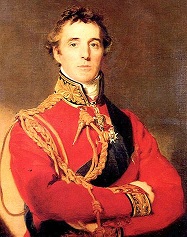
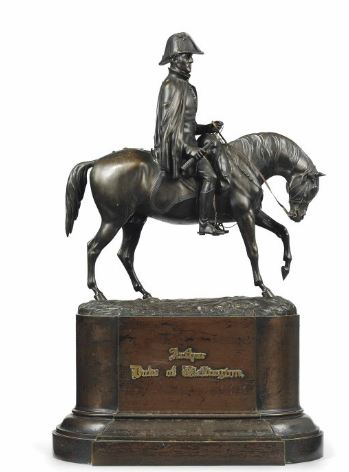
      Sir Thomas Lawrence is best remembered for his flattering style of portraiture, emphasising the positive physical attributes of his subjects. The man in this painting is in his mid-twenties, staring back at us unabashed, almost arrogantly, in the mode of a man of fashion. His style of clothing is very typical of the dandy, but the controlled wildness of his hair exudes masculinity with more than a hint of Romanticism. In 1814 Lawrence was commissioned by members of the Wellesley family to paint a series of portraits, including this iconic image of the Duke of Wellington.

Wellington by Sir Thomas Lawrence (1814)

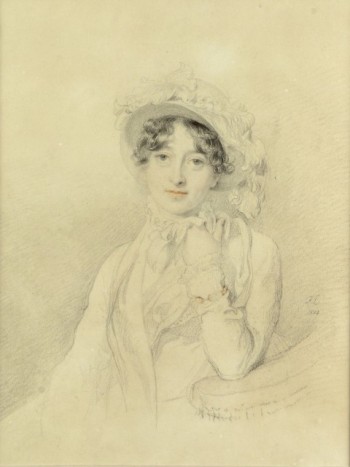
        Another of Lawrence’s most notable works at this time was an ensemble entitled ‘The Three Graces’ : being Mary Bagot, Priscilla Burghersh and Emily Fitzroy Somerset – These women are Long-Wellesley’s sisters.
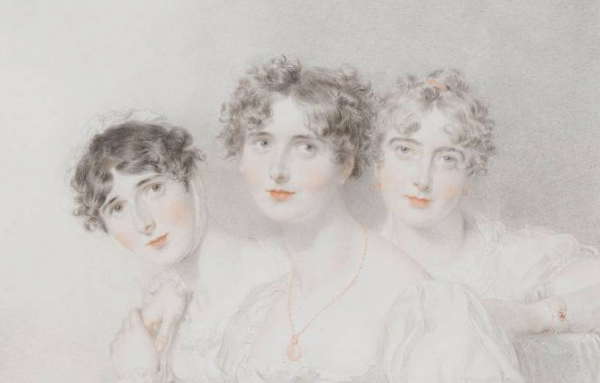
Wicked William’s three sisters as sketched by Sir Thomas Lawrence (1814)

        In the summer of 1814 William held an enormous fete at Wanstead House to honour his uncle the Duke of Wellington, which was attended by the crowned heads of Europe, in celebration of Napoleon’s defeat and exile. Given that Lawrence was at this time busily employed by the Wellesleys it seems plausible that ‘Wicked William’ could have asked Lawrence to do his portrait too. This was when Long-Wellesley was at the height of his pomp, having just turned 24 years old and thought to be so good-looking that even Lord Byron was envious. The St Ives painting has an element of swagger that would have typified Long-Wellesley. 

        It is important to acknowledge that the age of this portrait is as yet unproven. However the way this man is presented and what he is wearing does provide some hints. The sitter’s clothes are consistent with contemporary descriptions of Long-Wellesley, and the execution of the portrait is so close to the style of Lawrence that it is reasonable to assume it originates from (or relates to) the Regency period.


3. Are we looking at a member of the Wellesley family?

        The best way to determine a familial likeness is to set the mystery portrait against other members of the Wellesley family to look for common traits
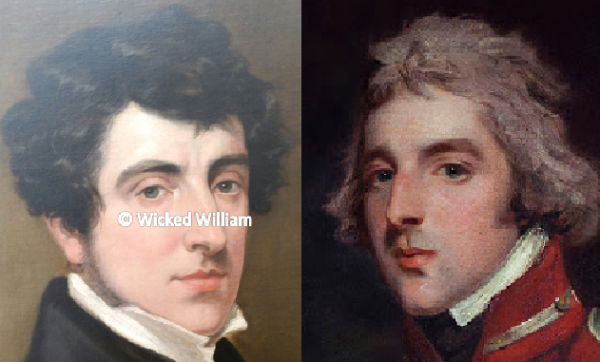
The restored painting (left) and a portrait of Arthur Wellesley by John Hoppner (right)

       In this comparison we capture Arthur Wellesley in 1808 (aged 39). Both men have thick-set eyebrows and blue eyes, their mouths and chins seem to follow the same lines.

When we place the picture alongside contemporary images of William’s sisters the evidence seems even more compelling.
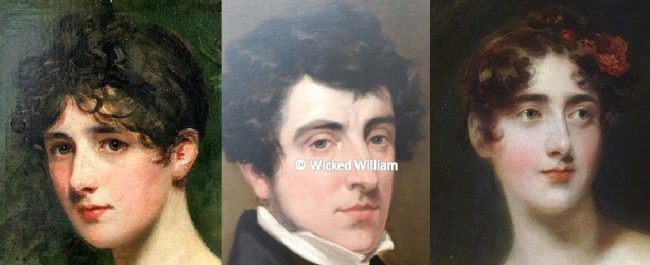
         On the left is a portrait of Mary Bagot by John Hoppner c.1807. On the right is Emily Fitzroy Somerset by Sir Thomas Lawrence c.1815. Although their portraits were painted by different artists the sisters’ features are identical. Of the two, Emily seems to be uncannily like the man in this portrait, suggesting not only that he is a close family relation, but also that this man has been painted by the same artist (Sir Thomas Lawrence).

4. Is this portrait ‘Wicked William’ Long-Wellesley?

     The story of William’s marriage to the richest heiress in Regency Britain, Catherine Tylney-Long, has become internationally famous since the publication of Angel and the Cad by Geraldine Roberts (2015). Long-Wellesley went on to wreck Catherine’s ancestral home at Wanstead House, leading to the fire sale of its priceless art and treasures; even her cherished family portraits were lost. Although William retained some of Catherine’s heirlooms, they had to be auctioned off in 1852 because he never paid the storage fees, and their current whereabouts are unknown.

       Apart from a few satires at the British Museum, there are no surviving images of William or Catherine Long-Wellesley for the duration of their marriage. All we can use for comparative purposes are a miniature of Long-Wellesley aged 16 (in the collection of the Duke of Wellington at Stratfield Saye) and etching of him in profile aged about 38 (the original of which is in my possession).

The unknown man replicates 16-year-old William in both appearance and dress

        Looking at youthful William (right), we see distinct features such as eyebrows, nose and the line of his jaw – which seem to be present in the later image. Their fashionable clothes seem to conform to the same dandy regulation of wearing a drab overcoat with high-necked collar. The curls of hair may not be so pronounced in the left-hand image, but this may have been deliberate – reined in to give the man an air of authority commensurate with his standing on public life.
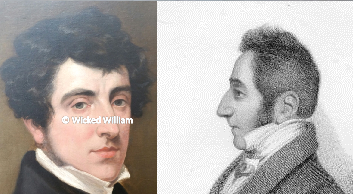
         The portrait of Long-Wellesley in his late thirties (shown on right) depicts a more care-worn man with a receding hairline and a much bigger nose. His chin looks less prominent, but the eyes and eyebrows and his mode of dress are consistent in both images. We all know that the nose never stops growing as one gets older, and Wicked William certainly seems well on the way to a full-blown proboscis akin to the Duke of Wellington. As he got older William looked increasingly more like Wellington. Even the Duke gasped at the likeness when the pair met up in 1845.

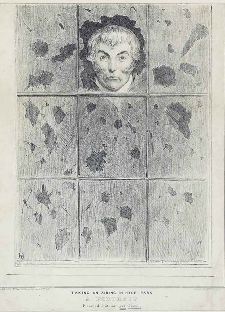
         Georgian satires ridiculed celebrities of their day by exaggerating physical appearance to create an image fit for public consumption. Their primary function was commercial; providing a cheap, popular and in-the-moment source of entertainment. Satirical representations were parodies rather than true likenesses. But it was vital to capture the essence of those featured, to make them instantly recognisable. In Long-Wellesley’s case he was often depicted carrying a rake to sow his wild oats; and presented as a womanising fool bereft of common sense. Despite this, when we compare Long-Wellesley’s satires with the St Ives portrait we again find common ground. These examples from 1811 and 1812 could easily be caricatures of the man we see in this portrait.


Conclusion

     It is clear that the St Ives painting needs further examination by art experts to fully establish its age and provenance. I have considered it purely in the context of Long-Wellesley’s life. Long-Wellesley did spend time in St Ives; he also would have been closely associated with Sir Thomas Lawrence at this time. The sitter in this portrait is almost certainly a member of the Wellesley family. Having compared this new painting with existing images and satires of Long-Wellesley, I feel certain that Parade Antiques have unearthed the genuine article, and that this really is an extremely important find.

      I am not yet sure what will become of the painting, but it would be wonderful to see it back in Wanstead. Imagine the irony of forcing Wicked William to gaze upon the wreck of his once proud estate from his position on the wall of the Temple at Wanstead Park – This would be a small yet symbolic act of penance for the misery and cruelty he wrought upon Wanstead House and its ancestral owners.

——–

Images of the St Ives portrait are produced with the kind permission of Parade Antiques, and have been watermarked to preserve their copyright.

If you would like to learn a bit more about Wicked William Long-Wellesley, you might like to find out how he got on when he served under Wellington’s command in Portugal. To learn about William’s over the top entertainments at Wanstead you could join Wicked William’s Hunt – or witness his heartless treatment of Catherine in her final days

For Wanstead related history you might like to learn about Anne Rushout, Wanstead’s Forgotten Artist – or discover multicultural Wanstead in Thomas Hood’s Tylney Hall

I am currently in the midst of writing up my thesis, which is about ‘Long-Wellesley and Publicity during the Regency period’. I hope to publish more new posts as this year goes on. As usual I would appreciate any feedback, comments, or suggestions.

The Last Victims Of Waterloo? Sea Horse Tragedy 1816

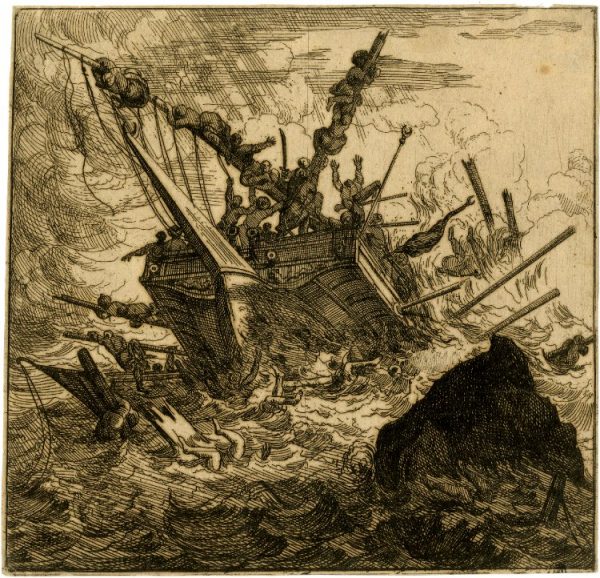
The Wreck of the Sea Horse, Tramore, 1816

On January 30th 1816 Waterloo veterans met a watery grave

As a second-generation Irishman whose parents live in deepest Tipperary, it is almost obligatory that my visits to Ireland include an excursion to Tramore in County Waterford. Its lovely sandy beach, funfair and (one-time) myriad of slot machine arcades providing something for all ages, PLUS the added bonus of Dooly’s truly excellent fish and chip shop – supplies the perfect end to any day trip. They don’t serve seahorse, but you don’t have to look far to see them in this town.

Yet, amidst my nostalgia for Tramore, the presence of a shipwreck on the beach (when I was a lad) was always a stark reminder of the perils facing mariners daring to enter her waters. To this end I have long appreciated why each side of Tramore Bay has so many large beacons – one of which is be-topped by a ‘Metal Man’ which I was wrongly informed had been erected as a kind of corporate stunt. Compounding things further, I always assumed that Tramore’s cute seahorse emblem was just an obligatory tacky seaside symbol, on a par with saucy postcards, donkeys and kiss-me-quick hats.

tramore golf club

Tramore Seahorse Logo – not tack, but genuine respect

But thanks to the magnificent people of Waterford, a monument is about to be unveiled which not only makes me humbly eat my words about Tramore and its logo, but is also a very sincere and poignant memorial for a maritime disaster of the highest order, which occurred on 30th January 1816 involving the ill-fated transport ship Sea Horse.

sea horse memorial

The new Sea Horse Memorial at Tramore

Whilst walking the promenade at Tramore this weekend I came across this delightful stone-built memorial commemorating the bicentennial of the tragedy of the sinking of the Sea Horse – when 363 lives were lost as she foundered during a storm in Tramore Bay. The story of the Sea Horse is very sad, not least for the 2nd Battalion, 59th (2nd Nottinghamshire) Regiment – who were all but wiped out in the icy waters of Tramore Bay. This Battalion (formed in 1806) had been garrisoned in Ireland until 1814 when they were called up to form part of the army of occupation in Paris. After Napoleon’s escape from Elba, the 2/59th were present at the Battle of Waterloo on June 18th 1815. In this bloodiest of battles, the 2/59th were fortunately spared – having not been called into action by the Duke of Wellington.

waterlooaftermath

The 2/59th Regiment – Escaped death at Waterloo (but not for long)

In the aftermath of Napoleon’s final defeat, peace and subsequent demobilisation – the 2/59th sailed back to Dover, making the short journey to Ramsgate, for embarkation upon the Sea Horse which was commissioned to return them to barracks in Ireland. The full story of what happened to the 2/59th is recounted by the Lancashire Infantry Museum. It reveals that Sea Horse was one of a convoy of ships wrecked along the Irish coast that fateful night – raising the overall death toll in this regiment to 550 souls.Their account highlights one important event – in itself a tragedy – but which triggered the horrendous loss that ensued:

At 4pm Ballycotton Island was seen at about 12 miles distance. On board the Sea Horse, the Mate, John Sullivan, who was the only person aboard with knowledge of the approaching coast, climbed the foremast to spy out the land, but he fell, breaking his legs and arms. He died three hours later in his wife’s arms; a loss of local knowledge which was to have tragic consequences for his ship….

Local knowledge was indeed essential because the treacherous bay of Tramore could easily be mistaken for the calm waters of the Waterford Estuary – which lay just east of where the Sea Horse ultimately foundered

shipwreck4

Shipwrecks were almost daily reported in the early C19

Contemporary newspaper reportage of what was at that time (and perhaps until the sinking of the Lusitania) Ireland’s worst maritime disaster, was scant. All I could find was a report in the Morning Post (6th February 1816)

The transport Sea Horse sailed from a port in England a few days ago bound for Waterford or Cork, with a large detachment of the 59th Regiment, consisting of about 16 officers, 287 men, 33 women and 31 children… On the morning of the 30th ult the vessel was driven into Tramore Bay by a desperate gale from the south. The severity of the weather had compelled her to cut her mizen mast, before she came within the bay… she continued beating off with a view to get around Brownstown Head, and thus to reach the harbour in safety, but totally without effect. The top fore-mast fell, killed the mate, and broke the leg of one of the seamen. Two anchors were thrown out but these were dragged by the violence of the storm, and rendered totally unavailing. The vessel was then driven forward, within half a mile of the shore, in presence of hundreds of people, who could give the unhappy persons on board no aid. It was low water at the time, about one pm, which on such a beach, rendered every chance of escape almost utterly hopeless. Much of them on board then retired below, and resigned themselves to their awful and impending fate. The vessel struck upon the sands… and in a few minutes went entirely to pieces. There were 363 drowned and only 31 saved… One of the [surviving] officers clung onto something belonging to the ship… had nearly abandoned himself to his fate, when a countryman rushed into the sea, at the peril of his life, and rescued the stranger from death… It was not within the compass of human power to prevent the sad catastrophe..

shipwreck1

363 lives were lost in Tramore Bay

Captain Gibbs was one of the few survivors and later wrote a full narrative of events. He said of his fellow passengers

There was no disturbance amongst them, most were saying prayers, women were heard encouraging husbands to die with them, and a sergeant’s wife, with three children clasped in her arms, resigned herself to her fate, between decks.

Children fared worst of all, for many had been placed in trunks by their parents in futile hope they might float to safety. One large chest was later recovered containing the bodies of 4 tots – another child was found in the arms of his father who had refused to give him up to save his own skin. Corporal Malone (a survivor) found his son amongst many bodies piled upon the shore, and he removed his shirt to wrap the naked boy for burial.

Christ Church Tramore

Sea Horse Memorial in Christ Church, Tramore

For those left behind, the human cost can perhaps best be summed up via this advertisement from the Morning Post (February 10th 1816), which reveals the awful situation to which one widow was plunged. If only I had a time machine to help the family of ship’s carpenter Russell from Rotherhithe, who had only recently joined the Sea Horse crew and by his death left a wife and 6 children

t russell dead sea horse

An uncertain fate awaited the bereaved families

To conclude, I have to say that I felt a immense pride and admiration for the people of Waterford when I learned how much this awful event is woven into their cultural history, and how fitting and respectful their hard work to memorialise the victims has been. As for me, I now understand why the Sea Horse logo so aptly befits Tramore – and I’ve finally realised that the ‘corporate’ bigwigs I believed responsible for the Metal Man – were in fact Lloyds of London who erected these maritime beacons in 1823 on the orders of the Admiralty in London, as a direct consequence of the Sea Horse disaster.

metal man tramore

So, if you are ever in Ireland and fancy a day out – why not go down to Tramore and see for yourself their heartfelt recognition for the loss of 363 souls who might, in a less tolerant society, have been disdained as soldiers from an army of occupation – rather than desperately sad victims of mother nature’s wrath.


For Further Information

Ivan Fitzgerald’s Blogspot is absolutely the best resource for information on the Sea Horse – not least for this 1820s poem lamenting the loss of life in Tramore Bay

tramore poem

For information as to where the wreck of the Sea Horse rests visit Wreck Site, or you might like the Sea Horse Commemoration Facebook Page. James Donahue has written a great piece on why the Sea Horse tragedy still resonates today

The Sea Horse Tramore Blog is a voluntary group comprising of various local bodies in Tramore dedicated to the memory of this event, and the Waterford Chamber of Commerce considers it to have ‘left a lasting mark upon the people of Tramore’

I have strayed off usual territory a bit here, but if your interest is The Battle of Waterloo, you might like to read about Wellington and Fitzroy Somerset or the history of the Waterloo Medal. Or if you are more of a landlubber like me, some information on London stagecoaches might be in order


Arthur Wellesley repackaged: the birth of ‘Wellington’

wellesley pole
Wellesley-Pole: the man who named ‘Wellington’

In previous blog posts I have described how Wellesley-Pole’s orchestrated The Great Recoinage (1817), the Waterloo Medal (1816), and modernised Royal Ascot (1822-1830). But he was also responsible for the ‘birth’ of Wellington: for it was our man Wellesley-Pole who created the iconic title under which Arthur Wellesley’s glories came to pass.

wellington young

R.I.P. Arthur, long live Wellington!!

The circumstances of Wellington’s creation are revealed in the Raglan MS at Gwent Archives, containing correspondence between Wellesley-Pole and Arthur from 1807-1818. This very important primary source is often used to illustrate Arthur’s unvarnished opinions about the performance of government, progress of the war, and the conduct of his family during these momentous years. Yet the many letters FROM Wellesley-Pole TO Arthur are barely ever cited – despite the fact they contain an equally rich vein of personal insight into the political intrigues of the time. It is quite sad to see Wellesley-Pole so overlooked – especially within his own personal archives.

Historians love to lay into William Wellesley-Pole. They portray him as ‘opportunistic’, ‘not a little devious’; ‘the worst type of hanger-on’; and harshest of all: ‘a nonentity’. Even his obituary is nowadays considered to be one of the most savage ever printed

From an early period of his career it was evident to all … that he was by no means destined to fulfil so prominent a position in public life as his brothers…Journalists and demagogues denounced him as a Minister who not only deserved to be degraded and punished, but as a criminal for whose enormities no amount of penal infliction could be excessive…His spirit quailed before a crisis…at no time in his life did he display Parliamentary talents of a high order…Mr Wellesley-Pole was simply angry- angry at all times with every person and about everything.; his sharp, shrill, loud voice grating on the ear…an undignified ineffective speaker, an indiscreet politician…advancing in years without improving in reputation.

The Times, February 24th 1845

Wellesley-Pole Wellesley-Pole would have been more feted had he not been entirely overshadowed by his illustrious brothers; Richard, Governor General of India (1797-1805); and Arthur, probably Britain’s greatest military leader. Withing his family, far from being a ‘nonentity’ – Wellesley-Pole was actually a very loyal and trustworthy brother, content to stay out of the limelight, & blessed with the one gift that eluded the rest of the Wellesley clan: a long and happy marriage.

Only by reading both sides of the Raglan MS does it becomes clear that, from his position at the heart of government, Wellesley-Pole played a vital supporting role; acting as a kind of ‘remote-secretary’ on Arthur’s behalf. His services ranged from provision of tea and other home comforts, through to supplying a new sword or replacement horses. Crucially Wellesley-Pole relayed the latest news, gathered opinions, and was able to soothe the often fractious relationship between the Cabinet and the Peninsular Army.

(c) National Trust, Mount Stewart; Supplied by The Public Catalogue Foundation

Victory at Talavera raised Arthur to the peerage

Following Arthur’s victory at the Battle of Talavera in 1809, the Government asked Wellesley-Pole to find a suitable title for his feted brother. He was reluctant to be saddled with such an important responsibility, but King would not wait, and an immediate decision was required. So Wellesley-Pole took up his pen and wrote to Arthur:

After ransacking the peerage… I at last determined upon Viscount Wellington of Talavera and of Wellington, and Baron Douro of Welleslie in the County of Somerset. Wellington is a town not far from Welleslie, and no person has chosen the title. I trust that you will not think there is anything unpleasant or trifling in the name of Wellington, but [in the] circumstances… I could not easily have done better. I own I feel in rather an embarrassing situation for it is impossible for me to know whether I have acted as you would have had me…but you should have explained to me your wishes before ever you left England, in case of such an event.

In the anxious days awaiting a reply from the Peninsula, Wellesley-Pole’s nerves became somewhat frayed when Arthur’s wife Kitty was reported to have declared

kitty pakenham

Wellington I do not like for it recalls nothing. However, it is done & I suppose it could not be avoided.

The fact Wellesley-Pole did not consult Kitty says a lot about the role of women in society at that time, for it seems odd that she was only told after the deed was done, and literally had to live with Wellesley-Pole’s decision for the rest of her life.

Eventually and to Wellesley-Pole’s immense relief his choice of title met with unqualified approval from Arthur:

My opinion is that you have done exactly what you ought to have done… You have chosen most fortunately, and I am very much obliged to you. I could not have been better off for a name if we had discussed the subject twenty times

It seems obvious to me that a greater study of Wellesley-Pole’s close relationship with Wellington not only offers a fuller understanding of this great military genius, but could provide Wellesley-Pole much needed relief from his critics: The creation of ‘Wellington’ was not an egotistical act on Wellesley-Pole’s part, for a quick perusal of the relevant letters shows that Wellesley-Pole had no choice but to stand proxy, and that his motives were honourable as he tried to balance the needs of government with the wishes of his beloved brother.

Another great example of Wellington and Wellesley-Pole in concert can be found in the production of the Waterloo Medal but things were no quite so rosy when Wicked William joined Arthur’s Peninsular Army An equally tough role for Wellington was his choice of favourite niece from Wellesley-Pole’s three graces.

If you live in London, why not visit Apsley House and see the Duke of Wellington’s home

6 Reasons why France should salute the Iron Duke

wellington

With the celebrations of the bicenntenial of Waterloo almost upon us, it obvious that France should commemorate the end of Napoleon’s fascinating rule rather than focussing on what was a decisive military defeat. However it should not follow that the Duke of Wellington should be portayed as the ‘baddie’ responsible for drawing the curtain down upon one of the most exciting periods in French history. To do so would be an injustice to the Iron Duke given that he was a confirmed Francophile – whose dispute was directly with Napoleon, and concern for the French citizens was always paramount.

wellington at waterloo

The recent creeping campaign to undermine Wellington’s role at Waterloo is, to me, bad enough. But the attendent lack of recognition for his important role in PROTECTING France both during and after the conflict is a step too far.

Thus I have drawn up six brief reasons why Wellington ought to receive some grudging Gallic recognition

1. Military Training

angers

Arthur learned his trade in France

Anyone familiar with the life and career of the Duke of Wellington will know that at the age of 16  (when simply known as Arthur Wellesley) he enrolled at the French Royal Academy of Equitation in Angers. It was in France that Arthur first showed any signs of talent. At Angers Arthur learned equestrian skills and became very fluent in French, which was to serve him well in future. Crucially Arthur met fellow students, some of whom were victims of the French Reign of Terror – others who rose through the ranks to fight against him under Napoleon – he never forgot the friendships made or the bonds he felt towards France

2. Wellington the Francophile

buhl

Wellington adored French art and furnishings

Wellington’s love for the French people extended way beyond the ties of personal friendships. For he was also a great admirer of French culture, and particularly its art and furnishings. Whilst Napoleon was exiled to Elba in 1814 Wellington was in Paris – not lording it over the people, but negotiating fair prices to buy works of art including French Buhl furnishings. He set an example by not acting as the commander of an army in occupation, but immersing himself into the cut and thrust of Parisian life and becoming a consumer – paying the going rate without quibble.

3. Military Campaign in France 1813-14

toulouse1814

Wellington’s civilised entry into Toulouse, 1814

Towards the end of the Peninsular War in 1813 Wellington went to great lengths to ensure his armies pouring into France acted with absolute decorum towards the peasantry. Anything taken was always paid for, crops were not trampled down, and the British-led army refrained from hostilities expected from any invading army.

4. After the Battle of Waterloo

waterlooaftermath

Horrific aftermath of Waterloo

Anyone who thinks that Wellington lacked emotion towards his troops would be well advised to read the correspondence of Thomas Creevey (1768-1838), better known as the Creevey Papers. Though Creevey was not a fan of Wellington, he describes the Iron Duke returning to the fields of Waterloo and Quatre Bas in the days following the battle to aid and assist French and Allied troops alike. Wellington is horrified to find one French soldier unattended and went to his aid – apologising for his situation and calling for medical assistance. The pain Wellington felt for Waterloo encompassed all participants; he never demonised the French.

5. Respect for the enemy

marshall ney

Wellington could not stop Bourbon vengeance : Marshall Ney

Throughout the Peninsular War Wellington held a more than healthy respect for French generals opposing him in the field. To those who claim that Wellington was over-cautious it might be argued that he was wise to avoid meeting renowned military leaders –  unless it was on his own terms. One such general, Marshall Ney, survived to rejoin Napoleon at Waterloo – having been retained by the restored Bourbon monarchy. After Waterloo the Bourbons decided to make an example of Ney. When Wellington heard he went to great lengths to appeal for clemency, but the King refused to speak with Wellington – & Ney was executed by firing squad. His death divided opinion in France, but showed Wellington to be a man of honour. The Duke’s respect for the enemy went right to the top – and certainly cut both ways. For, when his number was up, Napoleon offered to surrender to Wellington only. I have always thought it a shame that Wellington passed up the opportunity to meet Napoleon at this time as I am sure their conversation would have been legendary.

6. Protection of Paris

occupation

The British – a very civilised army of occupation

Perhaps the most important, yet easly forgotten, role Wellington played in the war against Napoleon was by his presence at Paris. Arriving from the east: Russian, Prussian and Austrian armies were intent upon revenge for the many atrocities their armies and people endured at Napoleon’s hands -and it was almost second-nature for ordinary soldiers to rape and plunder the vanquished population. But while Wellington was around, there were be no horrific reprisals. Draconian punishments befell any British soldier seen to undermine relations with their hosts – and this policy was greatly influential in restraining other occupying troops. This ultimately helped to restore good relations on all sides. The Congress of Vienna stands up very well because of this international civility, especially compared with the bitterness and revenge that bedevilled the Treaty of Verseilles a century later.

louvre

The Louvre, Paris c.1815

In some respects it may be argued that Wellington’s admiration for France went too far – for he played a major role in preventing art treasures amassed at the Louvre being reclaimed by those from whom Napoleon had seized them.

Conclusion

It was a good thing for France that the Duke of Wellington saw his task as the defeat of Napoleon and not a vendetta against its people.  Whatever the ifs and buts about his credit for the Battle of Waterloo, the Iron Duke WAS crucial in protecting France and enabling her to restore relations with the rest of Europe. Though the people of France could never love Wellington, I hope at least they can acknowledge that he was not the worst of enemies to have at a time of military defeat.

loius return

Bringing back the Bourbons? – Not so popular there Arthur!

If you have enjoyed this post you may be interested in Wellington and Fitzroy Somerset at Waterloo or to know how Wicked William rated his illustrious uncle.

Find out more about the production of the Waterloo Medal, via Wellington’s brother Wellesley-Pole

For news, views and information on this year’s Waterloo celebrations visit Waterloo 200 or Waterloo2015 – not forgetting the simply splended Unseen Waterloo

If you live in London, why not visit Apsley House and see the Duke of Wellington’s home

Last but not least, I must mention Geraldine Roberts’ book Angel and the Cad, which is launched by MacMillan on June 18th – Yes, the bicenntenial of Waterloo!!  – in which the Duke of Wellington & Waterloo feature heavily.

Any comments or feedback, as ever, would be greatly appreciated. Otherwise tune in for more Wellesley-related articles!

Waterloo Medal: a Wellesley-Pole production

The Mint with a Pole Part 2 – The Waterloo Medal

Intro | Waterloo Medal | Pole & Pistrucci | The Great Re-coinage | Exit & Legacy

waterloo medal

Take a look at Wellesley-Pole’s unique Waterloo Medal
  • The first medal issued by the British Government to all soldiers present at an action.  
  • The first campaign medal awarded to the next-of-kin of men killed in action.
  • The first medal to be individually inscribed

But how did the Waterloo Medal come about?

waterloo battle

Survive this and get an individually inscribed medal!

On 28th June 1815, Wellington suggested ‘giving the non-commissioned officers and soldiers engaged in the Battle of Waterloo a medal.’ His brother Wellesley-Pole interpreted this as an opportunity for the Royal Mint to ‘show the world that this country is as superior in her [arts], as she has lately been proven to be in the skill and valour of her arms’. Accordingly on 11 July, he wrote to the Royal Academy inviting designs for two proposed medals.

One in Gold, of the largest size…will probably be given to each of the Sovereigns in Alliance with the Prince Regent, to their Ministers and Generals…The other… of small size to be given to every Officer and Soldier … who was present at the Battles

Wellesley-Pole was caught up in the euphoria of the victory against Napoleon and his impatience to get underway was immediately apparent. He restricted the design competition to the larger medal after mint employee Thomas Wyon put forward a cameo of the Prince Regent, copied from Sir Thomas Lawrence’s famous painting, which was approved for the smaller medal. Wellesley-Pole was so impressed that he promoted 23-year-old Wyon to Chief Engraver on 13th October. It was a typically bold move, showing his readiness to support those he believed in, even if it made him unpopular.

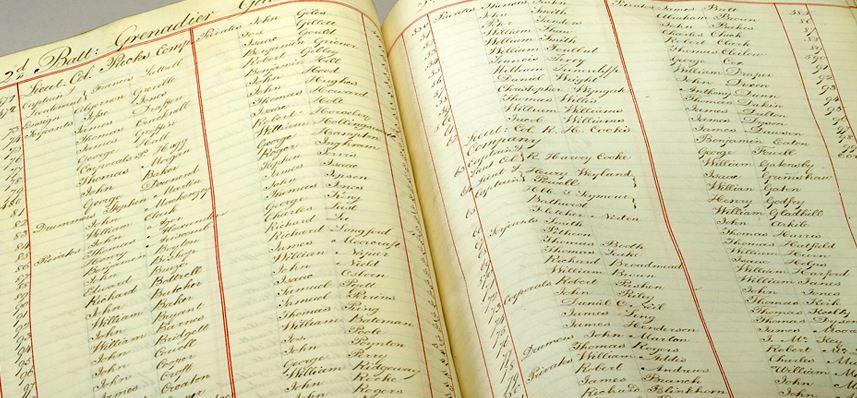
names list

A list of Waterloo participants was meticulously compiled

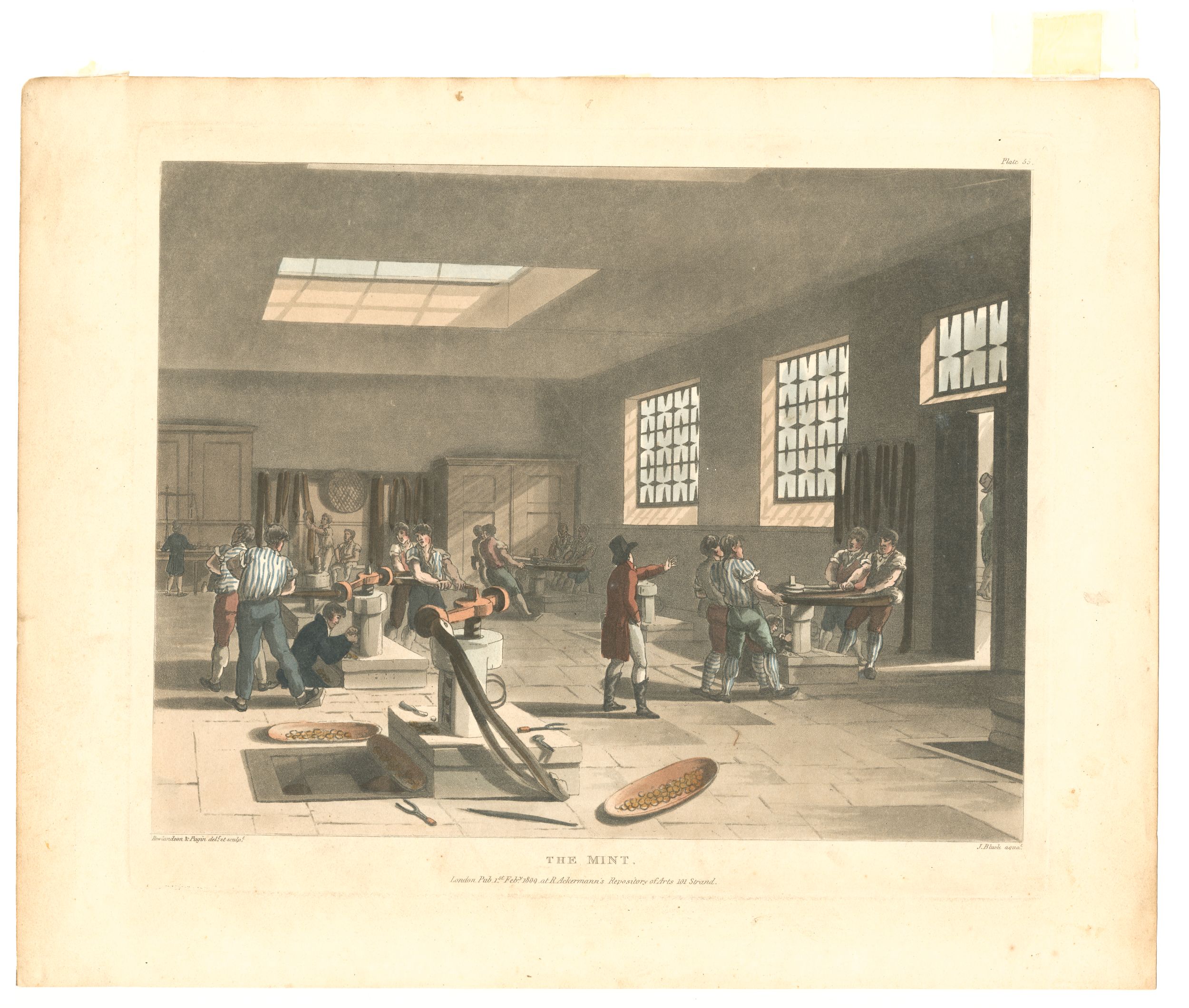
At the end of August, Wellesley-Pole detailed how the operation was to be coordinated. He had already sent a flurry of letters to the regiments asking for a comprehensive list of eligible soldiers. He also incentivised Mint staff by offering £100 prize money for finding a way to modify milling machines to allow the edges of medals to be individually inscribed. The level of detail of Wellesley-Pole’s instructions provides a fascinating insight into his methods.

The Moneyers’ work begins tomorrow morning (31 Aug) …and if the Rolling and Cutting continue without intermission for 10 hours each day, Sundays excepted…The Cutting may be finished on Monday night (4th Sept). The Blanks will begin Milling on Monday morning (4th Sept); they will be finished ready for annealing on Thursday evening (7th September). The annealing will be done on Friday the 8th Sept…There must be six sets of Marking Machines made for Lettering the Medals – 18 Sets of Letters are wanting for the Machines… When the two Machines are at work the Lettering may be completed in 30 days, viz at the rate of one piece a minute, for each machine working 10 hours a day. The six sets of Marking Machines will be ready for working on the 11th September. Supposing we begin to letter on Monday the 12 Sept, the Lettering may be finished by the 20th October….Mr Wyon will be ready with his Dyes by the 10th of Oct. If we work 8 Presses at the rate of a Piece per minute for each Press (working 10 hours a day) the Forty Thousand Medals will be struck in Ten days, and be ready for delivery on the 9th of November.

He demanded total commitment from all concerned. It is almost like a team talk.

I rely upon the…the utmost exertions… to complete the work. The whole grace of the distribution of the medals would be lost if any unavoidable delay was to take place in their issue; and, in the very perfect state of the machinery of the Mint, no excuse could be allowed to us by the public in such an event. You will be so good as to let it be generally understood that…no branch of the manufacture is to relax its efforts under an idea that it will be ready before any other branch is prepared to carry forward the work. Every person is to act as if the whole measure depended upon his individual exertions.
works at the mint

Wellesley-Pole was a great believer in teamwork

Progress was delayed after a fire at the Mint in September, then a late decision by the Prince Regent to strike the medals in silver instead of bronzed copper. The Bank of England received a request for 60 thousand ounces of fine silver on 19th January 1816, and incredibly the finished product was ready to ship by 3rd March. Wellesley-Pole wrote

I propose packing the Medals in Boxes marked on the outside so as to specify the Corps or Regiment to which the Medals within may belong; and there will be packed in each Box a copy of the List transmitted … The Name of each Officer and Man is impressed upon the edge of the Medal destined for him, and care will be taken to pack the Medals in the order in which the Names stand on the several Lists…I am in hopes that we shall be enabled to deliver finished Medals… at the rate of about 1000 per day from this time forward.

In all, just under 40,000 medals were awarded, with the vast majority sent out without fault in quality or individual inscription. Such a monumental logistical achievement was to prove a trial run for what was to follow at the Royal Mint under Wellesley-Pole.

pole signature

Another project successfully signed off by Wellesley-Pole

After the work was finished, Wellesley-Pole ordered 50 individually-inscribed medals as gifts to Ministers, senior Mint officials and friends. Everything was transparent and above-board: ‘The Deputy Master of the Mint will be so good as to pay the expense of these Medals and charge it to [my] private account’.
Yet Wellesley-Pole’s hard work met with some controversy as Peninsular War veterans felt justifiably aggrieved that those who were present at Waterloo—many of them raw recruits, who had never seen a shot fired in anger—should receive such a meaningful prize; while they, who had served the whole war, received nothing beyond a Parliamentary vote of thanks. If you know anything about Wellesley-Pole at this stage, such understandable yet also unfair criticism is about par for the course.

So Wellesley-Pole’s administrative brilliance and innovative team-building ethos at the Mint was once again subsumed by suspicion and hostility that seems to have dogged his entire career.

Never could this be better demonstrated than in Part 3 where Wellesley-Pole joins forces with another unpopular firebrand, namely Benedetto Pistrucci…

Sources Used

[1] Gurwood J., Wellington Supplementary Dispatches, (10 Volumes – London: Murray, 1871)

[2] British Library Manuscripts Add.MSS  39791

[3] Hayward J., Waterloo: The Medal, www.greatwarhistoricalsociety.com

[4] Royal Mint Museum (image of Waterloo Medal ledger)

Fitzroy Somerset gave his right arm for Wellington – but was it reciprocated?

wellingtonsmall   fitzroy somersetsmall

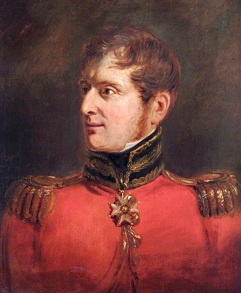
Brothers in arm? Wellington & Fitzroy Somerset

Perhaps the biggest cloud hanging over the military career of Arthur Wellesley, 1st Duke of Wellington is the perception that he was cold and unfeeling to his troops. Countless biographies remind us that the Iron Duke rarely showed his emotion. He was said to be prone to condescension to anyone that he deemed inferior – which was practically everyone. For many the legendary description of his men as ‘scum of the earth’ in 1813 underlines Wellington’s ruthless reputation – yet when the quote is used in full context the picture become less clear:

[these men are] the scum of the earth; it is really wonderful that we should have made them to the fine fellows they are

The above seemingly blatant insult could now be reinterpreted as Wellington’s appreciation for how far such lowly men had progressed under his command, though it was hardly a glowing compliment.  In fact there are many instances of Wellington’s sense of feeling in the arena of battle – and just how keenly he felt the loss of men under his command. Despite these occasions an over-riding sense remains that Wellington was never quite willing or able to give credit where it was due – even towards his closest military aides.

waterloo

Wherever Wellington went, Fitzroy was sure to follow (Waterloo 1815)

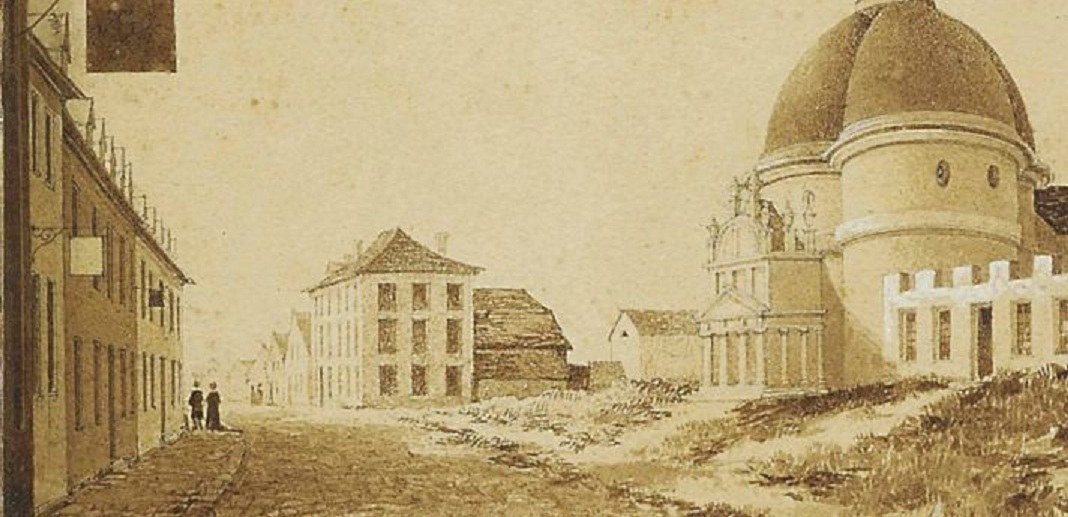
One such stalwart was Fitzroy Somerset, youngest son of the 5th Duke of Beaufort, who joined Wellington’s staff in 1807 and became his military secretary in 1811. In August 1814 Fitzroy married Emily Harriet Wellesley-Pole, Wellington’s niece (and Wicked William’s sister).  She was in Brussels with him and gave birth to a baby daughter just weeks before the battle of Waterloo. In the heat of the battle Fitzroy was shot in the arm by a French sniper, whilst he was fighting alongside Wellington. He was taken to a nearby farmhouse where the arm was amputated – but not before he insisted on removing a ring his wife had given him.


arm-loss siteAfter Waterloo, Fitzroy’s arm was amputated in this terrace (left)

One of the first duties Wellington had to perform on his return to Brussels was informing Emily of her husband’s situation, which can hardly have been the easiest news to impart to a young mother wrought with anxiety.

Shortly afterwards Wellington penned this letter to Fitzroy’s brother:

To His Grace to Duke of Beaufort
Bruxelles, June 19th 1815

My dear Lord
I am sorry to have to acquaint you that your brother Fitzroy is very severely wounded, and has lost his right arm. I have just seen him, and he is perfectly free from fever and as well as anybody could be under such circumstances.
You are aware how useful he has always been to me; and how much I shall feel the want of his assistance, and what regard & affection I feel for him; and you will readily believe how much concerned I am for his misfortune.
Indeed the losses I have sustained have quite broken me down, and I have no feeling for the advantages we have acquired. I hope however that your brother will soon be able to join me again; and that he will long live to be as he is likely to become, an honour to his country, as he is a satisfaction to his family and friends.
Believe me my dear Lord ever your most faithful servant
Wellington

It is plain how desperately sad Wellington was for the injuries sustained by his young protégé – and very touching (with the benefit of hindsight) to know that Fitzroy went on to fulfil his destiny as ‘an honour to his country’.
But questions arise as to the true measure of their relationship when we look at the many years of service that Fitzroy gave to Wellington  – suggesting that Wellington received much more than he was prepared to reciprocate.
Having endured Wicked William’s antics at the battlefront for two months in 1808, it must have come as a relief for Arthur Wellesley to find someone as reliable and discreet as Fitzroy Somerset amongst his aide-de-camp staff.  Over the course of 6 the next years Fitzroy became as essential part of Wellington’s command.

Even after the calamity of Waterloo, Fitzroy quickly learned to write with his left hand and remained part of Wellington’s inner circle. Following a stint as aide de camp to the Prince Regent, he returned as Wellington’s secretary in the latter’s new capacity as Master-General of the Ordnance in 1819. When Wellington became Commander-in-Chief of the Forces in January 1827, Fitzroy duly followed to become Military Secretary.  But hereafter came a parting of the ways since Wellington was obliged to relinquish command of the army when he became Prime Minister in January 1828. Fitzroy stayed on as Military Secretary until 1852 (the year Wellington died) – effectively becoming the Duke’s eyes and ears in army-related matters.

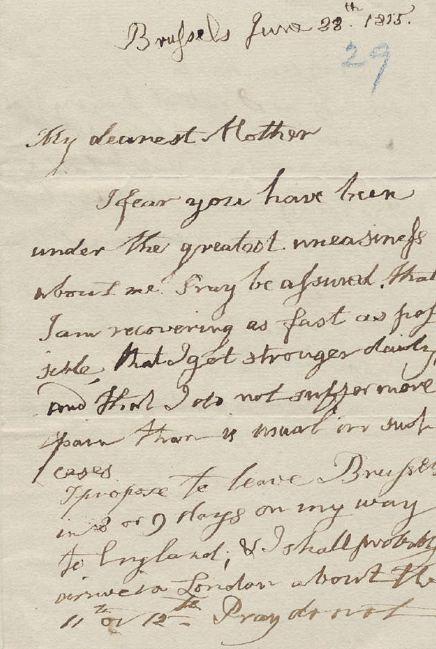
letter home to mum

Fitzroy’s first shakey left-handed letter to his mother

On the face of it there is plenty to suggest that Wellington took a very keen interest in Fitzroy’s career, and he certainly ensured that Fitzroy’s disability proved no hindrance to high office.  When we look at the recently auctioned Raglan Collection, there are many items that could only have been gifts bestowed on Emily and Fitzroy through Wellington’s personal generosity.
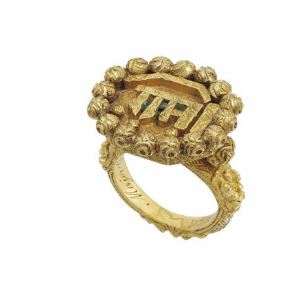
For example Lot 10, a ring allegedly taken from Tipoo Sultan’s finger after the Battle of Seringapatem in 1799, or Lot 78 which originally stood in Apsley House

tippo ring bustof wellington

But here’s the rub – Wellington’s private generosity ran counter to his preparedness to intervene in matters of public concern.  For we find that Fitzroy’s willingness to serve, his loyalty and commitment was rewarded with mediocre pay.

Throughout his life Wellington was exasperated by constant demands upon his patronage, privately acknowledging that his refusal to bow to such pressure when forming his first cabinet in 1828 lost him many friends. Even Charles Arbuthnot sulked for days on that occasion, but the Duke held firm and kept his friend from office. Why was this?

Wellington often said:

I am nimmukwallah, as we say in the East; that is…I conceive it my duty to serve with unhesitating zeal and cheerfulness, when and wherever the King or his government may think proper to employ me.   

This rigid sense of duty compelled Wellington to suppress private needs wherever they impinged upon matters of Government and state. It made him circumspect not only in regard to patronage for others, but also in terms of his own rewards.  For example in the aftermath of Waterloo when the nation was happy to lavishly treat their conquering hero, Wellington modestly opted for Stratfield Saye House – & returned £100,000 to state coffers. We can therefore see that Wellington’s over-riding desire to maintain high standards of decorum in office, created the dichotomy between private generosity and public mean-spiritedness.

bunker mentaility

In public life Wellington often felt isolated, but saw approachability as a weakness

Another factor separating Wellington’s private and public image was his hostile attitude towards the press, of which he once wrote… ‘blackguard editors of newspapers [attempt to] deprive us of our reputation by their vulgar insinuations’. Wellington repeatedly declared that he would never have anything to say to the ‘gentlemen of the Press’.  Acting like this he developed a bunker mentality, going out of his way to avoid accusations of impropriety in public office – making him appear hard-hearted towards genuine appeals for placement.

It is therefore unsurprising that Fitzroy Somerset was not raised to the peerage until after Wellington’s death, or that he remained a relatively poor man throughout his life. Both of these could (and perhaps should) have been tackled through Wellington’s influence. Fitzroy was created Baron Raglan in 1852 and given command of the British troops sent to the Crimea in 1854. He died there in 1855 from complications brought on by an attack of dysentery. Even in his final cruel days at the battlefront Raglan was heard exclaiming ‘What would Wellington have done, if he had been here?’  This poignant plea reveals how much Raglan appreciated the comradeship and ability of his old commander in arms.

raglan crimealarge

Dear Arthur, Wish you were here. Fitzroy x

In conclusion we must consider Raglan’s feelings when examining Wellington’s commitment to their friendship. We see that Lord Raglan idolised Wellington and seems to have had no sense of being taken for granted. The plain truth is that the Iron Duke would not have given his right arm for anyone, and those who knew him intimately would have accepted this unequivocally – because Wellington’s private character could never usurp his desire to serve the nation.

This blog does not shed more light on the complexities of Wellington’s character – but it does show that he was loyal and dependable, whilst also aloof and ungenerous. This combination is the crux of the continuing debate about Wellington the man.

As for Lord Raglan, his death proved him a wealthy man indeed for in 1858 some 1800 friends, admirers and comrades purchased Cefntilla house and estate in Monmouthshire, presenting it to his family in perpetuity – a fitting memorial to a man who indeed was ‘an honour to his country’.

cefntilla

Cefntilla Court, Raglan’s ancestral home

If you are interested in more about Wellington’s character you may like Wicked William goes to war or find out whether Emily Somerset was Wellington’s favourite niece.

Christie’s auction catalogue for the Raglan Collection (London, 23 May 2014) really is a triumph of academic research containing a veritable treasure trove of items of interest.

Raglan Rescue is an ongoing campaign to save Lord Raglan’s collection for the nation

I cannot recommend highly enough the superb new archive in Ebbw Vale and its helpful staff, where the Raglan MS is housed.

There are so many excellent internet and archival resources devoted to Arthur Wellesley, Duke of Wellington. However it is impossible to ignore the forthcoming Wellington Congress which will be staged at the University of Southampton from 9-12 April 2015. This is a great way to hear many diverse papers about the life and times of the Duke of Wellington, and it is not too late for those wishing to submit a paper and be part of this event celebrating the bicentennial of Waterloo. Who knows? I might even be there!