Finding Wanstead in Thomas Hood’s Tylney Hall

Overview of Thomas Hood & Wanstead

Review of Tylney Hall | Finding Wanstead in Tylney Hall  | Black representation in Tylney Hall

Up the slope Wanstead Park

Hood conjured a vision of Wanstead Flats – not Wanstead House

The overview to this blog looks at Thomas Hood’s impact as a poet and wry observer of the joy and hardships of life in the early decades of the nineteenth century. As explained, his only novel Tylney Hall (1834), gave readers false hope of discovering what actually happened at Wanstead House, nearby ancestral home of the Earls of Tylney –  which had been suddenly and brutally demolished less than a decade earlier. Such a glaringly obvious deceit within the novel’s title undoubtedly upset readers. The Literary Gazette echoed this widespread disappointment

It was inferred that the private histories of the Wellesley and Long families had furnished matter for the novel…. Accordingly, not a few copies travelled eastward, through Stratford-le-Bow, but, of course, to the signal discomfiture of the speculators [because] the figures were not drawn from living models

I am fascinated by the fact that the central character – from whose perspective we follow events – is a black man – Not a stereotypically menial representation found in the background of much Georgian art, but a wealthy, educated and well-connected black man, with a profound understanding of the prejudice he encounters. What’s more he is not the only black character in the book. I thought this plot-device would have set alarm bells ringing as to Tylney Hall ‘s credibility. But having examined several contemporary reviews of Hood’s novel – both good and bad – I find no evidence to suggest that the presence of black people of worth was anything out of the ordinary to late Georgian readers.

middling heat in the west indies 1817

Tylney Hall avoids traditional black stereotypes

So how much, if anything, does Tylney Hall represent the geography and social fabric of eighteenth century Wanstead? I will answer this question in two sections, firstly looking for physical evidence of Wanstead’s presence – and secondly questioning whether the presence of black (or Asian) people in that part of the world was as commonplace as Tylney Hall implies

1. Finding Wanstead in Tylney Hall

It is important to remember that Hood was often unwell during his years at the Lake House. Thus the writer had to rely heavily upon his surrounding neighbourhood to create the backdrop for Tylney Hall. From the outset Hood makes no effort to disguise the fact that Wanstead is the setting.

Rabbits1900

The Three Rabbits was within walking distance of Hood’s home

The opening chapter of Tylney Hall  takes us to the Rabbits public house ‘set in a bleak wasteland called the Flats…On the other side stretched an immense park, behind an angle of which lay perdue a small village.’ Straight away the geography of Wanstead is laid before us – from Manor Park’s Three Rabbits pub in the south up to the village beyond Wanstead Park. Hood gives a lovely description of the pub and its characters, including their regular whist drives. We also learn that the local coaching inn, which stands outside the grounds of ‘Tylney Hall’ is called ‘The Green Man’  – not just the same name but the same proximity of Leytonstone’s Green Man pub to the gates of old Wanstead House.

green man

The Green Man Inn (Leytonstone) features in Hood’s Tylney Hall

Tylney Hall is less obviously a replica of the real Wanstead House. Perhaps Hood never visited Wicked William’s Palladian palace before it was demolished, for interior descriptions of Tylney Hall are scanty. However Tylney Hall does possess ‘a great many Gobelin Tapestries’ – copying one of the main treasures advertised for sale by George Robins in 1822, suggesting that Hood may have seen or possessed an auction catalogue. External features of Wanstead House – such as the stables (still standing today) and the octagonal Basin are replicated by Hood for the fictitious Tylney Hall

gobelin tapestry

Gobelin Tapestries prominently featured in Robins’ auction catalogue (1822)

Hood’s lovely descriptions of the park, lake and waterways around ‘Tylney Hall’ can only be picked up and appreciated by readers familiar with the landmarks in question. We can therefore conclude that Hood’s novel is definitely a homage to Wanstead Park.

2. Finding black people in Wanstead

cruickshank from the west indies

West Indian immigrants satirised by Cruickshank (1824)

Recent research has shown that black people were fairly commonly employed as servants in wealthy or titled households during the Georgian era. As such many were educated to a high-level commensurate with their status within the hierarchy of the home. In many cases these families contained mixed race children or servants – either of whom would have enjoyed the protection of their wider family group. Those who returned from service in the East India Company often settled in close knit ‘Anglo-Indian’ communities – The writer William Makepeace Thackeray  (1811-1863), who was born in Calcutta and returned to England in 1815 to complete his education – lived in one such community – sticking together to overcome local resentments. Another example may be found in the story of Dido Elizabeth Belle, which has recently been made into a film. But most importantly, there was a general influx of foreign settlers in Britain’s urban areas from the eighteenth century onwards. By the 1790s significant immigrant communities, arriving from Africa, the West Indies or Asia – either aboard merchant ships, or demobbed military/naval conscripts. In London, for example, the slums around St Giles were considered to be black ghettos.

During my research on ‘Wicked William’ of Wanstead House I discovered that during the 1790s the Wellesley-Pole family regularly opened a soup kitchen from their home in Savile Row – This weekly event was attended by such numbers of homeless black immigrants that they were eventually ordered to close it to keep the peace.

the rabbit salesman

For many,  black people were a regular feature of everyday life

So, let’s take these findings to the Wanstead area. First of all we can see that a great many estates in and around Epping Forest were bought up and subsequently developed by East India Company employees and merchants. Given its relatively close proximity to London and the docks – it is therefore perfectly reasonable to conclude that Hood’s Tylney Hall does reflect the reality of black people – rich and poor, entitled and subservient – who may have lived or worked around Wanstead at this time.

In my final part I will take a closer look at three black characters from Tylney Hall to get a better understanding of their place in society and the interaction they had – both good and bad – with those around them. I want to show that for Hood at least – there was a true respect for black people. Perhaps Hood was reflecting the prevalent public enthusiasm for black culture following the recent Abolition of Slavery Act (which gained Royal Assent just two months prior to publication). But I prefer to think his experience of living amidst the poor and under-privileged around Wanstead was the more fertile ground where his characterisations were formed

+++

Paul Edwards has written a great article in History Today looking at black personalities in Georgian England

For more information on the subject of black history try this select bibliography:

Reconstructing the Black Past: Blacks in Britain 1780-1830 by Dr Norma Myers

The Fortunes of Francis Barber: The True Story of the Jamaican Slave Who Became Samuel Johnson’s Heir by Michael Bundock

Untold Histories: Black People in England and Wales During the Period of the British Slave Trade, C. 1660-1807by Kathleen Chater

Black England: Life Before Emancipation, and  Black Victorians/Black Victoriana – both by Gretchen Gerzina

London In The Eighteenth Century: A Great and Monstrous Thing  by Jerry White

Finally you may like to read more about the Wellesley-Pole’s charitable work, as they attempt to rescue a tramp. If only their son Wicked William of Wanstead House had the same attitude when he went amongst the needy
A Review of ‘Tylney Hall’ by Thomas Hood

Overview of Thomas Hood & Wanstead

Review of Tylney Hall | Finding Wanstead in Tylney Hall  | Black representation in Tylney Hall

tylney hall cover

The fact that Tylney Hall (1834) is Thomas Hood’s only published novel implies that he was not really suited to this discipline of writing – especially as his reputation for humorous articles and sublime poetry was already established. This may be true given the mixed reviews Hood received for this three volume story. But the parlous state of Hood’s finances and his desperately poor health would also have compelled him to focus on shorter more intense creative output – just to make ends meet. Furthermore, Hood was actually working on a second novel entitled ‘Our Family’ at the time of his death – so we must assume he was not too bruised by the experience of writing Tylney Hall.

This post provides an overview and critique of the plot – and it does contain some spoilers!

Plot Synopsis

eppinghunt-3

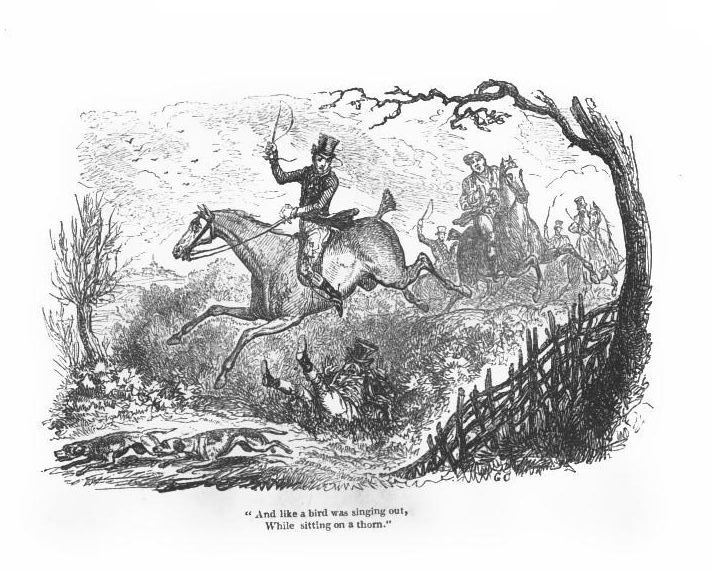
This novel is set in the 1700s in a location in the environs of London. The eponymous mansion of Tylney Hall is owned by Sir Mark Tyrrel, a widower with two young sons. Sir Mark is a keen sportsman enjoying warm relations with his friends, relations and employees. His sons are as different as brothers can be. Older boy and heir-apparent Ringwood is the outdoor type, whereas Raby is a bookish, more sensitive lad who prefers poetry to the hunt. Their lives change when Sir Mark’s younger brother returns from the West Indies, barely clinging to life – bringing with him a scared and frightened boy who he identifies as his son. There is an awkward moment in which Sir Mark exclaims ‘He’s of a cross breed, he’s as brown as Gypsy Jack’. But when he sees how upset he has made the boy he quickly makes amends

‘Come, come’, said Sir Mark, laying his broad hand with an encouraging slap… ‘what I said about the skin was only for the sake of giving tongue – a good horse can’t be of a bad colour.’

As his brother lies dying, Sir Mark pledges ‘to back him through this world, and while I live I’ll ride with him round the course.’ This is an important scene because it instantly shows us that the most powerful character (Sir Mark) takes the boy to his heart – and supports him unequivocally thereafter.

black 2

Sir Mark nicknames his nephew ‘St Kitts’, alluding to his island of origin, and the narrator Hood (for the most part) refers to him as ‘the Creole’. In fact we have to wait until page 43 before the boy’s Christian name is revealed; ‘Walter’ – but I think this is a plot device emphasising Walter’s status as an outsider, rather than an outright bias against him.

The main storyline of Tylney Hall revolves around Walter’s relationship with his cousins, Ringwood and Raby. Walter is often innocently caught up in the cross-fire when the brothers fall out (as siblings do) – because whichever side he takes – both brothers end up resenting him. Ringwood in particular can be nasty and continually questions Walter’s legitimacy, suggesting that he was born out of wedlock. Perhaps the most shocking attack comes when Ringwood names his new horse ‘Brown Bastard’ – in retaliation for a betrayal he wrongly believes Walter has committed. Surprisingly the accusation of bastardy is most hurtful to Walter because he feels unable to stand on an equal footing with the brothers because of it.

fortune teller

Walter befriends a mysterious fortune-teller in the forest

Sir Mark keeps the peace at home and always supports his nephew when arguments arise, but Walter’s resentment continues to grow as a series of misunderstandings (on either side) increase his antipathy to Ringwood. Just when it seems Walter will flip, he meets a mysterious black woman in the forest who claims to have been his nursemaid in the West Indies. She counsel’s Walter to bide his time and crucially provides him with documentary evidence proving his legitimacy – the marriage certificate for his parents:

the reproach of my birth is removed; that sting will still be aimed at me, but it has lost its venom… I am now Ringwood’s equal in all but expectations

All three boys are educated at Oxford, returning to Tylney Hall during the holidays. One summer Raby meets and falls in love with Grace Rivers, the daughter of a local magistrate. But the lovers are thwarted after Sir Mark announces he has long-since agreed that oldest son Ringwood shall wed the magistrate’s daughter. Walter ought to have been pleased to see this serious rift between the brothers, but instead the news awakens the depth of his own feelings for Grace, inciting a jealous hatred towards Raby too.

cockney sportsman

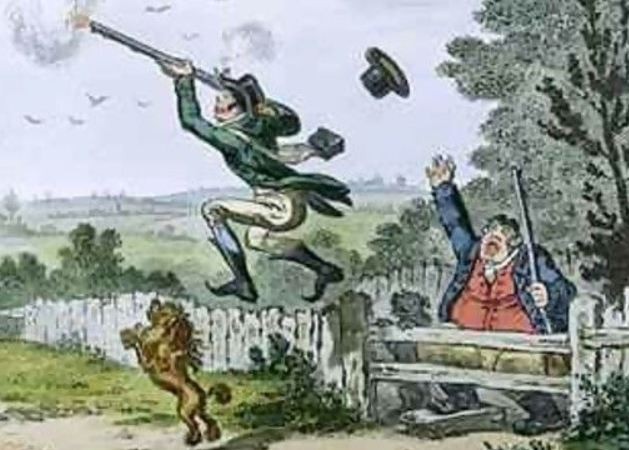
Raby is no sharp-shooter, preferring poetry to potshots

Walter knows that Sir Mark intends to buy him a commission into the army when he graduates from Oxford  – but he now decides he wants more. Observing Sir Mark’s disappointment at Raby’s complete inability to use a gun, Walter offers to give Raby shooting lessons, and takes him to a secluded part of the Flats ostensibly to shoot hares. Raby fires the gun when he sees movement in a copse and to his utter shock finds that he has shot his brother Ringwood dead. We are not told whether Walter engineered the shooting – but he does take advantage by urging Raby to flee as he will surely be found guilty of murder, given the well-known fact of the breach between the brothers.  That night a thunderstorm floods the area  – and a few days later a body is plucked from the river wearing Raby’s clothes – indicating that he has died attempting his escape.

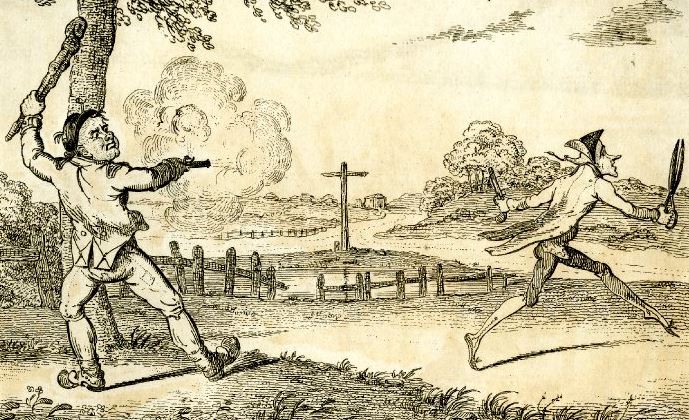
Sir Mark is devastated by this double tragedy and dies less than a month afterwards. Walter inherits the estate but he cannot rest easy as the first the local squire then the old woman in the forest threaten to expose him. As the months pass by, Sir Walter (as his is now known) begins to relax – and looks to complete his final conquest – that of Grace’s heart. This proves a bridge too far as Grace rejects his advances, and accuses him of skulduggery. Returning home from this devastating setback Sir Walter meets the squire who produces a letter confirming Walter’s hand in Ringwood’s death, and challenges him to a duel. Walter sinks to new depths of dishonour by attempting to shoot his adversary in the back while he is still taking the 10 paces – The bullet misses its mark and the squire fatally wounds Walter by return of fire.

duel
Bad-boy Walter shoots (but misses) the squire while his back is turned

All this is witnessed by a passing stranger – who happens to be Raby on his way home, after deciding to face the music. The younger brother is not after all – having swapped his clothes with a tramp before he made his escape. Walter has the decency to make a dying confession fully exonerating Raby, enabling him to marry Grace and reclaim Tylney Hall as its rightful owner.

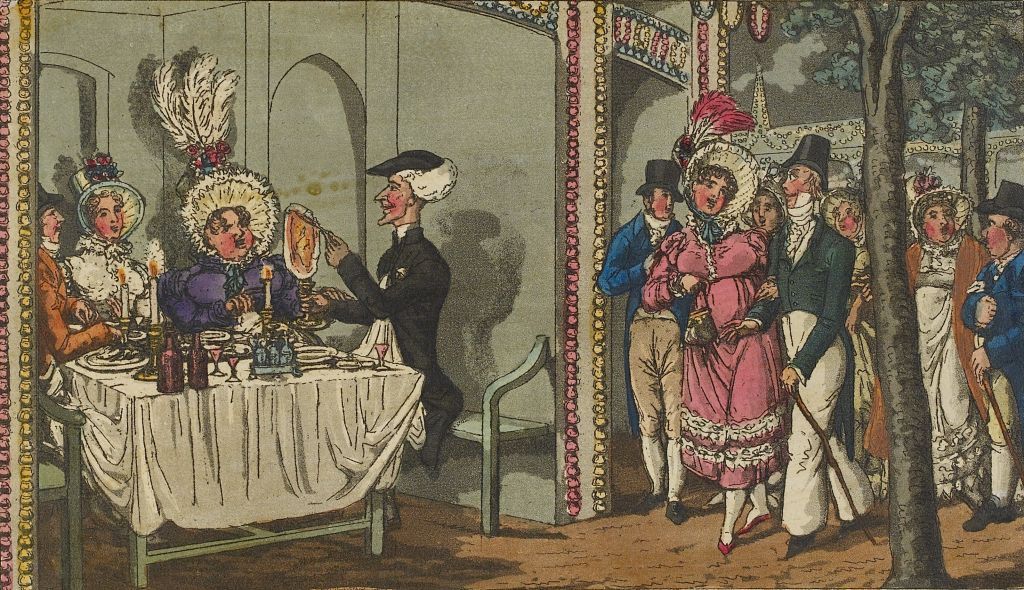
There are a lot of deaths in the final part of the book, but these are not entirely unexpected as we have seen the resentment build inside Walter. Some of the comic set-pieces, such as an elaborately described fete champetre – held at the home of social-climbing snob Mr Twigg (and turns out disastrously bad) – contain serious events which help turn the screw of Walter’s hatred. It is hard not to empathise with Walter after the treatment he receives from Ringwood & though Walter does turn out to be a thoroughly bad apple in the end, Hood succeeds in showing that this is in some part down to the ordeal he has endured.

Style of Writing

When Thomas Hood wrote Tylney Hall he considered himself ‘young in the path in which he was treading’ and readily acknowledged that characterisation failed to an extent because ‘he could not write love scenes’. It is certainly true that the largely comic style of narration makes it difficult for Hood to switch emphasis to the darker side without jarring the flow. When looking for the absurd, such as portrayed by the character ‘Unlucky Joe’, Hood’s style of writing resembles the early works of Thackeray, who published The Yellowplush Papers around the same time. Both men earned their living contributing to popular magazines such as Punch, and both were fans of the ribald sense of humour promoted by artists such as Rowlandson. The fete scene is particularly reminiscent of Pierce Egan’s Life in London (1822) – a very influential but largely discarded masterpiece of Regency satire.

Hood’s reputation as ‘king of the punsters’ is certainly well lived up to, but perhaps too much to sustain what is a genuinely interesting and sometimes gripping plot. The whole piece comes across as a kind of bridging point between late Georgian bawdiness and the mawkish sentimentality that was about to dominate Victorian literature. It is nonetheless a worthy attempt to tackle the important and still relevant subject of privilege and prejudice.

Most of all I enjoyed its understated social commentary, in particular on the subject of ‘legitimacy’ defined by the arbitrary fate of being born on the ‘wrong side of the blanket’ – for which Walter laments

Tis no fault of mine. I had not the ordering of my birth…

Justice may award the shame to the parent, but the prejudice of man entails it on the child.

Rating 4 out of 5

Tylney Hall is more than just a curiosity, and is a very readable story.  The strength of Hood’s central black characters seems very innovative – perhaps ahead of its time. Transformed into a screenplay this could produce a powerful and unique insight into black culture in Georgian Britain.

Part Three of this series examines how accurately Tylney Hall represents Georgian Wanstead – the area upon which it is based

+++

There is a dearth of readily available information on Tylney Hall  – Gerald Massey’s website remains the best resource for Thomas Hood generally but I also recommend The Poetry Foundation

Finally, why not check out this collection of Hood’s memorable quotes

Elsewhere on my blog I have examined Hood’s relationship with the Epping Hunt. For other sporting related posts you might like the story of prize-fighter Tom Shelton or a brief history of Royal Ascot

Thomas Hood, Tylney Hall & Multicultural Wanstead

Overview of Thomas Hood & Wanstead

Review of Tylney Hall | Finding Wanstead in Tylney Hall  | Black representation in Tylney Hall

 thomas-hood-5

Thomas Hood (1799-1845) is a shamefully overlooked 19th century literary great – for whom a renaissance must surely beckon. His obscurity is all the more surprising when we consider how immensely popular he was throughout the Victorian era. Try Googling him and you will find scant reward. During his own short lifetime Hood overcame debilitating illness and grinding poverty to become a national treasure. He contributed humorous articles to popular magazines such as Athenaeum and Punch & also single-handedly ran his own magazine The Comic Annual (1830-42). He wrote just one novel – Tylney Hall (1834) – which I will be discussing in this blog, but poetry was his real forte.

sonnet to vauxhall

Hood’s Sonnet to Vauxhall – illustrated by Rowlandson

Hood’s output was created at great cost to his health. In his early days he was a talented engraver working alongside artists such as Thomas Rowlandson (a man with whom he later often collaborated), but was compelled to abandon this profession and seek an outdoor life to recover his strength. It was a tough existence for by 1841 when Hood became an invalid he was only saved from financial ruin thanks to the intervention of Prime Minister Sir Robert Peel, who was a great fan of his works. When Hood eventually died his family were granted a state pension – and the public continued to adore him. A memorial was later built by public subscription in Kensal Green cemetery. As the century progressed Hood’s poetry and witticisms remained familiar enough to be often quoted in ordinary conversation. As late as 1903 William Rossetti (of Pre-Raphaelite brotherhood fame) described Hood as ‘the finest English poet between the generations of Shelley and Tennyson’. However, since these heady heights of appreciation Hood has quietly slipped into obscurity, and has long-since vanished from the modern-day English literature curriculum.

 lakehouse

Hood wrote Tylney Hall whilst living in Wanstead Park

Yet one bastion of recognition for Thomas Hood still remains intact, and it can be located in the environs of Epping Forest, and most particularly Wanstead. After his marriage in 1824 Hood lived in Islington but made frequent visits to the countryside beyond London,  especially to Epping Forest, and he formed a deep affinity with the area. I have already described how Hood encapsulated the rough and tumble tradition of the Epping Hunt (1829), recording for posterity the rituals of that annual cockney jamboree. He was also fully cognisant of the scandalous loss of Wanstead House, ironically benefitting from its destruction by renting the Lake House in Wanstead Park from ‘Wicked’ William Long-Wellesley.

wickedwilliam


Wicked William – Hood’s shady landlord (1832-35)

Hood’s arrival in Wanstead in 1832 coincided with Wicked William’s enforced exile – so it is unlikely that landlord and tenant spent much time together. Though he was always a feckless waster, William was notoriously generous and probably offered Hood terms well below the market rate. Perhaps Long-Wellesley’s vanity was sated by Hood’s eulogy to the Epping Hunt – because the men were already acquainted. This unlikely friendship endured, for it is recorded that William regularly visited Hood’s sickbed in 1837, when both men were living in Belgium.

eppinghunt-1

This scene from The Epping Hunt  shows Hood preferred whimsy to satire

Hood was active during a time of great social and technological change – as the long 18th century drew to a close and young Queen Victoria assumed the throne. From the outset of his career Hood purposefully rejected the brutality of late Georgian satire which sought to undermine its subject, preferring to adopt a kinder and more affectionate style. His whimsical humour presaged the rising sense of decency and respectability throughout society, foreshadowing the sentimentality and mawkishness which defined popular Victorian literature. Hood’s style is very like Thackeray’s early writing, light-hearted and amusing – never over-analytical.

Despite his comic reputation, Hood was capable of portraying the biting hardship of contemporary poverty. For example, Song of the Shirt (1843) highlighted appalling working conditions of the era – where Hood showed remarkable foresight in writing from a female perspective – describing a needleworker’s daily struggle for existence and the cruelty of her employer

song of the shirt

Despite being penned by a man, Song of the Shirt ought to be considered one of the most important proto-feminist works of literature ever written. It was based on a contemporary court case involving a woman who was forced to sell her employer’s equipment simply to put food upon the table – a decision that led to prosecution. The case is long forgotten but this poem became a standard-bearer for highlighting the effect of inequality upon humanity, inspiring a generation of mid-Victorian artists

bridge of sighs

Opening stanzas of Bridge of Sighs 

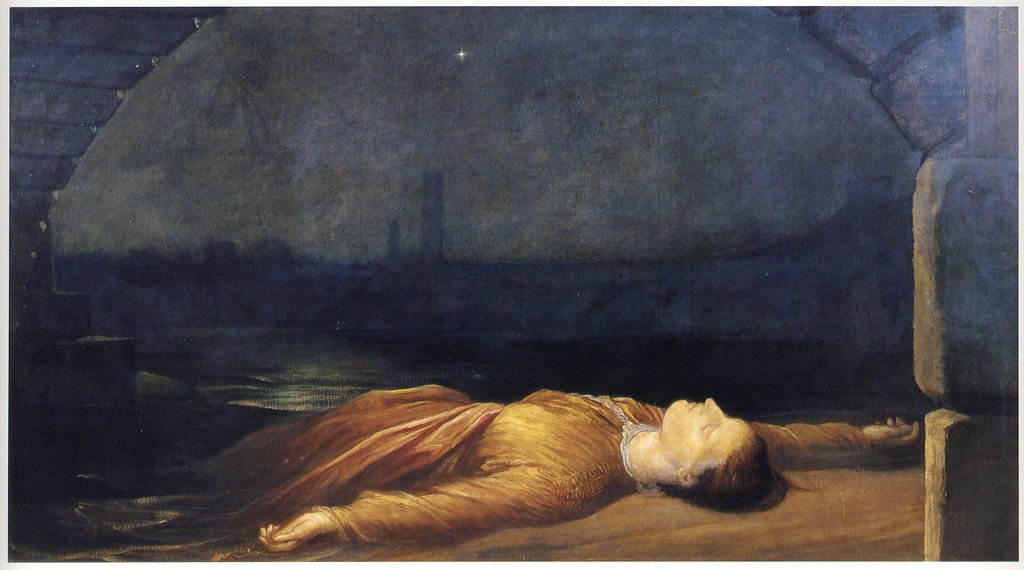
Another poem Bridge of Sighs (1844) again draws on real life by recounting the tale of a homeless young woman who committed suicide by throwing herself from Waterloo Bridge in London – At a time when suicide was frowned upon Hood declares that whatever sins she may have committed are cleansed by the sadness of her death

 found drowned

Hood’s poem inspired Found Drowned by Frederick Watts (1852)

Were it not for Hood’s own untimely demise he may have further developed his talent for social commentary. But in death as in life Hood has been unlucky, for the gentle observational humour of his earlier years has become his posthumous trademark.

grave

I will be turning to Hood’s only novel Tylney Hall in the second part of this blog. Written in 1834, whilst he was living in Wanstead, the title is a very thinly veiled reference to Long-Wellesley’s once great mansion, Wanstead House. But attempting to cash in on Wicked William’s story was an unwise move because it raised expectations that Tylney Hall would reveal the truth about Wanstead House, and satisfy public curiosity as to why it was demolished. – This led to criticism and affected sales, forcing Hood to add a note in the preface explaining that ‘Tylney Hall’ alluded to the topography of Wanstead Park, but not its disreputable owner.

wansteadcolour

Tylney Hall – not about Wanstead House

It is easy to see why a desperately poor artist with young mouths to feed would use any means possible to promote his work. But by choosing ‘Tylney Hall’ for a title Hood inadvertently and fatally undermined his novel – by unnecessarily calling into question the accuracy of its content.

Easter Monday 1817 by Henry Thomas Aitken

Tylney Hall does show Wanstead as it was to Thomas Hood

Because Hood’s works were always inspired by his own life experiences I believe that the world created in the pages of Tylney Hall should not be rejected, as we are offered a tantalising and surprising viewpoint of life in multicultural Wanstead 200 years ago. Additionally we find perhaps the first English novel to centrally feature strong and noble black characters, to whom we can sympathise and relate. The second part of this study will examine this more closely, proving that that Hood really was ahead of his time thus worthy of a new and more fitting appraisal.

Dr Sara Lodge has written a comprehensive critique of Thomas Hood in her book Thomas Hood and nineteenth-century poetry: Work, Play, and Politics (Manchester University Press, 2007)

To read more of Thomas Hood’s poems click here – or try a tasty selection of his best quotes

Gerald Massey has an excellent website devoted to Thomas Hood

You may also like to read about more Epping Hunt related buffoonery courtesy of Wicked William or to know about his short-lived military career.

6 Reasons why France should salute the Iron Duke

wellington

With the celebrations of the bicenntenial of Waterloo almost upon us, it obvious that France should commemorate the end of Napoleon’s fascinating rule rather than focussing on what was a decisive military defeat. However it should not follow that the Duke of Wellington should be portayed as the ‘baddie’ responsible for drawing the curtain down upon one of the most exciting periods in French history. To do so would be an injustice to the Iron Duke given that he was a confirmed Francophile – whose dispute was directly with Napoleon, and concern for the French citizens was always paramount.

wellington at waterloo

The recent creeping campaign to undermine Wellington’s role at Waterloo is, to me, bad enough. But the attendent lack of recognition for his important role in PROTECTING France both during and after the conflict is a step too far.

Thus I have drawn up six brief reasons why Wellington ought to receive some grudging Gallic recognition

1. Military Training

angers

Arthur learned his trade in France

Anyone familiar with the life and career of the Duke of Wellington will know that at the age of 16  (when simply known as Arthur Wellesley) he enrolled at the French Royal Academy of Equitation in Angers. It was in France that Arthur first showed any signs of talent. At Angers Arthur learned equestrian skills and became very fluent in French, which was to serve him well in future. Crucially Arthur met fellow students, some of whom were victims of the French Reign of Terror – others who rose through the ranks to fight against him under Napoleon – he never forgot the friendships made or the bonds he felt towards France

2. Wellington the Francophile

buhl

Wellington adored French art and furnishings

Wellington’s love for the French people extended way beyond the ties of personal friendships. For he was also a great admirer of French culture, and particularly its art and furnishings. Whilst Napoleon was exiled to Elba in 1814 Wellington was in Paris – not lording it over the people, but negotiating fair prices to buy works of art including French Buhl furnishings. He set an example by not acting as the commander of an army in occupation, but immersing himself into the cut and thrust of Parisian life and becoming a consumer – paying the going rate without quibble.

3. Military Campaign in France 1813-14

toulouse1814

Wellington’s civilised entry into Toulouse, 1814

Towards the end of the Peninsular War in 1813 Wellington went to great lengths to ensure his armies pouring into France acted with absolute decorum towards the peasantry. Anything taken was always paid for, crops were not trampled down, and the British-led army refrained from hostilities expected from any invading army.

4. After the Battle of Waterloo

waterlooaftermath

Horrific aftermath of Waterloo

Anyone who thinks that Wellington lacked emotion towards his troops would be well advised to read the correspondence of Thomas Creevey (1768-1838), better known as the Creevey Papers. Though Creevey was not a fan of Wellington, he describes the Iron Duke returning to the fields of Waterloo and Quatre Bas in the days following the battle to aid and assist French and Allied troops alike. Wellington is horrified to find one French soldier unattended and went to his aid – apologising for his situation and calling for medical assistance. The pain Wellington felt for Waterloo encompassed all participants; he never demonised the French.

5. Respect for the enemy

marshall ney

Wellington could not stop Bourbon vengeance : Marshall Ney

Throughout the Peninsular War Wellington held a more than healthy respect for French generals opposing him in the field. To those who claim that Wellington was over-cautious it might be argued that he was wise to avoid meeting renowned military leaders –  unless it was on his own terms. One such general, Marshall Ney, survived to rejoin Napoleon at Waterloo – having been retained by the restored Bourbon monarchy. After Waterloo the Bourbons decided to make an example of Ney. When Wellington heard he went to great lengths to appeal for clemency, but the King refused to speak with Wellington – & Ney was executed by firing squad. His death divided opinion in France, but showed Wellington to be a man of honour. The Duke’s respect for the enemy went right to the top – and certainly cut both ways. For, when his number was up, Napoleon offered to surrender to Wellington only. I have always thought it a shame that Wellington passed up the opportunity to meet Napoleon at this time as I am sure their conversation would have been legendary.

6. Protection of Paris

occupation

The British – a very civilised army of occupation

Perhaps the most important, yet easly forgotten, role Wellington played in the war against Napoleon was by his presence at Paris. Arriving from the east: Russian, Prussian and Austrian armies were intent upon revenge for the many atrocities their armies and people endured at Napoleon’s hands -and it was almost second-nature for ordinary soldiers to rape and plunder the vanquished population. But while Wellington was around, there were be no horrific reprisals. Draconian punishments befell any British soldier seen to undermine relations with their hosts – and this policy was greatly influential in restraining other occupying troops. This ultimately helped to restore good relations on all sides. The Congress of Vienna stands up very well because of this international civility, especially compared with the bitterness and revenge that bedevilled the Treaty of Verseilles a century later.

louvre

The Louvre, Paris c.1815

In some respects it may be argued that Wellington’s admiration for France went too far – for he played a major role in preventing art treasures amassed at the Louvre being reclaimed by those from whom Napoleon had seized them.

Conclusion

It was a good thing for France that the Duke of Wellington saw his task as the defeat of Napoleon and not a vendetta against its people.  Whatever the ifs and buts about his credit for the Battle of Waterloo, the Iron Duke WAS crucial in protecting France and enabling her to restore relations with the rest of Europe. Though the people of France could never love Wellington, I hope at least they can acknowledge that he was not the worst of enemies to have at a time of military defeat.

loius return

Bringing back the Bourbons? – Not so popular there Arthur!

If you have enjoyed this post you may be interested in Wellington and Fitzroy Somerset at Waterloo or to know how Wicked William rated his illustrious uncle.

Find out more about the production of the Waterloo Medal, via Wellington’s brother Wellesley-Pole

For news, views and information on this year’s Waterloo celebrations visit Waterloo 200 or Waterloo2015 – not forgetting the simply splended Unseen Waterloo

If you live in London, why not visit Apsley House and see the Duke of Wellington’s home

Last but not least, I must mention Geraldine Roberts’ book Angel and the Cad, which is launched by MacMillan on June 18th – Yes, the bicenntenial of Waterloo!!  – in which the Duke of Wellington & Waterloo feature heavily.

Any comments or feedback, as ever, would be greatly appreciated. Otherwise tune in for more Wellesley-related articles!

No Longer Minted : Wellesley-Pole’s Exit (1823)

Wellesley Pole’s departure and legacy

Intro | Waterloo Medal | Pole & Pistrucci | The Great Re-coinage | Exit & Legacy

wwp by pistrucci

Wellesley-Pole leaving medal – by Pistrucci

The bold manner in which you devised, and… executed one of the most difficult works…during the present Reign, or possibly any former one, does honour to the name of Wellesley

Sir Joseph Banks – Letter to Wellesley-Pole 21st June 1817

In the summer of 2009 it came to light that the Royal Mint had made a terrible blunder with the redesign of the 20p piece, meaning that for the first time in over 300 years an undated British coin entered circulation. Any one lucky enough to find one of these ‘mistakes’ could reasonably be expected a windfall, since coin experts placed their value at £50

feck up 20p

A error such as this is indeed a rarity for the Royal Mint, especially given the advances in technology since the days of Wellesley-Pole and Pistrucci. Moreover it brings sharply into focus the amazing logistical achievements of the Waterloo Medal and The Great Recoinage. In less than three years at the Mint Wellesley-Pole revolutionised the issue of war service medals, and then exchanged the entire silver currency of Great Britain without losing a single bag of coin from the 57 million issued and distributed the length and breath of these islands. By any standard this is a mind-boggling achievement, which occurred during years of civil strife – when there was no proper transport and communication system in place.

big red book

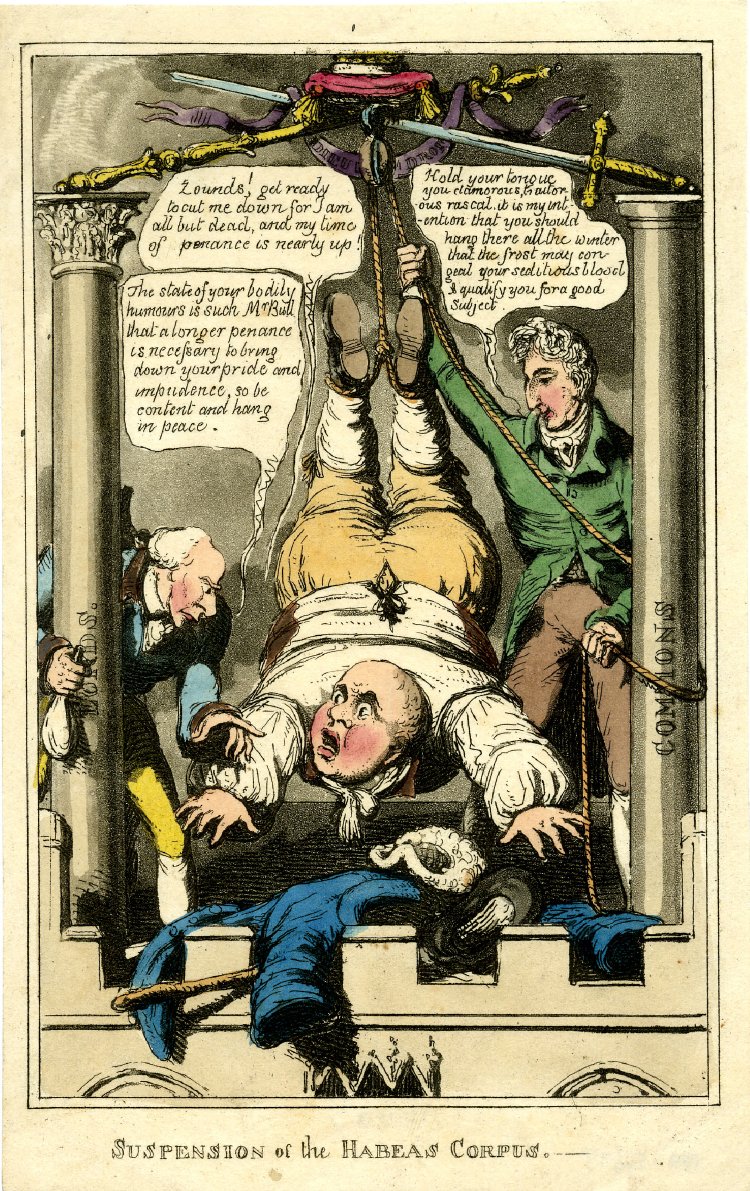
This 1818 satire has Wellesley-Pole is saying ‘I swallow £10,000 per annum and do very little for it.’

But what of the next five years, 1818-1823, I hear you ask. What did Wellesley-Pole do next? Well the answer is – not a lot. The problem was that Wellesley-Pole was up to any task set him, but after the new silver currency in 1817, save for the introduction of the gold sovereign, and a few changes after George IV came to the throne – Wellesley-Pole was not called upon to any great extent. This is not to say that the Royal Mint failed to develop and thrive under his command, more that it was really rather routine for a man of his administrative capabilities.

caslereagh

Wellesley-Pole was not vocal enough in support of Government repression

After 1818 Wellesley-Pole was angling for a new role in Government – His long-term ambition was to become First Lord of the Admiralty, something dear to his heart as a former naval officer and services as Secretary to the Admiralty (1805-1808). But he needed advancement to the peerage to make this possible. The only problem was that Lord Liverpool’s government had barely any Ministers sitting in the House of Commons. The Prime Minister really wanted to see Wellesley-Pole at his fiercest in the Commons alongside Lord Castlereagh – defending the crackdown on civil liberties. Instead Wellesley-Pole made repeated requests for advancement, so Liverpool became instead convinced that the time had come to get rid of him. In 1814 Wellesley-Pole had been an important pawn in the political rapprochement with the Duke of Wellington – but when the Iron Duke himself joined the Cabinet in 1818, Liverpool realised that one Wellesley was quite enough – and so the dye was cast for Wellesley-Pole’s removal

Ultimately it was events elsewhere which kept Wellesley-Pole in office until 1823. After the death of George III in 1820, the new King George IV was only to happy to ennoble his friend and confidante – and Wellesley-Pole became Baron Maryborough. But the trial of Queen Caroline, delayed the King’s coronation by two years, putting both Royal and Government business onto the back burner. Hence it was not until 1823 that Wellesley-Pole was ‘no longer Minted.’

maryborough

Wellesley-Pole ennobled – and sacked at the same time

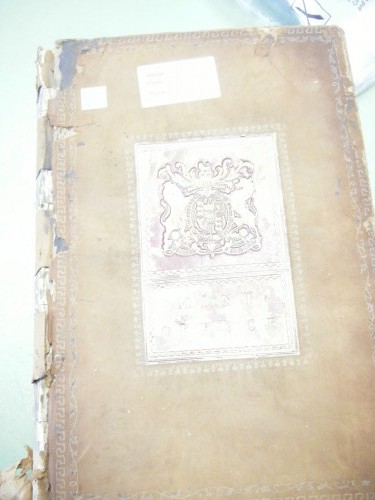
We have now seen Wellesley-Pole’s legacy – and also found out how and why he was removed from office. But what of the Mint? How did they feel about the loss of their Master after 9 tumultuous years? The answer to this can be found at the National Archives where a 300-page document details the full period of Wellesley-Pole’s tenure at the Mint. Most importantly of all it reveals how popular Wellesley-Pole was amongst his staff and colleagues. Sir Joseph Banks (quoted at the head of this post) was just one of many contemporaries who, at least privately, were fulsome in their admiration of his achievements. Luckily for us, and for the Royal Mint – it was Banks’ admiration for Wellesley-Pole that enabled the establishment of the Royal Mint Museum (1816). Both men had a sense of the importance of retaining examples of old currency for continuity of British culture.

Main Mint book - 300 pages

Mint Book at the National Archives

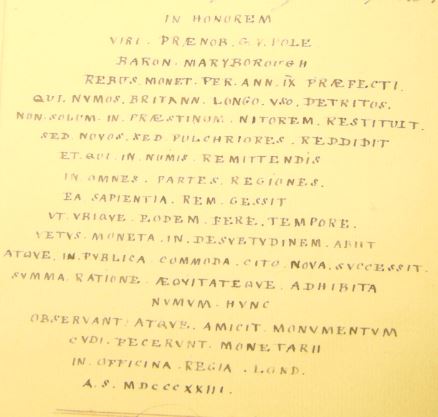
After Wellesley-Pole resigned – the Royal Mint scrambled to lavish him with lasting thanks for what he had done to enhance their reputation. A copy of his bust by Nollekins was commissioned and placed in the Mint boardroom alongside Sir Isaac – reckoned to be the greatest of all Mint employees. He also had the honour to be elected by the Goldsmiths to their Livery, a rare token of esteem. Finally Pistrucci designed a special medal which was awarded to Wellesley-Pole with a Latin inscription, the translation of which follows:

The Officers of the Royal Mint have caused this Medal to be struck in the year of our Lord 1823 in honour of the Right Honourable William Wellesley-Pole, Baron Maryborough (nine year Master of the Mint) as a mark of their respect and esteem for his Lordship: who when the coin of the realm, from long wear had become much deteriorated, not only restored it to its pristine beauty but replaced it by an entirely new coinage, far more perfect both in design and execution, and who also in transmitting the new coinage to all parts of the Kingdom conducted the undertaking with so much Wisdom, Consideration, and Equity that the old money ceased, and the new began to obtain currency in every place, at nearly the same moment

latin

For those Latin aficionados – here is the Latin version

Perhaps Wellesley-Pole’s greatest legacy of all was framed by his constant insistence that there should be  ‘no impairment in the coins beauty or quality’. Because of this the designs remained in circulation until decimalisation in 1971. For over 150 years British citizens carried his handiwork in their pockets, surely the greatest testimony to what he achieved.

 nollekins

Bust of Wellesley-Pole by Nollekins – Placed in Mint Boardroom

I hope you have enjoyed ‘The Mint with a Pole’ and come back soon as there are more episodes from the Wellesley-Pole family with which I hope to entertain you.

Any comments or feedback would be gratefully received.

To find out where Wellesley-Pole went after the Mint, please follow him to Royal Ascot – or see why Wellesley-Pole fought to prevent prosecution of a vagrant. Alternatively you can help the Duke of Wellington choose which niece he liked the most.

Sources

  1. National Archives MINT 1/56
  2. Daily Mail June 29 2009
  3. Humphreys H., Gold, Silver and Copper Coins of England (6th Ed, London: Bohn, 1849)
  4. Craig J., The Royal Society and the Royal Mint in, Notes and Records of the Royal Society of  London,  (London: The Royal Society, V19, No 2– Dec 1964)
  5.  Mays J., The Splendid Shilling, (Hampshire: New Forest, 1982)

Wellesley-Pole’s Finest Hour: The Great Re-coinage, 1817

 The Mint with a Pole – Part 4

or

When Wellesley-Pole made money quicker than his son spent it

Intro | Waterloo Medal | Pole & Pistrucci | The Great Re-coinage | Exit & Legacy

cornlaws

Bread Riots outside the House of Commons, 1815

In 1816 the euphoria of victory at the Battle of Waterloo wore off and Britain entered a period of unrest. Corn prices were set at an artificially high level by the Importation Act (1815) – or Corn Laws as they became known – benefitting wealthy landowners at the expense of the poor. A bad harvest, the return of thousands of soldiers from Europe, and demonstrations against working conditions combined to increase tension, leading to repressive counter-measures from the Government. Against this backdrop, the Coinage Bill was passed on 22 June 1816, and Wellesley-Pole was ordered to draw up a plan to replace the silver coinage.

the new coinage pole

Wellesley-Pole seen hard at work for ‘John Bull’ whilst the poor suffer on

Wellesley-Pole’s schedule detailed how he proposed to design, manufacture, and distribute the new coinage. It also outlined a system for recovering the old money for the Bank of England. He started entirely from scratch after realising there was ‘no collection of British coins in His Majesty’s Mint…not a single Proof.’ To ensure this would never happen again, he founded a Museum to house ‘every coin and medal which, from this time forth, shall be struck’. In July 1816 Banks supplied Wellesley-Pole with old coins as a basis from which the new currency could be created.This collection now forms the backbone of the Royal Mint Museum.

banks

Joseph Banks donated coins to enable Wellesley-Pole to set up Mint Museum

The key problem was how to undertake an operation of this magnitude without alerting the nation as to what was afoot – and once the coinage was manufactured – how to distribute it to the four corners of Britain so that it might appear simultaneously on ‘Great Re-coinage Day’. Wellesley-Pole had to do this at a time of immense social unrest, using the most rudimentary of transport and communication systems. Some boxes of coin were shipped to northern ports but the vast majority went by carriage up and down Britain’s roadways – with accompanying detailed instructions to be acted upon at each and every destination. Getting the new coinage to these outlets was one thing, but Wellesley-Pole was also tasked with rounding up all the old silver currency in exchange for new crowns, shillings and sixpences. This redundant money had to return to the Mint by the same arduous process after the two-week exchange period expired.

bank of england

The Bank of England – Pivotal to Wellesley-Pole’s plans

The National Archive reveals that Wellesley-Pole submitted his plan on 16th September. He confirmed an agreement with Governor of the Bank of England that banks throughout Britain would assist in the transfer ‘without looking for any remuneration… Considerable expense must be saved from the many applications that have been made in favour of persons wishing to be employed in the issue and exchange of the new money’. He further curtailed costs by creating accounts with every participating bank for the money distributed to and collected from them. Sir Joseph Banks described his plan as

excellently arranged…I have seen a multitude of public men, but no one whose conduct has been as energetic and so perfectly successful’.

A week later Wellesley-Pole received approval from the Prime Minister Lord Liverpool, subject to proceeding in complete secrecy until the money was ready to be circulated.

bull head

Pistrucci was unable to draw mad King George III from life – This ‘bull head’ image was heavily criticised

Each coin was approved by the Prince Regent prior to manufacture. Wellesley-Pole enthused the coins were ‘absolutely divine’. Every last detail was meticulously planned. Coins were labelled and bagged in sums of £100. Bags were then packed into a sturdy box containing £600 comprised of one bag of half crowns, four bags of shillings and one of sixpences. The destination of each box was labelled and arrangements were made for them to be re-used for the return of old coinage after the exchange was completed. 57 million coins were ready for distribution by January 17th 1817. A few days later Wellesley-Pole called a meeting of the bankers of London proposing:

  1. That all 72 London banks be ‘furnished with money to exchange the silver coin…by opening all their shops to the public at large. Inspectors from the Mint to be established in each shop for selecting…the old coin to be recovered…by which means Bankers would be exonerated from any responsibility.

  2. Every Banker in England, Scotland and Wales to employed in likewise manner but ‘the Country Bankers’ to recommend such persons for inspectors as they conceive to be trustworthy.

Wellesley-Pole earmarked the operation for 3rd February, but the London Bankers, worried about civil unrest, feared that by opening to the general public ‘their property would be endangered’. So the Master of the Mint was compelled to hastily arrange alternative locations for public distribution. He ensured that a comprehensive network of outlets were created in every principle town in England and Wales, which received almost £1.8M by February 3rd.

announcement

Cat out of bag 18th Jan 1817 – Wellesley-Pole announces Great Re-Coinage

The exchange for Scotland was undertaken by the Bank of Scotland who acted under a letter of instruction from the Master of the Mint, so the entire operation hinged on Wellesley-Pole’s meticulous planning.

The Cabinet eventually deferred the exchange until February 13th. But it was completed in 14 days as planned and the old currency ceased to be legal tender on March 1st. These remarkable statistics bear testimony to the success of this operation

Of £2,6000,000 delivered not one bag or box of new coin was mislaid and there does not remain a single complaint of deficiency of money for exchange in every part of Great Britain.  In carrying the measure through, the Mint dealt with over 14000 letters and employed 1000 inspectors. 469 accounts with individual banks were reconciled ‘to the penny’ when the old currency was returned.

By any standard this operation was an astounding success. Because it went without a hitch it was soon forgotten, perhaps the biggest single reason why Wellesley-Pole is  mired in obscurity. It was only when the House of Commons debated currency in 1842, that the enormity of his achievements were highlighted against shortcomings in current procedures.

As we have seen in Pole and Pistrucci the Great Re-Coinage failed to ignite public excitement, and the press preferred to continue their campaign of back-biting and ridicule against both men.

The only reply either man can give in answer to their critics is to emphasise that the silver coinage remained in circulation until 1971 – Yes that’s 154 years!

In my final part I will look at Wellesley- Pole’s departure from the Mint and round up his legacy…..

 IVORYCOACHPASS1- WWP

 So you have seen how, at least for a few years, Wellesley-Pole made money faster than his feckless son Wicked William of Wanstead House was able to spend it. Follow Wicked William to the Epping Hunt, or off to War with Wellington or find out what happened when Wellesley-Pole’s rage got the better of him.

Finally, I have written the remarkable history of Wellesley-Pole’s house

I hope you enjoy this post and would be most grateful to hear any feedback.

Sources Used

  1. Royal Mint Website
  2. The National Archives (Kew) Mint 1/56
  3. Bagot J., George Canning and Friends (London: Murray, 1909)
  4. Senate House Library, Mint Book MS499
  5. Greg Roberts unpublished dissertation The Forgotten Brother (2009)
  6. Image of Sir Joseph Banks by William Wyon courtesy of the Royal Mint Museum


3 Savile Row – Its role in British history


Within These Walls: 6 Layers of History

savilerow

No 3 Savile Row, Mayfair

Let me introduce you to a Grade II listed mansion house in London’s Mayfair that has recently been in the news due to an unsuccessful campaign to prevent its conversion into an Abercromby & Fitch childrenswear store. Knowing the history of this grand old building it is somewhat ironic to find that an American transformation has materialised. For the truth is that this building has some very interesting and important connections.  Since its construction in 1733 this house has been occupied by people who have helped shape the course of British military and cultural history. Let’s go inside…

1. Admiral John Forbes (1714-1796)

forbes

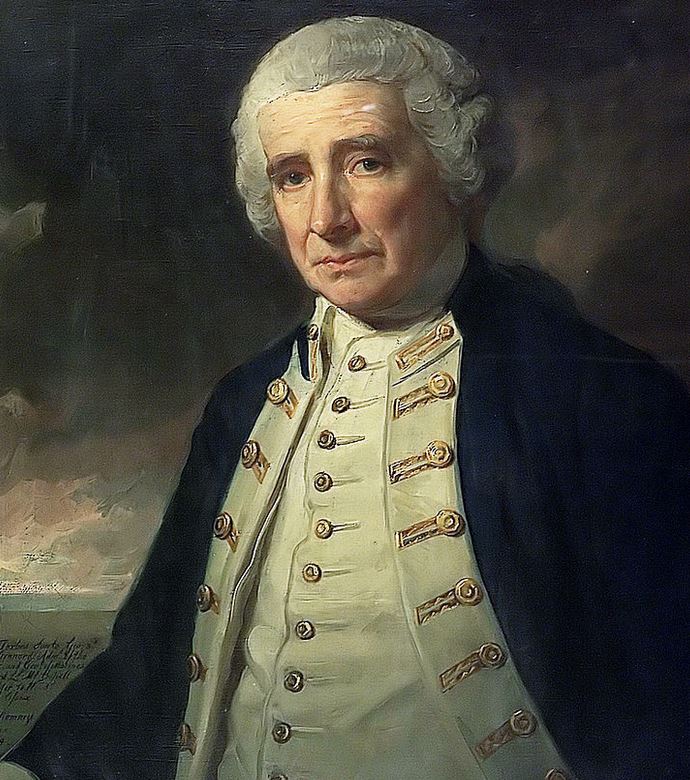
John Forbes was Wellesley-Pole’s father in law

John Forbes began his naval career at the age of 13 and progressed up through the ranks until he became Admiral of the Fleet from 1781 until his death. This was an era when a great many servicemen returned from war incapacitated, and disability was not considered a barrier to high office. Even though Forbes was unable to walk and rarely seen in society he still managed to exercise overall control of the British Navy – and he did so by holding meeting as his house at 3 Savile Row, where he had lived from around 1760.

byng

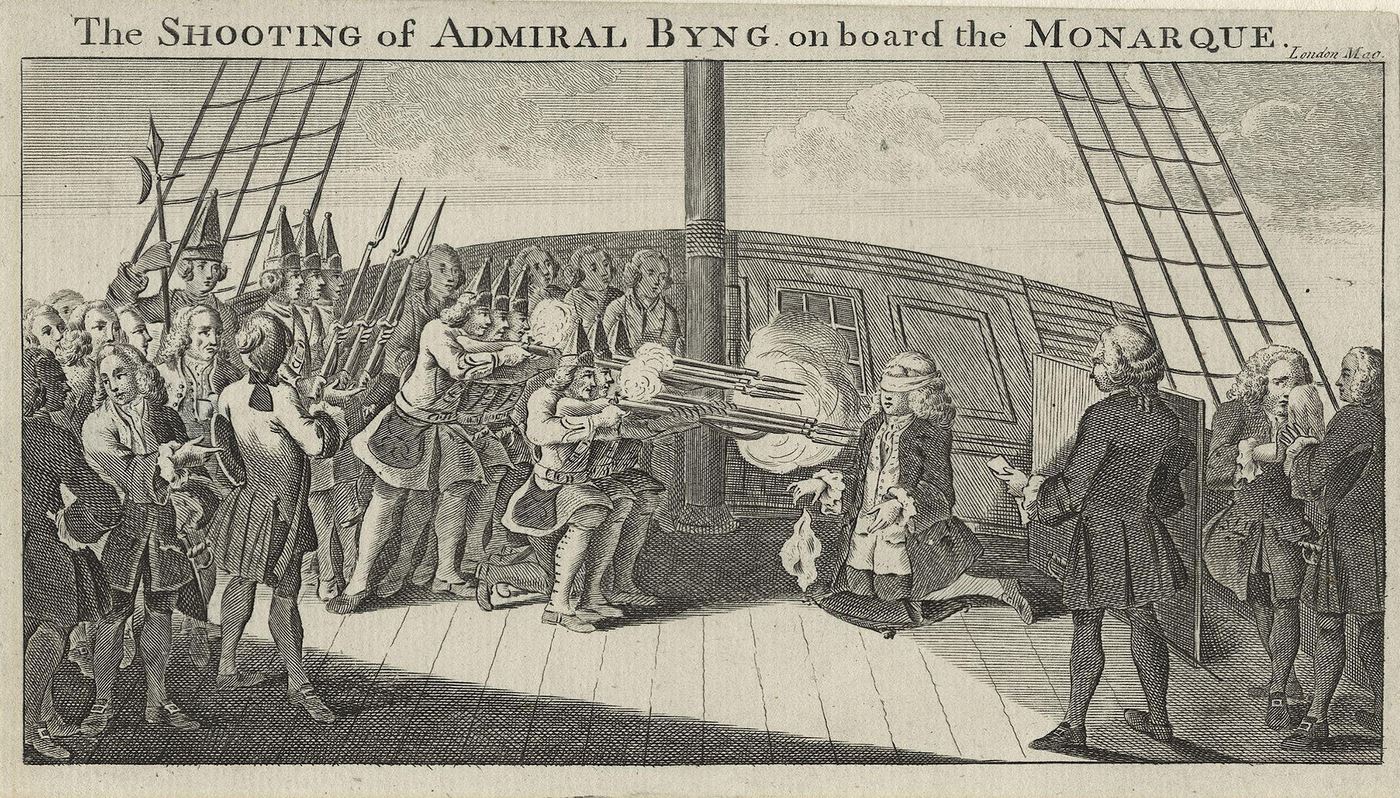
Execution of Admiral Byng (1757)

Forbes most important contribution to British history came when he was involved in the trial of Admiral Byng, who was blamed for the loss of Minorca in 1756. He was tried and found guilty of failing to “do his utmost” to prevent the defeat. When Byng was sentenced to death an appeals for clemency was angrily refused by King George III. Forbes was the only Admiral to refuse to sign Byng’s death warrant though his action failed to prevent Byng’s execution by firing squad on 14 March 1757. Such was the effect upon the public mind that this was the last time a serving naval officer was executed on this charge. Forbes fearless refusal to bow to enormous pressure singled him out as a compassionate man of principle and made him a role model for fairer treatment of naval personnel.

In 1784 Forbes twin daughter Katherine married 3rd Lieutenant William Wellesley-Pole in a ceremony at 3 Savile Row with guests including Arthur Wellesley, later Duke of Wellington. Wellesley-Pole inherited the house in 1797 but decided to rent it out

2. General Robert Ross (1766-1814)

ross

Perhaps Wellesley-Pole’s most famous tenant was Robert Ross a famous British general who is best known across the water in the United States. Irish-born Ross lived at Savile Row until 1805 after returning from action at the Battle of Alexandria (1801). He was subsequently present at the Battle of Corruna (1809) before serving under Arthur Wellesley during the Peninsular War. Despite being seriously wounded at the Battle of Orthes on 27th February 1814, Ross agreed to lead command a British expeditionary force to attack the United States

washington burning

Hard to believe even today – Britain burning down the White House (1814)

Having routed the Americans at Bladensburg (27th August 1814) Ross advanced into Washington DC where he destroyed all the public buildings including the White House. For this act Ross is perhaps the best remembered of all British soldiers ever to set foot on American soil.

death of ross

The death of General Ross

It was not to end well for Ross as he was killed by American snipers near North Point on 12th September 1814. He is buried in the Old Burying Ground at Nova Scotia but has a monument inscribed to him in St Paul’s Cathedral.

3. The Duke of Wellington (1769-1852)

wellington

When Arthur Wellesley returned from 8-years service in India the first place he stayed was with the Wellesley-Pole family in Blackheath, for he was at that time unmarried and had no London home. However, he was to repeat the exercise in 1814 when he triumphantly returned from the Peninsular War following Napoleon’s surrender and exile. It’s very telling that the newly ennobled Duke of Wellington chose Savile Row rather than his own marital home. Imagine if you can the thousands of people who gathered outside, mounting a daily vigil to catch a glimpse of their conquering hero. Wellington remained at Savile Row for a month before returning to Paris.

4. William Wellesley-Pole (1763-1845)

wwp by pistrucci

Wellesley-Pole owned 3 Savile Row between 1797 and 1842. In his role as Master of the Mint Wellesley-Pole presided over the introduction of new silver currency that was to remain in circulation from 1817 right through until decimalisation in 1971.

shilling

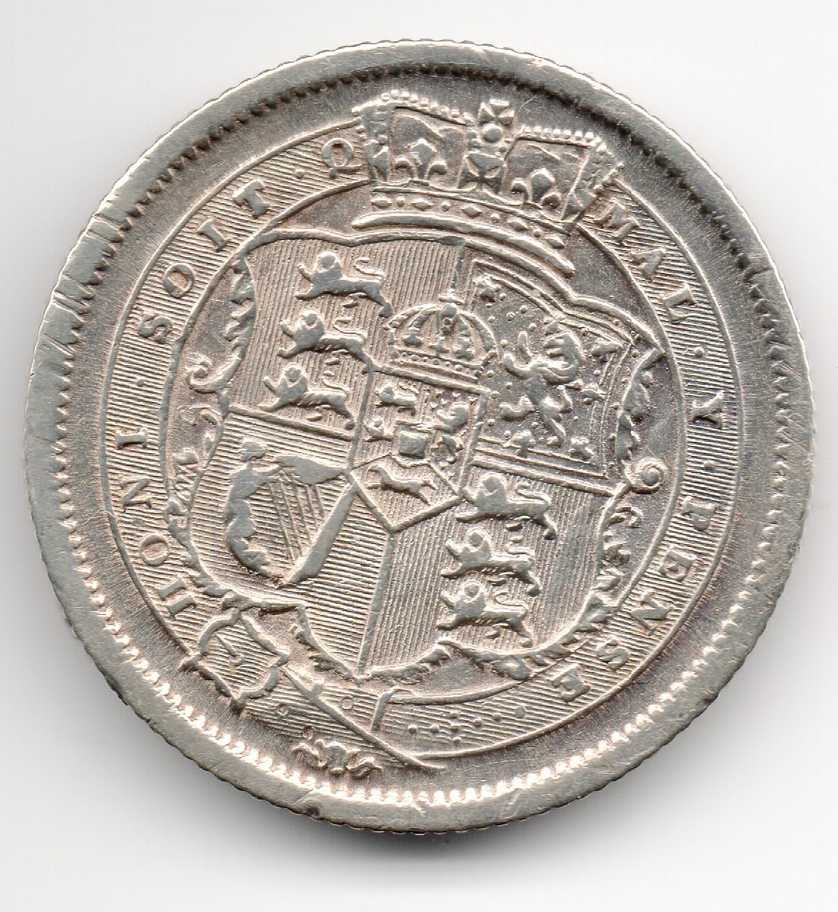
The humble shilling must surely be on of the greatest symbols of Britishness. Wellesley-Pole he also helped to create the instantly recognisable St George & Dragon motif designed by Benedetto Pistrucci which is still in use today.

double sovereign

5. The Bowler Hat (1849)

bowler hat

Quintessentially British – The bowler hat

Perhaps the greatest stereotypical representation of the English gentleman must be the wearing of a bowler hat. No 3 Savile Row can claim the distinction of being recognised as the place where the bowler hat originated. William and Thomas Bowler are credited with creating the first prototype for the bowler hat in 1850, but it is generally acknowledged that the hat was after a design by British soldier and politician Edward Coke, who was fed up with seeing his gamekeeper’s hats continually knocked off by low-hanging branches when out riding. When he was in Town, Coke lived at 3 Savile Row.

bowler2

Bowler hats have travelled up the social spectrum

Initially very popular with the Victorian working classes, the bowler hat went on to become standard uniform for middle-class businessmen, and by the 1960s it had elevated to the aristocratic realm.

6. The Beatles (1969)

beatles

On January 30th 1969 the Beatles played their last ever public performance on the roof of Apple Records HQ at No 3 Savile Row. Just a year earlier the Beatles paid £500,000 to purchase the mansion and they are said to have spent the best part of 18 months living there leading up to that famous rooftop escapade.

advert

Not surprisingly, to this day 3 Savile Row is still considered a tourist attraction for Beatles fans and there has been a steady clamour for a blue plaque to recognise their use of this building.

Conclusion

Whilst researching this post I came across a reference to Lady Hamilton, Admiral Nelson’s lover, stating that she too once lived at 3 Savile Row. But I have not included her in this blog as I can’t see where she would fit in this timeline, unless she rented the property before General Ross. However, I think there is sufficient here to demonstrate that we should hold Savile Row dear not just because of the Beatles, or to keep American tailoring out of this important British fashion location, but because of its connections to everything British: from the stiff upper lip (Forbes), to military escapades (Ross & Wellington), the British currency (Wellesley-Pole), Quintessentially British headwear (Bowler hat), not to mention The Beatles.

In fact No 3 Savile Row has given us a wealth of characters and symbols that mean a lot to our notion of Britishness.

Kier Holdings paid £20 million for the mansion in 2009 but its fate today remains undecided. Who knows what the future holds…

demo

If they knew their history, these chaps would be wearing bowler hats!

Links

A marvellous set of 1950s photographs showing some amazing interiors of No 3 Savile Row

For more info on General Ross I recommend War of 1812 website

The Daily Telegraph has written a splendid history of the bowler hat

Until such time as Geraldine Roberts Angel and the Cad is published by MacMillan, my main focus on this blog will be Wicked William’s father Wellesley-Pole. There is much to write about Wicked William so stay tuned on that score!

However, you might like to know about Wicked William and the Epping Hunt, or why the Duke of Wellington considered him lamentably idle – alternatively you could always read about the death of a Regency Prizefighter

I hope you have enjoyed this post and would be most grateful for any feedback for any additional information you may be able to provide to fill in the gaps.

‘No one likes us, we don’t care’ – Wellesley-Pole & Pistrucci

The Mint with a Pole – Part 3

Intro | Waterloo Medal | Pole & Pistrucci | The Great Re-coinage | Exit & Legacy

pistrucci image 1826 by cf voigt

Benedetto Pistrucci – Would you mess with him?

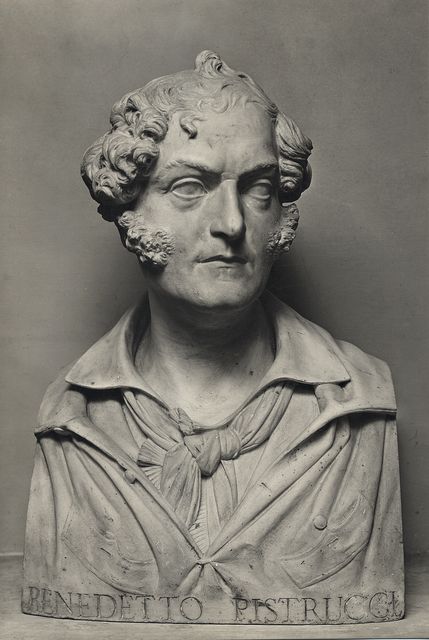
Wellesley-Pole’s recruitment of Pistrucci for the Royal Mint in 1815 was both a brave and also deeply unpopular decision. These two firebrands came together under a storm of controversy, yet successfully adopted a classic ‘bunker’ mentality to achieve new heights of numismatic brilliance. Benedetto Pistrucci (1783-1855) was born and educated in Rome. At the age of 15, he was placed with the gem-engraver Nicolo Morelli (1771–1830), whose patrons included the Pope and Emperor Napoleon. His talent for carved cameos was quickly evident as he obtained first prize in sculpture from the drawing academy at Campidoglio. Pistrucci remained in Rome until he was in his forties, producing a combination of portrait cameos and engraved gemstones. Hoping to enhance his reputation further Pistrucci moved to France around 1814. But his arrival coincided with Napoleon’s defeat and exile, so he met the Duke of Wellington and his brother Wellesley-Pole rather than the French Emperor (to whom he had hoped to present a cameo). By the time Wellesley-Pole returned to London to become Master of the Mint, Pistrucci was already there causing ripples of disapproval in artistic circles.

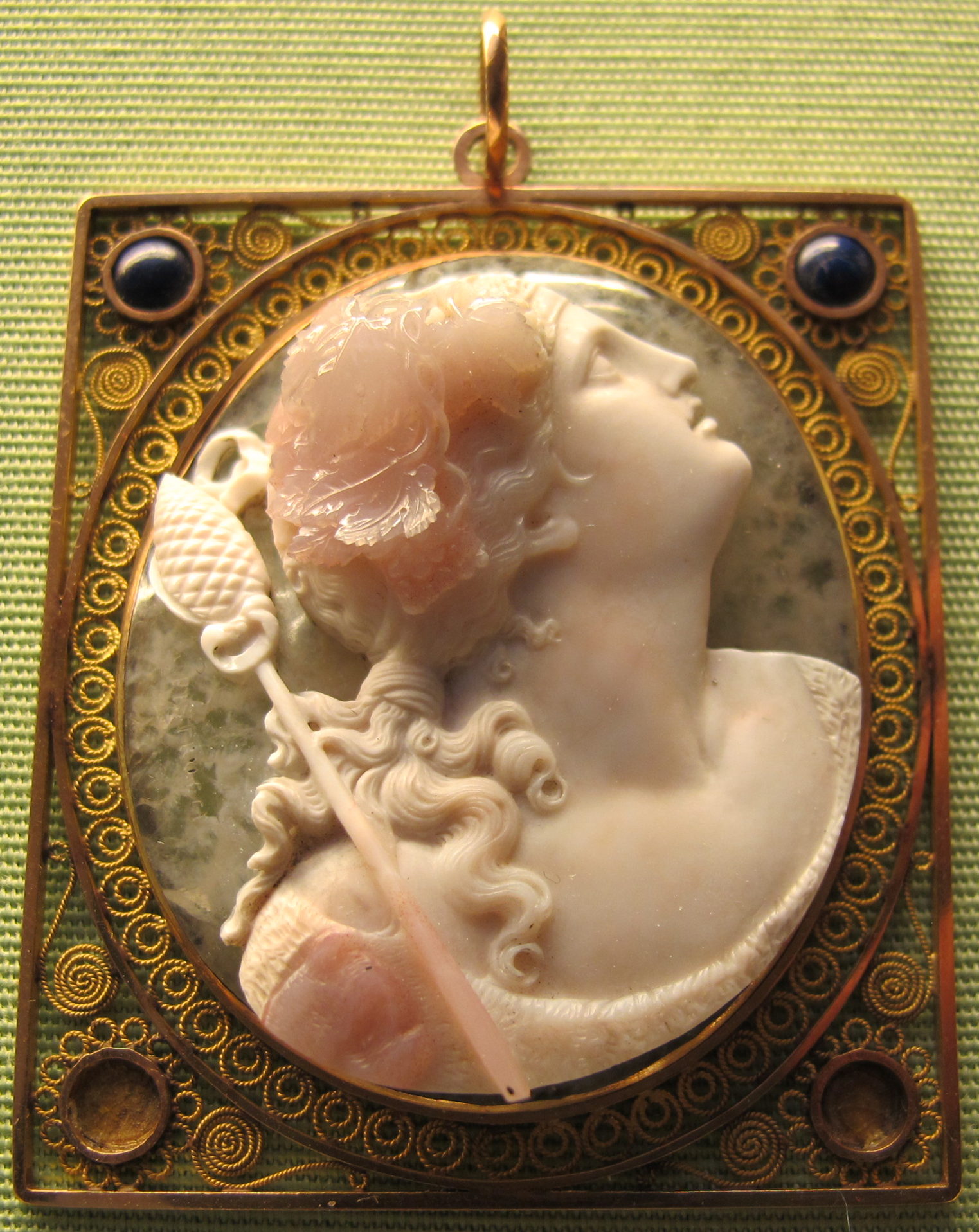
2014GW2957

Pistrucci intended this cameo for Napoleon (Paris 1814), but he was ‘Gone Away’

Having spent over a quarter of a century perfecting his skills Pistrucci was supremely confident in his ability and unwilling to reverentially defer to established English artists. In 1815 Pistrucci attended a party at Sir Joseph Banks’ home where a Mr Payne Knight exhibited an engraved gem believed to be an ancient relic, having been purchased some years earlier from Mr Boneli an art dealer from Golden Square. To the astonishment of the assembled guests Pistrucci announced that he had created the gem in his workshop and sold it to Boneli for twenty Roman crowns. This assertion was challenged not only by Boneli (who insisted that Pistrucci had merely polished up an ancient gemstone) but also by several renowned experts present. It was declared that there was ‘no living artist so capable’ as to have manufactured such an item. So Pistrucci offered to make a replica and present it within three months in proof of his claim. He duly delivered a near perfect match, but without the signs of wear and tear evident on the original – and he demanded £50 payment from Payne Knight for his troubles. But Knight refused to pay or to submit both items for independent adjudication.

head of flora

The ‘Head of Flora’ – which Pistrucci claimed to be his own design

So in some circles Pistrucci found himself labelled a forger and a charlatan trying to extort money from a well-known patron of the arts. But all was not lost for he acquired a vital ally in the form of Sir Joseph Banks (1743-1820). Banks was the long-serving President of the Royal Society which had a traditionally paternalistic control over the policies and activities of the Royal Mint. Knowing that Wellesley-Pole was looking for an artist to work on designs for the new coinage Banks introduced Pistrucci – but left the final decision wholly with the Master of the Mint.

wellesley pole

Wellesley-Pole looking calm and collected for a change

Wellesley-Pole soon encountered problems when he brought Pistrucci into the Mint. His Italian friend had initially submitted artwork for approval, including the now famous St George and Dragon design. But when chief engraver Thomas Wyon copied Pistrucci’s model he could not match the original. Wellesley-Pole realised he was on to a winner and paid Pistrucci 100 guineas to create the template himself. This caused ill-feeling at the Mint, which worsened after Wyon unexpectedly died. Wellesley-Pole knew no one could replicate Pistrucci’s work, so he backed his man unequivocally. Pistrucci was employed as an engraver for £500 per annum, offering him accommodation at the Mint. Wellesley-Pole acquired Pistrucci’s services on excellent terms considering that the initial contract for 100 guineas only entailed a week’s work. Pistrucci was permitted to augment his pay by carrying out private commissions, and brought his family over from Rome. However he worked up to 18 hours a day at the Mint in these early years, leaving no time for freelance projects. Staff at the Mint resented Pistrucci because he was an alien. Their antipathy lasted decades during which time he was not allowed to be called ‘Chief Engraver’.

On 11th July 1815 Wellesley-Pole invited 12 members at the Royal Academy, including Sir Thomas Lawrence, John Flaxman, and his close friend Joseph Nollekins to submit designs for the Waterloo Medal. The letter clearly stated

This can only be done by the aid of the First Artists belonging to the Royal Academy

flaxman

John Flaxman (1755-1826) – was not deemed good enough by Wellesley-Pole

But when the Royal Academy nominated Flaxman’s design for the larger Waterloo Medal, Pistrucci refused to copy it, declaring that it went against his artistic principles. Instead he submitted his own proposal which was approved by the Regent. The Regent then asked for his portrait by Lawrence to be copied for the obverse face of the medal. But when Wellesley-Pole went to see him at his studio, Pistrucci had turned Lawrence’s painting to face the wall and pointedly refused to comply even when threatened with dismissal. He said he wanted to create the Regent ‘from life’. It was an awkward situation, for Wellesley-Pole had agreed a fee of £3500 for this commission, £2000 of which had already been paid. Additionally, he was over a barrel regarding the new coinage. Remarkably Wellesley-Pole persuaded the Regent to back down, and Pistrucci got his way. The Royal Society was enraged by the Mint’s rejection of Flaxman and Lawrence’s artwork. A senior British Museum antiquary said ‘a more intimate knowledge of the talent that existed in the Kingdom…would have saved [Wellesley-Pole] from the reproach of unnecessarily insulting the whole body of native artists’.

double sovereign

Pistrucci’s iconic St George & Dragon motif – still in use today. Note his initials (bottom right)

To get some idea of the resentment stirred up by Wellesley-Pole’s appointment and dogged support for Pistrucci you only have to look at the press between 1816 and 1819 where numerous anonymous letters lambasted their partnership. Even though the Great Re-coinage was an unqualified success the barbed comments kept coming. For example the Morning Chronicle of October 29th 1818 stated

The execution of the coin of the Realm…[occurred] through the anti-national bad taste of the Master of the Mint shamefully [working] after the designs of the Italian artist.

wwp coin marks

Despite Wellesley-Pole’s private marks being very small and subtle he was likened to Cardinal Wolsey

Wellesley-Pole was delighted to discover ‘I am empowered to place such private mark as I choose [on all coin], and I have chosen my initials…WWP’. The press accused him of ‘smuggling his initials’ onto the new sovereign and they were quick to publish his reply: ‘I shall be impeached for putting my initials on the coin of the realm, as Cardinal Wolsey was for placing a cardinal’s hat on the coin of Henry VIII!’  Such was the level of vitriol probably originating from jealous and resentful members of the Royal Academy that Wellesley-Pole was compelled to make a statement in the House of Commons setting the record straight. Pistrucci fared similarly when exercising his right to leave a mark on designs used in the new coins

Pistrucci the artrist who executed the die for the Crown piece is determined that his name shall be transmitted to posterity. It is engraved at full length on both sides of the coin!! For this specimen of vanity and presumption he has no precedent

Reports on the design of the Double-Sovereign in 1819 reveal the depth of animosity against both men

Mr Pistrucci whose happy knack of making strong likenesses is well known to the British public has presented a faithful resemblance of himself in the cavalier… with a melting pot instead of a helmet. In the beast on which he is mounted the public will recognise… the Master of the Mint differing however from the Grecian charger… by a striking addition to the length of his ears… so that the whole figure on the new coin resembles a jack-ass. [In fact] the initials W.W.P are impressed on his hind-quarters… so Englishmen in future ages will not look at the jack-ass without thinking of Mr Pole.

pistrucci bust

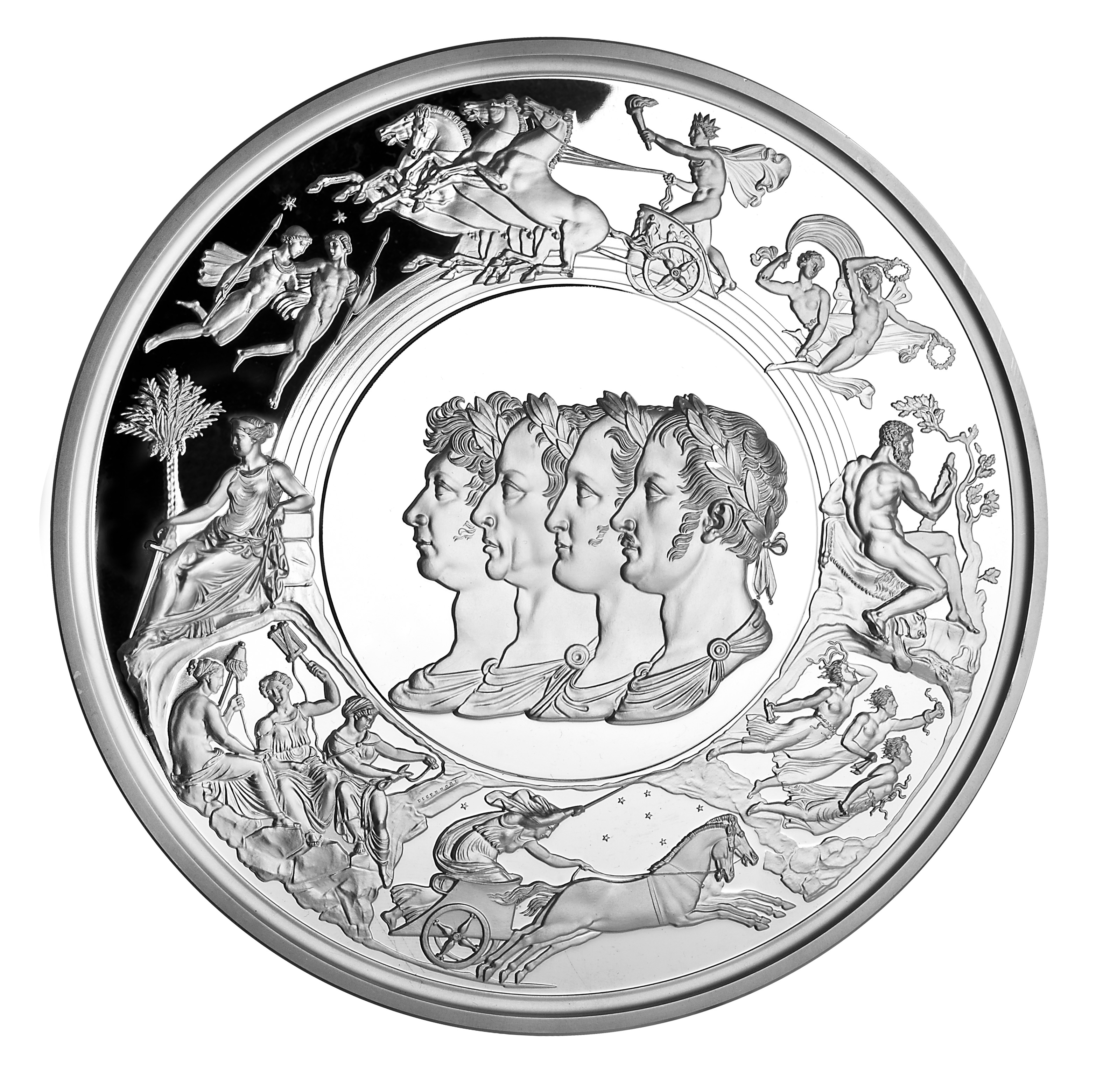
In Pistrucci, Wellesley-Pole found a like-minded character. Both men were hot-headed perfectionists unwilling to compromise in pursuit of their goals. Wellesley-Pole correctly identified Pistrucci as the man to revolutionise British coinage and backed his man to the hilt. But the consequence for both men was an estrangement from the established body of artists, and fellow Mint employees. In fact it was the Mint’s unwillingness to accept Pistrucci as Chief Engraver and their pointed omission of his name from their Red Book that led to the 30+ year delay in Pistrucci delivering the dyes needed to produce the larger Waterloo Medal.  Pistrucci complained long and often that he was promised the role of Chief Engraver by Wellesley-Pole and he genuinely feared that the Mint would cast him aside as soon as he was no longer considered essential.  So he dragged his heels for decades and by the time the dyes were presented only the Duke of Wellington remained alive of the leaders involved in the Battle of Waterloo.

Waterloo-medal-A

Though Pistrucci worked at the Mint until 1849, his most productive and inspirational phase was under Wellesley-Pole’s influence and support – between 1815 and 1820. It is fair to say that both men benefitted from each other’s obstinacy and drive for perfection. No one liked them, but luckily for us, they didn’t care because their collaboration produced coins considered to be ‘the finest that had ever been issued in Europe’.

pistricci work

Example of Pistrucci’s earlier cameo work c.1810

Pistrucci was undoubtedly an essential cog in Wellesley-Pole’s machinery at the Mint, but my next part will focus on the incredible logistical achievement of The Great Re-Coinage in 1817…

Sources Used

  1. Greg Roberts unpublished dissertation ‘The Forgotten Brother’ (2009)
  2. Billing A., Gems, Jewels and Coins (London: Bell and Daldy, 1867)
  3. Humphreys H., Gold, Silver and Copper Coins of England (6th Ed, London: Bohn, 1849)
  4. British Library Add. MSS 39791
  5. Hayward J., Waterloo- The Medal, www.greatwarhistoricalsociety.com
  6. Bagot J., George Canning and Friends (London: Murray, 1909)
  7. Images of Wellesley-Pole marks on coins courtesy of The Royal Mint Museum

In November 2014 it was announced that Pistrucci’s Waterloo Medal had finally been struck, nearly 200 years after Wellesley-Pole commissioned it. The medal was presented to representatives of Britain’s allies at the Battle of Waterloo in a ceremony held at Apsley House, The Duke of Wellington’s London home

ceremony

Better late then never- Britain’s allies thanked for Waterloo

To find out more about Pistrucci’s Waterloo Medal visit The Royal Mint Museum

Waterloo 200 organisation will produce 500,000 Waterloo Medal replicas as part of events to mark anniversary of Wellington’s victory

For more information Pistrucci’s famous ‘head of flora’ cameo visit the British Museum

Traditionalists will be pleased to see that the Royal Mint are producing a 2015 Sovereign in which Pistrucci’s mark is clearly visible

To find out what Wellesley-Pole got up to after he left the Mint, watch him go to the dogs or if you want to know more about Wellington’s devotion to his staff you may enjoy Wellington & Raglan


Waterloo Medal: a Wellesley-Pole production

The Mint with a Pole Part 2 – The Waterloo Medal

Intro | Waterloo Medal | Pole & Pistrucci | The Great Re-coinage | Exit & Legacy

waterloo medal

Take a look at Wellesley-Pole’s unique Waterloo Medal
  • The first medal issued by the British Government to all soldiers present at an action.  
  • The first campaign medal awarded to the next-of-kin of men killed in action.
  • The first medal to be individually inscribed

But how did the Waterloo Medal come about?

waterloo battle

Survive this and get an individually inscribed medal!

On 28th June 1815, Wellington suggested ‘giving the non-commissioned officers and soldiers engaged in the Battle of Waterloo a medal.’ His brother Wellesley-Pole interpreted this as an opportunity for the Royal Mint to ‘show the world that this country is as superior in her [arts], as she has lately been proven to be in the skill and valour of her arms’. Accordingly on 11 July, he wrote to the Royal Academy inviting designs for two proposed medals.

One in Gold, of the largest size…will probably be given to each of the Sovereigns in Alliance with the Prince Regent, to their Ministers and Generals…The other… of small size to be given to every Officer and Soldier … who was present at the Battles

Wellesley-Pole was caught up in the euphoria of the victory against Napoleon and his impatience to get underway was immediately apparent. He restricted the design competition to the larger medal after mint employee Thomas Wyon put forward a cameo of the Prince Regent, copied from Sir Thomas Lawrence’s famous painting, which was approved for the smaller medal. Wellesley-Pole was so impressed that he promoted 23-year-old Wyon to Chief Engraver on 13th October. It was a typically bold move, showing his readiness to support those he believed in, even if it made him unpopular.

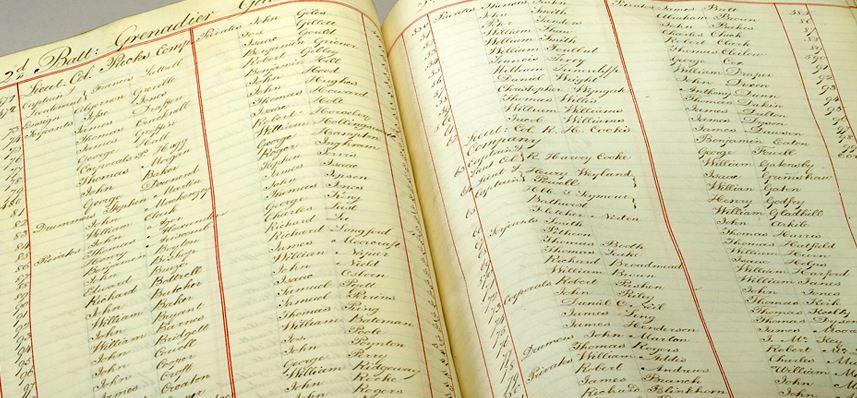
names list

A list of Waterloo participants was meticulously compiled

At the end of August, Wellesley-Pole detailed how the operation was to be coordinated. He had already sent a flurry of letters to the regiments asking for a comprehensive list of eligible soldiers. He also incentivised Mint staff by offering £100 prize money for finding a way to modify milling machines to allow the edges of medals to be individually inscribed. The level of detail of Wellesley-Pole’s instructions provides a fascinating insight into his methods.

The Moneyers’ work begins tomorrow morning (31 Aug) …and if the Rolling and Cutting continue without intermission for 10 hours each day, Sundays excepted…The Cutting may be finished on Monday night (4th Sept). The Blanks will begin Milling on Monday morning (4th Sept); they will be finished ready for annealing on Thursday evening (7th September). The annealing will be done on Friday the 8th Sept…There must be six sets of Marking Machines made for Lettering the Medals – 18 Sets of Letters are wanting for the Machines… When the two Machines are at work the Lettering may be completed in 30 days, viz at the rate of one piece a minute, for each machine working 10 hours a day. The six sets of Marking Machines will be ready for working on the 11th September. Supposing we begin to letter on Monday the 12 Sept, the Lettering may be finished by the 20th October….Mr Wyon will be ready with his Dyes by the 10th of Oct. If we work 8 Presses at the rate of a Piece per minute for each Press (working 10 hours a day) the Forty Thousand Medals will be struck in Ten days, and be ready for delivery on the 9th of November.

He demanded total commitment from all concerned. It is almost like a team talk.

I rely upon the…the utmost exertions… to complete the work. The whole grace of the distribution of the medals would be lost if any unavoidable delay was to take place in their issue; and, in the very perfect state of the machinery of the Mint, no excuse could be allowed to us by the public in such an event. You will be so good as to let it be generally understood that…no branch of the manufacture is to relax its efforts under an idea that it will be ready before any other branch is prepared to carry forward the work. Every person is to act as if the whole measure depended upon his individual exertions.

works at the mint

Wellesley-Pole was a great believer in teamwork

Progress was delayed after a fire at the Mint in September, then a late decision by the Prince Regent to strike the medals in silver instead of bronzed copper. The Bank of England received a request for 60 thousand ounces of fine silver on 19th January 1816, and incredibly the finished product was ready to ship by 3rd March. Wellesley-Pole wrote

I propose packing the Medals in Boxes marked on the outside so as to specify the Corps or Regiment to which the Medals within may belong; and there will be packed in each Box a copy of the List transmitted … The Name of each Officer and Man is impressed upon the edge of the Medal destined for him, and care will be taken to pack the Medals in the order in which the Names stand on the several Lists…I am in hopes that we shall be enabled to deliver finished Medals… at the rate of about 1000 per day from this time forward.

In all, just under 40,000 medals were awarded, with the vast majority sent out without fault in quality or individual inscription. Such a monumental logistical achievement was to prove a trial run for what was to follow at the Royal Mint under Wellesley-Pole.

pole signature

Another project successfully signed off by Wellesley-Pole

After the work was finished, Wellesley-Pole ordered 50 individually-inscribed medals as gifts to Ministers, senior Mint officials and friends. Everything was transparent and above-board: ‘The Deputy Master of the Mint will be so good as to pay the expense of these Medals and charge it to [my] private account’.

Yet Wellesley-Pole’s hard work met with some controversy as Peninsular War veterans felt justifiably aggrieved that those who were present at Waterloo—many of them raw recruits, who had never seen a shot fired in anger—should receive such a meaningful prize; while they, who had served the whole war, received nothing beyond a Parliamentary vote of thanks. If you know anything about Wellesley-Pole at this stage, such understandable yet also unfair criticism is about par for the course.

So Wellesley-Pole’s administrative brilliance and innovative team-building ethos at the Mint was once again subsumed by suspicion and hostility that seems to have dogged his entire career.

Never could this be better demonstrated than in Part 3 where Wellesley-Pole joins forces with another unpopular firebrand, namely Benedetto Pistrucci…

Sources Used

[1] Gurwood J., Wellington Supplementary Dispatches, (10 Volumes – London: Murray, 1871)

[2] British Library Manuscripts Add.MSS  39791

[3] Hayward J., Waterloo: The Medal, www.greatwarhistoricalsociety.com

[4] Royal Mint Museum (image of Waterloo Medal ledger)

The Mint with a ‘Pole’ (1814-1823)

Introduction: How and why Wellesley-Pole became Master of the Mint

Intro | Waterloo Medal | Pole & Pistrucci | The Great Re-coinage | Exit & Legacy

maryborough

An outcast redeemed: William Wellesley-Pole (c.1814)

When Wellesley-Pole took up office on 29th September 1814, this was to be the first and only time that the Master of the Mint qualified as Cabinet rank. In this period the Government was dominated by peers with only exceptional outsiders breaking into their elite circle. By any standards Wellesley-Pole’s appointment was unusual. He was neither a peer (nor even a supporter) of Lord Liverpool’s administration – yet he was handed an unexpected seat in the heart of government doing a job previously considered second-rate. So why was Wellesley-Pole brought in from the cold, and what motivated Lord Liverpool to make the role of Master of the Mint a Cabinet position? To answer this we must go back 2 years:-


perceval death

Spencer Perceval’s murder: the opening shot in a ministerial crisis

The Battle of 1812

Lord Liverpool came to office in the summer of 1812 in the aftermath of the assassination of prime minister Spencer Perceval. But he did so at the expense of the Richard Wellesley who spectacularly fell from grace after his memo critical of Perceval’s war effort was leaked to the press at the worst possible time:

press leak

Richard Wellesley’s attack on Perceval coincided with announcement of his death

Initially Lord Liverpool proposed Wellesley-Pole to join the Cabinet as Minister for War, which would have put him in charge of Arthur [Lord Wellington]’s campaign in Spain. But the Prince Regent felt placed in an awkward position and refused to accept Wellesley-Pole because ‘he could not reward one brother, and abandon the other’. Heavy of heart Wellesley-Pole wrote to Liverpool on May 21st

I shall ever retain a just sense of your great kindness towards me [but] I could not serve without subjecting myself to difficulties and inconveniences which I am bound by every principle of affection to my brother to avoid.

Meanwhile in the Peninsula Wellington took the news badly, pronouncing himself ‘confoundedly vexed’ that Wellesley-Pole chose to follow his brother out of office, instead of staying and fighting for his place. Wellington’s antipathy towards Liverpool was such that he broke contact with London during its state of flux declaring ‘I will not tantalise you by entering on our plans for the remainder of the campaign.’ Ironically for all sides Wellington’s victory at Salamanca in July 1812 actually served to cement Liverpool’s shaky administration, putting an end to any realistic prospect of Richard Wellesley seizing power.

salamanca

Wellington’s victory at Salamanca just about saved Lord Liverpool’s administration

Cometh the hour, cometh Wellesley-Pole (1814)

The main reason Wellesley Pole was asked to re-join the Government was because of an urgent need to improve relations between Liverpool’s administration and the Wellesleys. After 1812, Liverpool’s government was insulated by the inability of opposition groups to unify against them. However, when Napoleon surrendered and was exiled in 1814, Arthur (by now Duke of Wellington) made it clear to the Prime Minister that he would not support an administration that excluded his brothers. The risk of being at odds with the hero-of-the-hour was too great; bridges must be built. So, after his triumphant return to England in June, Liverpool acceded to Wellington’s request to bring Wellesley-Pole into the Cabinet.

wellington2

With victories like this, you can ask for anything

On this occasion Wellesley-Pole clearly benefitted from patronage via the Duke of Wellington, but Liverpool’s decision to place him in charge of the Mint was really not a token gesture. In fact it was a pragmatic and eminently sensible move. Liverpool already had a personal association with the Mint, serving as Master between 1799 and 1801. His father Charles Jenkinson chaired a long-running Select Committee dedicated to enhancing Mint practices. Currency reform was vital, becoming more acutely necessary as the war reached a conclusion. Replacing the silver currency required the Mint, the Exchequer, Prime Minister, bankers, and the Prince Regent to work in harmony. The aim was to preserve the banking system whilst it underwent a vital blood transfusion. These unique circumstances may explain Liverpool’s decision to elevate Master of the Mint to Cabinet rank. He knew Wellesley-Pole met the criteria required, having worked closely with him before. Wellesley-Pole was a good administrator, loyal and discreet, had Exchequer experience, and (best of all) commanded the Prince Regent’s respect.

Appointing Wellesley-Pole therefore enabled Liverpool to appease the Duke of Wellington, but it also gave him the ideal person to tackle serious and urgent problems which threatened to destroy Britain’s post-war economy.

The State of the Mint to 1814

In 1787 the Mint began a slow process of modernisation. Jenkinson’s Select Committee examined the state of the coinage and existing working practices. He was assisted by Sir Joseph Banks (1743-1820), President of the Royal Society – a post he held for 42 years. The Royal Society traditionally exercised control over currency manufacture. The Mint comprised of disparate departments with strict, almost medieval, working practices. The Royal Society acted like a glue to keep these elements working together and to oversee innovation and improvement.

 banks

Sir Joseph Banks (1743-1820) was to become Wellesley-Pole’s greatest fan

When Jenkinson’s Committee was established, it was so long since silver coins had been mass-produced that Mint employees feared the know-how was lost. Eventually in 1804 a system was perfected for producing standard weights and alloy mixtures. Around the same time, Matthew Boulton invented a steam-driven coining press. He operated from a factory in Birmingham, supplying copper coinage throughout Britain and Ireland. To modernise the London operation a new Mint was constructed at Tower Hill incorporating steam technology, which was completed in 1810.

royalmint1830

The new Royal Mint at Tower Hill

Boulton’s steam press system and use of highly-skilled engravers overcame the problem of counterfeit copper coins. Also an Act of Parliament in 1803 introduced draconian fines for simple possession of fraudulent coins. But forgery of silver currency continued unabated. Up until this time the best engravers only worked on large value coins. No regard was given to the quality of lower denominations. ‘From the Mint’s point of view the manufacture of coin had to satisfy two, and only two, criteria: coin must be of proper fineness and of accurate weight.’ It is little wonder that forgers thrived.

back from elba

Napoleon’s brief trip home, 1815

Almost as soon as Wellesley-Pole began his duties, Napoleon escaped from Elba and hostilities with France resumed. During this period Wellesley-Pole asked the Commons to approve the construction of houses ‘to accommodate… persons who had been ‘imported’ from Birmingham, for the purpose of managing the machinery of the new Mint. At a meeting with Banks to discuss new currency designs, Wellesley-Pole was introduced to an Italian engraver named Benedetto Pistrucci, of whom we shall hear more.

The Battle of Waterloo was to present Wellesley-Pole with his first opportunity of proving his worth, and he did not waste it. Tune in for part two to find out how the Waterloo Medal was conceived, the extraordinary speed in which it was manufactured, and its unique innovation.

For more information about this exciting era in the history of the Royal Mint please visit their website or the Royal Mint Museum, whose director Dr Kevin Clancy is a widely renowned and respected numismatist.

If you are interested in Wellesley-Pole, you may be interested to read about his ‘creation’ of Royal Ascot

You might like to know how Lord Liverpool got the better of the Wellesleys (again), or why The Duke of Wellington considered Wellesley-Pole’s son (Wicked William) ‘lamentably ignorant and idle’

Finally, the growing legions of Wellesley-Pole fans undoubtedly wondering why he’s never been written about should be thrilled to bits to know that our hero is very much a ‘best supporting character’ in Geraldine Roberts’ forthcoming book Angel and the Cad : Love, Loss & Scandal in Regency England

Sources Used:

[1] Butler I., The Eldest Brother: The Marquess Wellesley 1760-1842 (London: Hodder & Stoughton, 1972)

[2] British Library Manuscrips Add.MSS 37296

[3] Longford E., Wellington: Years of the Sword (London: Panther, 1971).

[4] Craig J., The Royal Society and the Royal Mint in, Notes and Records of the Royal Society of London, (London: The Royal Society, V19, No 2– Dec 1964).

[5] Selgin G., Steam, Hot Air & Small Change: Matthew Boulton and the Reform of Britain’s Coinage,in Economic History Review (London: Blackwell, 2003)

[6] Challis C., A New History of the Royal Mint (Cambridge: CUP, 1992)

[7] Hansard, 25/Apr/1815