No Longer Minted : Wellesley-Pole’s Exit (1823)

Wellesley Pole’s departure and legacy

Intro | Waterloo Medal | Pole & Pistrucci | The Great Re-coinage | Exit & Legacy

wwp by pistrucci

Wellesley-Pole leaving medal – by Pistrucci

The bold manner in which you devised, and… executed one of the most difficult works…during the present Reign, or possibly any former one, does honour to the name of Wellesley

Sir Joseph Banks – Letter to Wellesley-Pole 21st June 1817

In the summer of 2009 it came to light that the Royal Mint had made a terrible blunder with the redesign of the 20p piece, meaning that for the first time in over 300 years an undated British coin entered circulation. Any one lucky enough to find one of these ‘mistakes’ could reasonably be expected a windfall, since coin experts placed their value at £50

feck up 20p

A error such as this is indeed a rarity for the Royal Mint, especially given the advances in technology since the days of Wellesley-Pole and Pistrucci. Moreover it brings sharply into focus the amazing logistical achievements of the Waterloo Medal and The Great Recoinage. In less than three years at the Mint Wellesley-Pole revolutionised the issue of war service medals, and then exchanged the entire silver currency of Great Britain without losing a single bag of coin from the 57 million issued and distributed the length and breath of these islands. By any standard this is a mind-boggling achievement, which occurred during years of civil strife – when there was no proper transport and communication system in place.

big red book

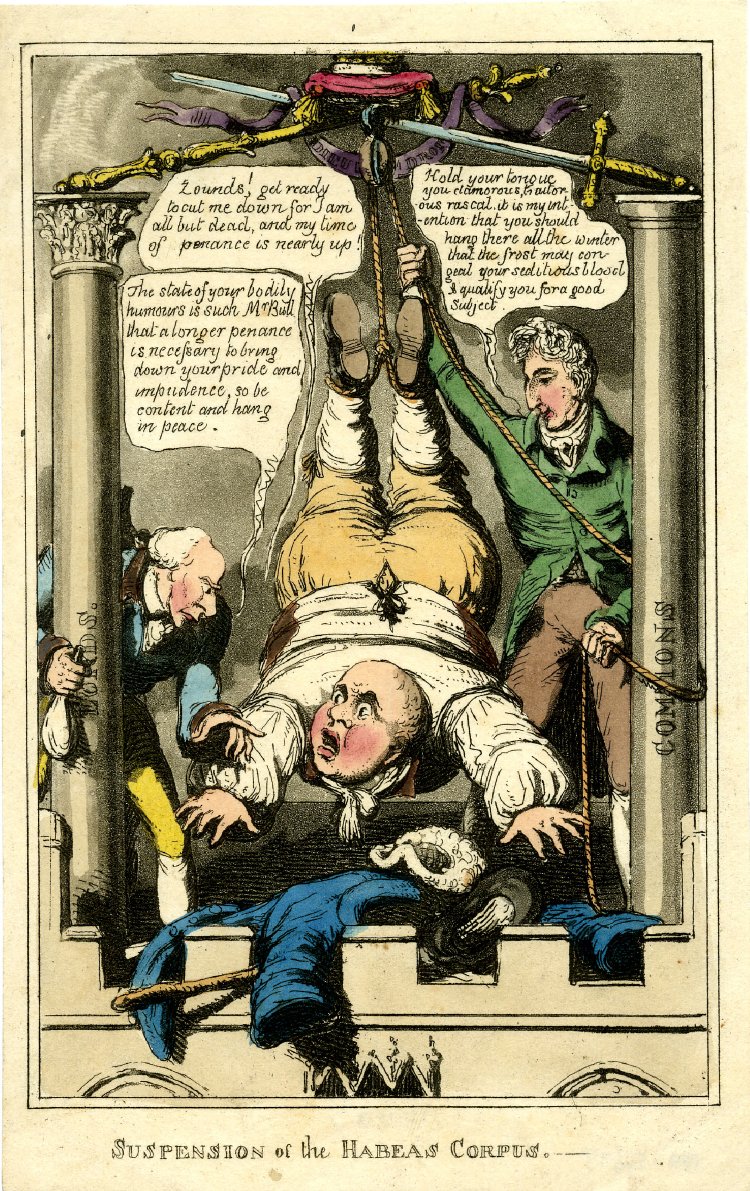
This 1818 satire has Wellesley-Pole is saying ‘I swallow £10,000 per annum and do very little for it.’

But what of the next five years, 1818-1823, I hear you ask. What did Wellesley-Pole do next? Well the answer is – not a lot. The problem was that Wellesley-Pole was up to any task set him, but after the new silver currency in 1817, save for the introduction of the gold sovereign, and a few changes after George IV came to the throne – Wellesley-Pole was not called upon to any great extent. This is not to say that the Royal Mint failed to develop and thrive under his command, more that it was really rather routine for a man of his administrative capabilities.
caslereagh

Wellesley-Pole was not vocal enough in support of Government repression

After 1818 Wellesley-Pole was angling for a new role in Government – His long-term ambition was to become First Lord of the Admiralty, something dear to his heart as a former naval officer and services as Secretary to the Admiralty (1805-1808). But he needed advancement to the peerage to make this possible. The only problem was that Lord Liverpool’s government had barely any Ministers sitting in the House of Commons. The Prime Minister really wanted to see Wellesley-Pole at his fiercest in the Commons alongside Lord Castlereagh – defending the crackdown on civil liberties. Instead Wellesley-Pole made repeated requests for advancement, so Liverpool became instead convinced that the time had come to get rid of him. In 1814 Wellesley-Pole had been an important pawn in the political rapprochement with the Duke of Wellington – but when the Iron Duke himself joined the Cabinet in 1818, Liverpool realised that one Wellesley was quite enough – and so the dye was cast for Wellesley-Pole’s removal

Ultimately it was events elsewhere which kept Wellesley-Pole in office until 1823. After the death of George III in 1820, the new King George IV was only to happy to ennoble his friend and confidante – and Wellesley-Pole became Baron Maryborough. But the trial of Queen Caroline, delayed the King’s coronation by two years, putting both Royal and Government business onto the back burner. Hence it was not until 1823 that Wellesley-Pole was ‘no longer Minted.’

maryborough

Wellesley-Pole ennobled – and sacked at the same time

We have now seen Wellesley-Pole’s legacy – and also found out how and why he was removed from office. But what of the Mint? How did they feel about the loss of their Master after 9 tumultuous years? The answer to this can be found at the National Archives where a 300-page document details the full period of Wellesley-Pole’s tenure at the Mint. Most importantly of all it reveals how popular Wellesley-Pole was amongst his staff and colleagues. Sir Joseph Banks (quoted at the head of this post) was just one of many contemporaries who, at least privately, were fulsome in their admiration of his achievements. Luckily for us, and for the Royal Mint – it was Banks’ admiration for Wellesley-Pole that enabled the establishment of the Royal Mint Museum (1816). Both men had a sense of the importance of retaining examples of old currency for continuity of British culture.
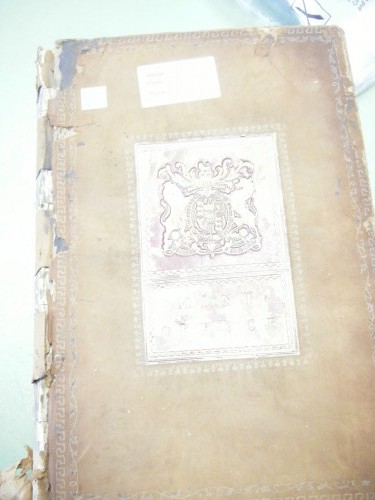
Main Mint book - 300 pages

Mint Book at the National Archives

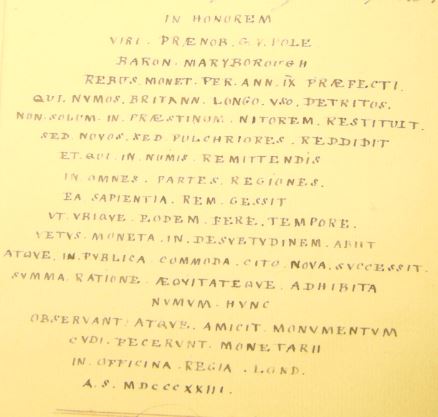
After Wellesley-Pole resigned – the Royal Mint scrambled to lavish him with lasting thanks for what he had done to enhance their reputation. A copy of his bust by Nollekins was commissioned and placed in the Mint boardroom alongside Sir Isaac – reckoned to be the greatest of all Mint employees. He also had the honour to be elected by the Goldsmiths to their Livery, a rare token of esteem. Finally Pistrucci designed a special medal which was awarded to Wellesley-Pole with a Latin inscription, the translation of which follows:

The Officers of the Royal Mint have caused this Medal to be struck in the year of our Lord 1823 in honour of the Right Honourable William Wellesley-Pole, Baron Maryborough (nine year Master of the Mint) as a mark of their respect and esteem for his Lordship: who when the coin of the realm, from long wear had become much deteriorated, not only restored it to its pristine beauty but replaced it by an entirely new coinage, far more perfect both in design and execution, and who also in transmitting the new coinage to all parts of the Kingdom conducted the undertaking with so much Wisdom, Consideration, and Equity that the old money ceased, and the new began to obtain currency in every place, at nearly the same moment

latin

For those Latin aficionados – here is the Latin version
Perhaps Wellesley-Pole’s greatest legacy of all was framed by his constant insistence that there should be  ‘no impairment in the coins beauty or quality’. Because of this the designs remained in circulation until decimalisation in 1971. For over 150 years British citizens carried his handiwork in their pockets, surely the greatest testimony to what he achieved.

 nollekins

Bust of Wellesley-Pole by Nollekins – Placed in Mint Boardroom

I hope you have enjoyed ‘The Mint with a Pole’ and come back soon as there are more episodes from the Wellesley-Pole family with which I hope to entertain you.

Any comments or feedback would be gratefully received.

To find out where Wellesley-Pole went after the Mint, please follow him to Royal Ascot – or see why Wellesley-Pole fought to prevent prosecution of a vagrant. Alternatively you can help the Duke of Wellington choose which niece he liked the most.

Sources

  1. National Archives MINT 1/56
  2. Daily Mail June 29 2009
  3. Humphreys H., Gold, Silver and Copper Coins of England (6th Ed, London: Bohn, 1849)
  4. Craig J., The Royal Society and the Royal Mint in, Notes and Records of the Royal Society of  London,  (London: The Royal Society, V19, No 2– Dec 1964)
  5.  Mays J., The Splendid Shilling, (Hampshire: New Forest, 1982)
Lord Liverpool’s Masterstoke

Creating Tradition – Wellesley-Pole and Ascot (Part 2)

How Wellesley-Pole came to be Master of the Buckhounds, 1823

Intro | Master of the Buckhounds | The Age of Reform | Anger Management | Legacy

buckhounds

Where’s Wellesley-Pole? Why, He’s Gone to the Dogs!

All things considered 1823 was not a great year for William Wellesley-Pole. After 9 successful years as Master of The Mint culminating in his deserved elevation to the peerage (under the title of Lord Maryborough) Wellesley-Pole fully expected to earn a senior Cabinet position upon Lord Liverpool’s ministerial reshuffle. But when the Prime Minister summoned Wellesley-Pole in January 1823 he dropped the bombshell that our man was surplus to requirements. To put it bluntly, Wellesley-Pole had reached the end of his useful life and the time had come for Liverpool to bring in new blood, such as Robert Peel and the racey and exciting William Huskisson,  who would help to bolster his unpopular administration

But Wellesley-Pole’s reaction placed Lord Liverpool in a quandary, for he flew into a rage and point blank refused to leave the Cabinet. Charles Arbuthnot recorded that Wellesley-Pole considered ‘the usage he has met with is quite atrocious & that he would not accept of any office but the one he has. He talked a great deal of stuff about the respect due to him as the Duke of Wellington’s brother, & in short, was like a madman.’ Such defiance of Prime Ministerial order threatened to undermine the very foundations of Liverpool’s Government. He had to get rid of Wellesley-Pole, but needed to devise a stratagem to achieve his aims without further rancour.

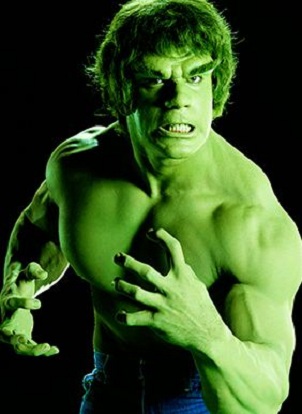
liverpool  wellesley-pole hulk

Lord Liverpool didn’t like Wellesley-Pole when he was angry

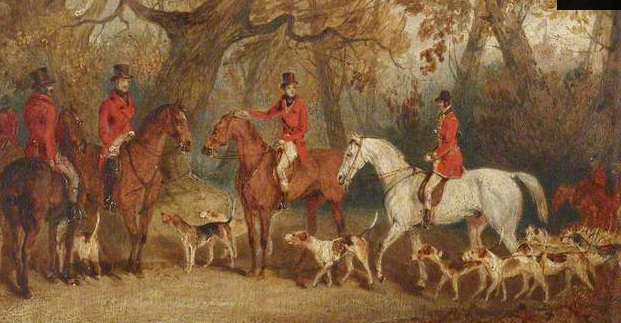
In the Autumn of 1823 Liverpool at last found the perfect opportunity to offload his angry Minister. He did this by exploiting Wellesley-Pole’s close relationship with King George IV. The death of Charles Cornwallis on 9th August created a vacancy in the Royal Household, in the office of Master of the Buckhounds. Wasting no time at all Liverpool wrote to the King suggesting that Wellesley-Pole wanted to apply for the job because he was practically George IV’s number one fan.The King was led to believe that Wellesley-Pole he always dreamt of having a country home near Windsor, but that he was far too modest to apply. Needless to say the King was receptive to such gushing adulation, took up his pen and wrote a plea for Wellesley-Pole to take the job. Perhaps with Liverpool’s connivance the salary offered was generous-  plus he was promised the gatehouse to Windsor Park upon which to make his establishment.

When Wellesley-Pole received the King’s letter has was surprised and flattered, but unsure as to whether a man of his age (60 years old) could be capable of taking on such a youthful and athletic role. However it was a place in the Royal Household dating back to the 1300s which appealed directly to Wellesley-Pole’s strong respect for of tradition. For Mrs Wellesley-Pole it was a no-brainer because she really did want a country retreat and this golden opportunity was quite simply too good to pass up. The King’s offer was therefore speedily and gratefully accepted.

It was only after the deal was done that Liverpool played his trump card. He wrote to Wellesley-Pole congratulating him on his appointment to the Royal Household but reminding him that an employee of the King could not be a Cabinet Minister – since the King would be embarrassedby the accusation of putting his own men into Government. This was a masterstroke leaving Wellesley-Pole no option but to fall on his sword – for he could not go back on his word to the King, still less dash his wife’s hopes of rural paradise. In private Wellesley-Pole roundly abused all in Government, not least the Duke of Wellington in whom he felt a keen sense of betrayal, but the fear of upsetting the King meant that ultimately Wellesley-Pole went quietly into political retirement.

buckounds at salt hill

The Buckhounds at Salt Hill, near Windsor c.1850

So just what was Wellesley-Pole letting himself in for? Well its fair to say his task largely involved acting as the Royal entertainments officer. This principally involved gathering the horse and hounds together for organised hunts, usually in Windsor Forest; but from the mid-1750s it began to embrace other sporting activities – particularly equine sports. Because the Royal Family controlled the wardenship of Windsor Forest, their patronage over horse-racing at Ascot Heath was long-established – dating back to Queen Anne (1711). Responsibility for ‘Royal Ascot’ really was the jewel in the crown of duties expected from the office of Master of the Buckhounds.

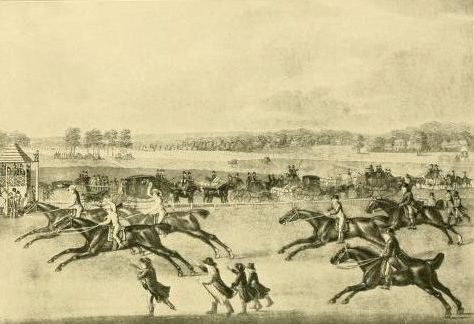
royalascotregency

Ascot Heath Races – The ‘Royal’ tag was to come much, much later

It is no secret that Wellesley-Pole had a hot temper, or that he could be a very fearsome adversary when roused. But his temper tantrums were never of long duration and, like his brother Wellington, he refused to let emotion become an obstacle to giving his all in service of his country.

Just a month after taking up his duties, Charles Bagot saw Wellesley-Pole ‘in light buckskins with a jockey cap and gold couples to his belt’ acting as Master of the Buckhounds. Wellesley-Pole insisted he was ‘exceedingly pleased with the appointment…he was getting tired of politics and the hounds were just the hobby he would most like.’ Whether this was bravado or the plain truth, it was obvious that Wellesley-Pole was going into this job enthusiastically. He quickly realised its possibilities went far beyond dog-minding,  offering him the chance to take control of Royal Ascot, a once great event whose reputation was tarnished by years of disorganisation  and neglect. Nearby racetracks (such as Epsom and Newmarket) threatened to leave Ascot in their wake. So, for Wellesley-Pole the task was on!!

So, on 13th October 1823 the King’s staghounds made their first appearance of the hunting season, near Winkfield Plain at Windsor. Several ladies in carriages and a great crowd of ordinary folk turned up to witness Lord Maryborough’s debut as Master of the Buckhounds- and to witness how a Cabinet Minister really had gone to the dogs.

To find out more about how brilliantly devious Lord Liverpool could be you should look no further than Norman Gash, whose The Life and Political Career of Robert Banks Jenkinson, Second Earl of Liverpool 1770–1828  was first published in 1984. Sadly Norman died in 2009 but a new paperback version of his book is due for publication in 2015.

For more on Wellesley-Pole’s hot-headedness, and how he turned anger into a positive energy, you may like to read his battle to save a tramp.

To find out how Wellesley-Pole ‘created’ Lord Wellington please read my guest blog on Number One London

I’d love to hear any comments or questions you may have about the Wellesley-Pole family, not least Wicked William, the blackest of all black sheep. So please contact me and I’ll be delighted to respond.