The Mint with a ‘Pole’ (1814-1823)

Introduction: How and why Wellesley-Pole became Master of the Mint

Intro | Waterloo Medal | Pole & Pistrucci | The Great Re-coinage | Exit & Legacy

maryborough

An outcast redeemed: William Wellesley-Pole (c.1814)

When Wellesley-Pole took up office on 29th September 1814, this was to be the first and only time that the Master of the Mint qualified as Cabinet rank. In this period the Government was dominated by peers with only exceptional outsiders breaking into their elite circle. By any standards Wellesley-Pole’s appointment was unusual. He was neither a peer (nor even a supporter) of Lord Liverpool’s administration – yet he was handed an unexpected seat in the heart of government doing a job previously considered second-rate. So why was Wellesley-Pole brought in from the cold, and what motivated Lord Liverpool to make the role of Master of the Mint a Cabinet position? To answer this we must go back 2 years:-


perceval death

Spencer Perceval’s murder: the opening shot in a ministerial crisis

The Battle of 1812

Lord Liverpool came to office in the summer of 1812 in the aftermath of the assassination of prime minister Spencer Perceval. But he did so at the expense of the Richard Wellesley who spectacularly fell from grace after his memo critical of Perceval’s war effort was leaked to the press at the worst possible time:

press leak

Richard Wellesley’s attack on Perceval coincided with announcement of his death

Initially Lord Liverpool proposed Wellesley-Pole to join the Cabinet as Minister for War, which would have put him in charge of Arthur [Lord Wellington]’s campaign in Spain. But the Prince Regent felt placed in an awkward position and refused to accept Wellesley-Pole because ‘he could not reward one brother, and abandon the other’. Heavy of heart Wellesley-Pole wrote to Liverpool on May 21st

I shall ever retain a just sense of your great kindness towards me [but] I could not serve without subjecting myself to difficulties and inconveniences which I am bound by every principle of affection to my brother to avoid.

Meanwhile in the Peninsula Wellington took the news badly, pronouncing himself ‘confoundedly vexed’ that Wellesley-Pole chose to follow his brother out of office, instead of staying and fighting for his place. Wellington’s antipathy towards Liverpool was such that he broke contact with London during its state of flux declaring ‘I will not tantalise you by entering on our plans for the remainder of the campaign.’ Ironically for all sides Wellington’s victory at Salamanca in July 1812 actually served to cement Liverpool’s shaky administration, putting an end to any realistic prospect of Richard Wellesley seizing power.

salamanca

Wellington’s victory at Salamanca just about saved Lord Liverpool’s administration

Cometh the hour, cometh Wellesley-Pole (1814)

The main reason Wellesley Pole was asked to re-join the Government was because of an urgent need to improve relations between Liverpool’s administration and the Wellesleys. After 1812, Liverpool’s government was insulated by the inability of opposition groups to unify against them. However, when Napoleon surrendered and was exiled in 1814, Arthur (by now Duke of Wellington) made it clear to the Prime Minister that he would not support an administration that excluded his brothers. The risk of being at odds with the hero-of-the-hour was too great; bridges must be built. So, after his triumphant return to England in June, Liverpool acceded to Wellington’s request to bring Wellesley-Pole into the Cabinet.

wellington2

With victories like this, you can ask for anything

On this occasion Wellesley-Pole clearly benefitted from patronage via the Duke of Wellington, but Liverpool’s decision to place him in charge of the Mint was really not a token gesture. In fact it was a pragmatic and eminently sensible move. Liverpool already had a personal association with the Mint, serving as Master between 1799 and 1801. His father Charles Jenkinson chaired a long-running Select Committee dedicated to enhancing Mint practices. Currency reform was vital, becoming more acutely necessary as the war reached a conclusion. Replacing the silver currency required the Mint, the Exchequer, Prime Minister, bankers, and the Prince Regent to work in harmony. The aim was to preserve the banking system whilst it underwent a vital blood transfusion. These unique circumstances may explain Liverpool’s decision to elevate Master of the Mint to Cabinet rank. He knew Wellesley-Pole met the criteria required, having worked closely with him before. Wellesley-Pole was a good administrator, loyal and discreet, had Exchequer experience, and (best of all) commanded the Prince Regent’s respect.

Appointing Wellesley-Pole therefore enabled Liverpool to appease the Duke of Wellington, but it also gave him the ideal person to tackle serious and urgent problems which threatened to destroy Britain’s post-war economy.

The State of the Mint to 1814

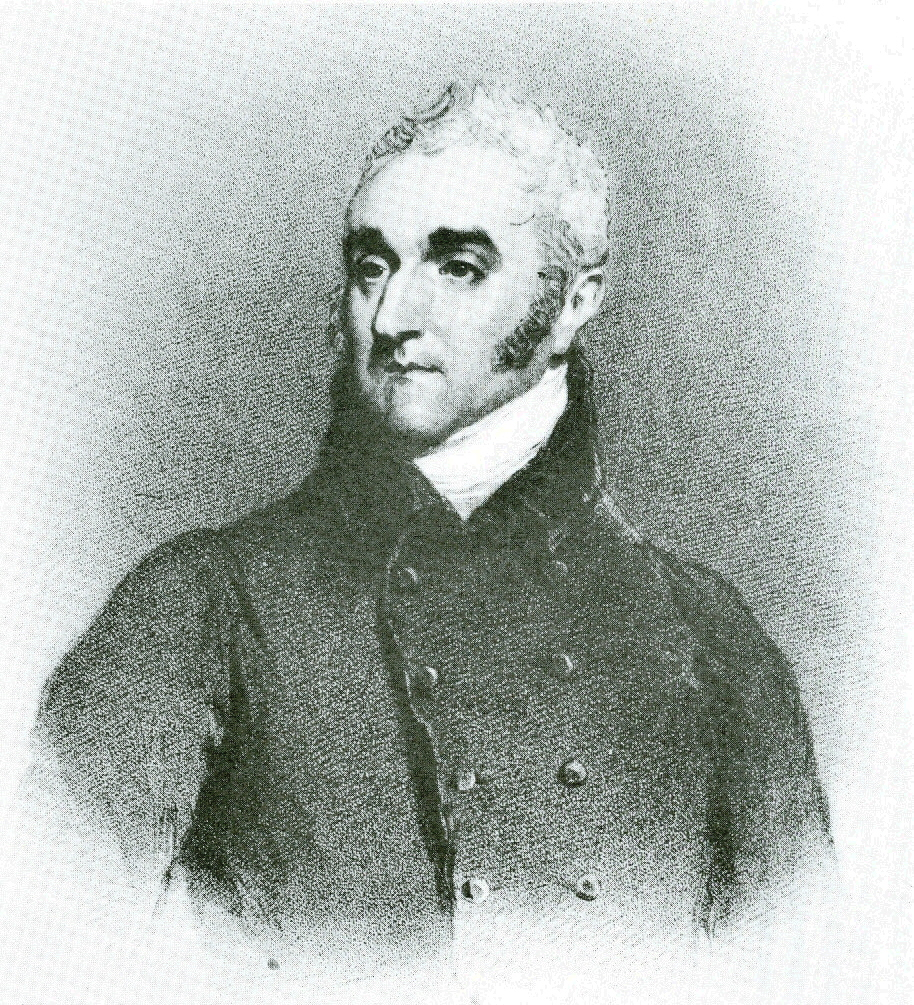
In 1787 the Mint began a slow process of modernisation. Jenkinson’s Select Committee examined the state of the coinage and existing working practices. He was assisted by Sir Joseph Banks (1743-1820), President of the Royal Society – a post he held for 42 years. The Royal Society traditionally exercised control over currency manufacture. The Mint comprised of disparate departments with strict, almost medieval, working practices. The Royal Society acted like a glue to keep these elements working together and to oversee innovation and improvement.

 banks

Sir Joseph Banks (1743-1820) was to become Wellesley-Pole’s greatest fan

When Jenkinson’s Committee was established, it was so long since silver coins had been mass-produced that Mint employees feared the know-how was lost. Eventually in 1804 a system was perfected for producing standard weights and alloy mixtures. Around the same time, Matthew Boulton invented a steam-driven coining press. He operated from a factory in Birmingham, supplying copper coinage throughout Britain and Ireland. To modernise the London operation a new Mint was constructed at Tower Hill incorporating steam technology, which was completed in 1810.

royalmint1830

The new Royal Mint at Tower Hill

Boulton’s steam press system and use of highly-skilled engravers overcame the problem of counterfeit copper coins. Also an Act of Parliament in 1803 introduced draconian fines for simple possession of fraudulent coins. But forgery of silver currency continued unabated. Up until this time the best engravers only worked on large value coins. No regard was given to the quality of lower denominations. ‘From the Mint’s point of view the manufacture of coin had to satisfy two, and only two, criteria: coin must be of proper fineness and of accurate weight.’ It is little wonder that forgers thrived.

back from elba

Napoleon’s brief trip home, 1815

Almost as soon as Wellesley-Pole began his duties, Napoleon escaped from Elba and hostilities with France resumed. During this period Wellesley-Pole asked the Commons to approve the construction of houses ‘to accommodate… persons who had been ‘imported’ from Birmingham, for the purpose of managing the machinery of the new Mint. At a meeting with Banks to discuss new currency designs, Wellesley-Pole was introduced to an Italian engraver named Benedetto Pistrucci, of whom we shall hear more.

The Battle of Waterloo was to present Wellesley-Pole with his first opportunity of proving his worth, and he did not waste it. Tune in for part two to find out how the Waterloo Medal was conceived, the extraordinary speed in which it was manufactured, and its unique innovation.

For more information about this exciting era in the history of the Royal Mint please visit their website or the Royal Mint Museum, whose director Dr Kevin Clancy is a widely renowned and respected numismatist.

If you are interested in Wellesley-Pole, you may be interested to read about his ‘creation’ of Royal Ascot

You might like to know how Lord Liverpool got the better of the Wellesleys (again), or why The Duke of Wellington considered Wellesley-Pole’s son (Wicked William) ‘lamentably ignorant and idle’

Finally, the growing legions of Wellesley-Pole fans undoubtedly wondering why he’s never been written about should be thrilled to bits to know that our hero is very much a ‘best supporting character’ in Geraldine Roberts’ forthcoming book Angel and the Cad : Love, Loss & Scandal in Regency England

Sources Used:

[1] Butler I., The Eldest Brother: The Marquess Wellesley 1760-1842 (London: Hodder & Stoughton, 1972)

[2] British Library Manuscrips Add.MSS 37296

[3] Longford E., Wellington: Years of the Sword (London: Panther, 1971).

[4] Craig J., The Royal Society and the Royal Mint in, Notes and Records of the Royal Society of London, (London: The Royal Society, V19, No 2– Dec 1964).

[5] Selgin G., Steam, Hot Air & Small Change: Matthew Boulton and the Reform of Britain’s Coinage,in Economic History Review (London: Blackwell, 2003)

[6] Challis C., A New History of the Royal Mint (Cambridge: CUP, 1992)

[7] Hansard, 25/Apr/1815
Why Wellesley-Pole should be commemorated by Ascot

Creating Tradition – Wellesley-Pole and Ascot (Part 5)

The Importance of Wellesley-Pole’s Legacy

Intro | Master of the Buckhounds | The Age of Reform | Anger Management | Legacy

maryborough

William Wellesley-Pole (Lord Maryborough) 1763-1845

It is tempting to turn the concluding part of my study of Wellesley-Pole’s impact upon Ascot into an open letter to the powers that be, in the hope that our man will finally gain the credit he deserves. Instead, however, I want to explain why the invention of tradition was not just about Ascot, but more to do with the relationship between the monarchy and the people.

Monarchy

A Perfect Marriage : the Monarchy &  the People

We have seen how Wellesley-Pole’s structural and organisational changes transformed Ascot into the best race track in Britain, and how his rules of racing added a much-needed backbone of professionalism upon which horse racing (as a sport) has thrived. We must must acknowledge that great innovators can make mistakes, & there certainly were one or two wrong decisions made along the way.

Wellesley-Pole’s true legacy, however, must lie in the adoption of ceremonial rituals via the ‘Royal Procession’ – an entirely new creation that gave the instant impression of being a long-held tradition- bringing the people and their King together as one joyous ensemble. It was a simple but brilliant idea that has served us right up to the present time.

Royal Procession

To illustrate this better I will firstly examine why ‘Royal Ascot’ meant so much to George IV, and secondly show how it played a significant role in popularising his successor, William IV.

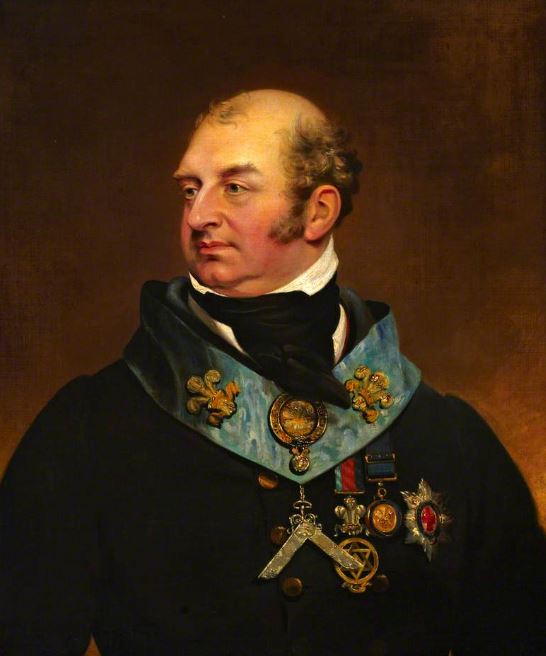
It must be clarified that Ascot was inaugurated under the reign of Queen Anne in 1711. This was more of a permit to hold meetings, and it was not until after 1750 that an annual 4-day meeting was held. The first royal to show a great interest in Ascot Heath was the Duke of Cumberland – who, as Lord Warden of Windsor Forest, was a enthusiastic and regular attendee. King George III also went frequently until his descent in madness in 1810. But it was his two eldest sons George (Prince of Wales) and Frederick (Duke of York) who really took Ascot to their hearts. The Duke of York was perhaps the most pivotal supporter of Ascot in this period as he regularly entered his own horses, sponsored races, and was always on the course. George, on the other hand, was more of a gambler than a participant – so much so that his debts led to exile from Ascot after 1807. Even after he became Prince Regent, George was remained wary of Ascot – principally because he was deeply unpopular and genuinely feared for his safety. The Duke of York by contrast was a soldier, widely respected, and loved by the people – amongst whom he could freely mingle.

york

Frederick, Duke of York – a massive fan of Ascot Heath Races

So, by 1820 when the Regency ended and George IV became King – Ascot Heath was certainly considered a race meeting frequented by Royalty – but there was no real glue to bind each together into one synonymous concept

George IV

caroline

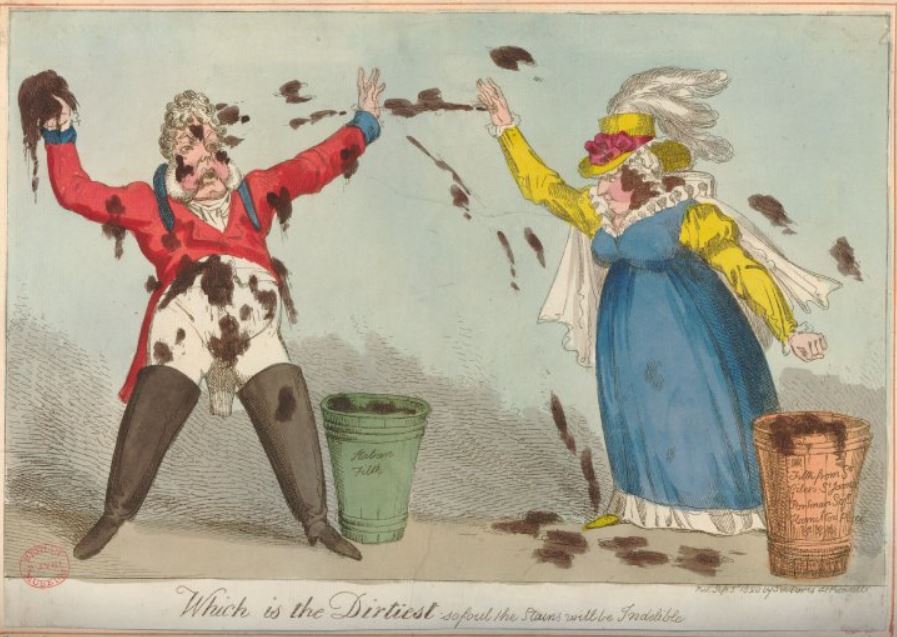
George IV’s early reign was marred by mud slinging

It is actually quite incredible to think that speculation about the King’s health was gauged throughout 1830 on the basis of whether he was likely to attend Ascot Races. On April 24th reports that the King spent three hours instructing the Royal Stud groom regarding horses to enter, was taken to mean his illness wasn’t serious. Yet as the weeks passed by and it became clear that George IV would miss Ascot the nation braced itself for bad news. This sense of foreboding reveals the bond that had formed between King and Royal Ascot and can be explained thus:

George Satire

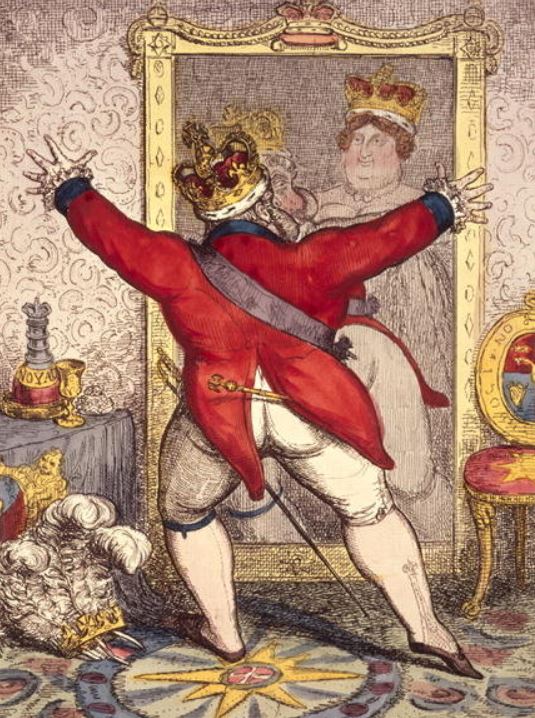
The press loved to hate the King, and he became withdrawn

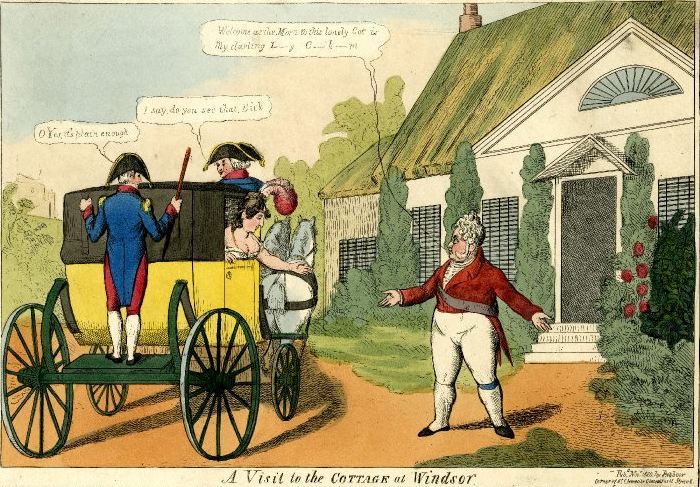
The first years of the King’s reign were dogged by social and political unrest, and problems with his estranged wife Queen Caroline of Brunswick. Her trail for adultery, exclusion from the Coronation and sudden death in 1822 combined to make George IV deeply unpopular at all levels of society. Not suprisingly by 1823, the King was largely reclusive – spending months on end at his Royal Cottage in Windsor Park. After his death it was revealed that aside from an occasional visit to the theatre, Ascot Races was the only public engagement at which the King appeared.

the Royal cottage at Windsor

Home from home – The Royal Cottage, Windsor Park

Ascot Races was to become a unique and pivotal occasion for the King. His decision to embrace and improve Ascot, by employing  Nash then Wellesley-Pole, was a bold move hoping to carve out one small corner of Britain where he could feel at home amongst his subjects. As an excercise in public relations, Wellesley-Pole’s newly devised ‘Royal Procession’ was a masterstroke. By 1826 it was reported

A little before one the heath was well filled, and the eyes of the spectators were then anxiously turned towards the straight mile, and the Royal Cavalcade approached amidst the cheerings of the people. The carriages stopped at the Royal Stand, and his Majesty alighted, and during the whole of the races was at the window, conversing with the noblemen of his suite… & was highly delighted at the affectionate demonstration of loyalty with which his progress was attended. He bowed repeatedly, and smiled upon the multitude in the most affable manner

If the King liked it, the public was just as enamoured, as this slightly offensive 1828 report shows

It cannot be denied that the popularity of these races arises more from the sanction afforded them by his Majesty, than from the mere running. Horses may be seen every day, but Kings are scarce; and the sight of one is something to talk of, and is recompense for an immensity of fatigue and expense. Of the thousands congregated at least three out of every five came to see the King; and it is a fortunate circumstance for his admiring subjects, that the Royal Person is sufficiently bulky not to be mistaken for that of any less personage

When Wellesley-Pole created the Royal Procession, therefore, he did an enormous service to the King, paving the way for his popular acceptance. In one fell swoop, Ascot Heath was permanently transformed into ‘Royal Ascot’ – for the benefit of both instititutions.

William IV

It is a curious thing that Ascot proved to be an important turning point for George IV’s successor, William IV  (even though Wellesley-Pole was no longer in charge). The new King was never much of a fan of horse-racing and seldom attended Ascot. However, one of his first engagements was at Wellesley-Pole’s second Ascot meeting in August 1830 where he received a rapturous reception.

WilliamIV

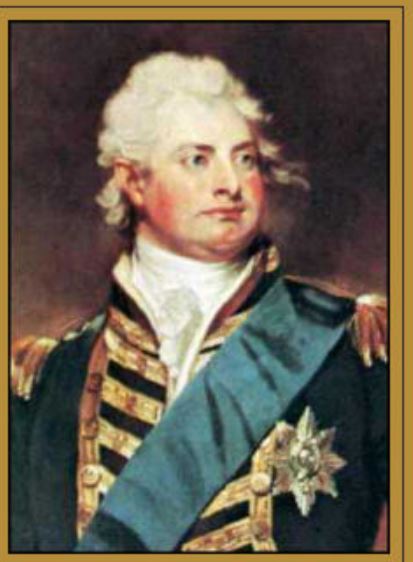
William IV – the ‘Sailor King’

The following summer was less enjoyable as the King found himself snubbed by the aristocracy, who boycotted Ascot in protest at William IV’s support for the Reform Bill, reportedly ‘evincing the coldness of their feelings towards the Crown’. But when the public heard of this snub they turned out in even greater numbers than before. The Morning Chronicle wrote

It is clear that the expectation of seeing the King is paramount over every other consideration with three-fourths of those who visit Ascot; without this attraction, certain we are that the brilliant company assembled on the Heath would have been fewer by some thousands… the great popularity of the Sovereign excited an interest ensuring a full attendance.

In 1832 the Royal Procession ceremony provided one last final, and unexpected endorsement proving beyond question that Wellesley-Pole’s marriage of Ascot to Monarchy was both secure and permanent. When making his initial public salute at the balcony of the Royal Stand…

A ruffian, in the garb of a sailor suddenly threw a large flint stone directly at the King…striking our venerable Sovereign on the forehead, just above the rim of his hat… the sound was loud and the King fell back one or two paces and exclaimed ‘My God, I am hit’. Happily his Majesty soon relieved all anxiety… and appeared smiling at the front window of the Stand to huge cheers from the populace

Concluding Words

So we can see the pivotal role Ascot played in re-connecting one monarch (George IV) with his subjects, and reviving another (William IV) at a time when the ruling elite tried to slap him down. In both instances the Royal Procession provided a perfect platform for the exchange of affection needed between citizens and Kings. Wellesley-Pole therefore created a pageant that elevated Royal Ascot above the status of a mere sporting occasion into a popular celebration of the monarchy.

That Ascot became the venue for a vitally important patriotic affirmation, whilst at the same time undergoing unprecedented improvements in all aspects of horse-racing – is the reason why I think Wellesley-Pole ought to be thanked by today’s owners.

ascotroyale

If you have read and enjoyed this, I hope you will try to remember Wellesley-Pole next time you happen to see Ascot’s ‘Royal Procession’. At least that way his hard work will never be forgotten.

Recommended Links

The main Ascot website has detailed information on days out at Royal Ascot 

I would heartily recommend a stay in Windsor, as besides Ascot there is so much to do in this beautiful town

Anger Management? Wellesley-Pole’s Ascot Disaster (1829-1830)

Creating Tradition – Wellesley-Pole and Ascot (Part 4)

The Decline & Fall of Wellesley-Pole

Intro | Master of the Buckhounds | The Age of Reform | Anger Management | Legacy

By the end of the 1820s Royal Ascot was the most important occasion in the sporting calendar, attended by huge crowds from all levels of society. On racing week London was quite simply drained of its inhabitants, & a great many rival events and pastimes forced to reschedule or close their doors as they could not hope to compete. Other sports, such as boxing cleverly capitalised on Ascot’s success – as for a number of years it became customary for a big bout to be arranged to attract the returning hordes on the evening of the final day’s racing.

London’s loss was not only commercial and social, for there was a marked rise in both burglaries and fires in the many unattended homes. Criminals must have loved the absense of Bow Street Runners, many of whom were sequestered to Ascot by Wellesley-Pole.

 ascot 1836
Wellesley-Pole’s grandiosely remodelled Royal Stand

However, by 1828 Wellesley-Pole began to become a victim of his own success, and his control over Ascot unravelled

Second Meeting Syndrome

George IV was so delighted with ‘Royal’ Ascot that he commanded Wellesley-Pole to arrange a second meeting to be held from 1828 onwards- proposing that it be held a mere fortnight after the first one finished. It is easy to see why the King craved more of Ascot, given the rapturous reception he was now accustomed to receiving each day he attended.

george iv

George IV loved Ascot and was greedy for more

Wellesley-Pole was as anxious to make the King happy, as the King was willing to give Wellesley-Pole absolute authority over the new arrangements. But as the King’s health declined, Wellesley-Pole’s workload doubled, meaning that his temperament and judgement was to be sorely tested by these new arrangements.

A second meeting was duly held at Ascot from 1828 onwards, but it was soon apparent that the King’s enthusiasm was insufficient to overcome the many problems created by trying to replicate another ‘Royal Ascot’ a mere fortnight after its conclusion. In the first place the new meeting did not suit many of the leading horse owners, who were used to taking their horses on to Goodwood after ‘Royal Ascot’. Secondly there was an inevitable loss in quality of the main meeting as several high-prize races were transferred to the second meeting. Thirdly and most importantly, no allowance was made for the ordinary folk whose attendance at Ascot was crucial to its carnival atmosphere. In 1829 the Morning Post summed up the problem

After the first Ascot meeting the better horses generally leave… leaving a small quantity of bad horses for the second meeting… We do have other thoughts upon the subject which we also consider of consequence to the support of the race course- the middling classes of society are the principal frequenters, who cannot afford to give up so much time in so short a space.

It was obvious that a second meeting was a bad idea, but Wellesley-Pole still went ahead in 1830 – though he did push the date back to August. Wellesley-Pole went against his better judgement to avoid disappointing the King, instead of calling the whole thing off. In fact George IV died on 26 June 1830 so was not around to witness the demise of this failed experiment, and Wellesley-Pole was held responsible for the whole idea. Not surprisingly, as soon as Wellesley-Pole stepped down as Master of the Buckhounds, ‘Royal Ascot’ reverted back to its old single meeting format.

Don’t Question MY Authority

The most inevitable consequence of Wellesley-Pole’s increased power was the knock on effect it had upon his emotions.  As his temper began to overheat, decisions became rash and ill-considered & his well-ordered management system began to crumble and subside.

endofrace

Arguments often flared up before the race had even set off

Wellesley-Pole’s megalomania boiled over during the Ascot Gold Cup in 1829. Prior to the race and to avoid any delay in his strict timetable, Wellesley-Pole made a rule that the horses gather together- setting off at the same time. The Morning Post wrote

When Mr Gully heard of [the new rule], after all the horses were brought to the post, knowing that his horse was of a frightful temper, he became apprehensive he might lose his chance of the prize, and hastily rode up to [Wellesley-Pole] to induce him to rescind the order. In doing so he passed the Royal Stand & neglected to take off his hat.

Wellesley-Pole seized on this breach of protocol to deny Gully a hearing and the race was run. Afterwards Gully sent a letter of apology to the King, which was graciously accepted, but this merely served to stir Wellesley-Pole’s resentment further. On the grounds that Gully’s explanation was not unsatisfactory to him as Lord Steward of Ascot – Wellesley-Pole decreed that Gully was henceforth forbidden to run a horse for the Gold Cup!!

Considering that the King had taken no offence for Mr Gully’s faux pas, Wellesley-Pole’s punishment was very mean-minded and personal. But it did not end there because Wellesley-Pole subsequently issued an edict declaring that from 1830 Ascot would only accept horses

The bona fide property of a member of the Jockey Club, a member of the Upper or Lower Rooms at Newmarket, or one of those clubs in London whose members may be admitted into the above clubs without a ballot

This was an extraordinary dictat, unilaterally imposed by Wellesley-Pole – and had immediate and far-reaching consequences. Most country-based owners suddenly found themselves excluded from entry meaning that by 1831 the Gold Cup was reduced to a ‘commonplace affair’. Royal Ascot was seriously damaged because of this. By this time both Wellesley-Pole and George IV were off the scene,  so it presented new King William IV with a perfect opportunity to boost his own popularity with Ascot patrons by rescinding this elitist rule.

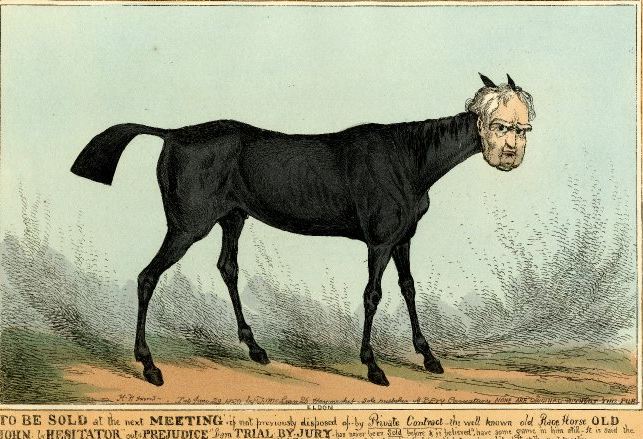
donkey-pole

Wellesley-Pole was starting to act like a donkey.

You Damned Scoundrel!!

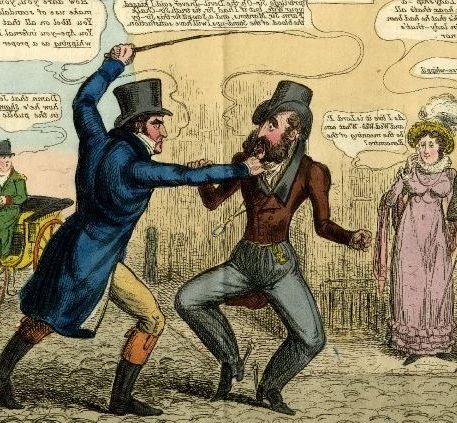
Perhaps the final straw for Wellesley-Pole came as a result of a moment of madness, as his fierce temper exploded and he resorted to violence. It must have been pure comedy to witness what occurred. During the second Ascot meeting of 1829 Wellesley-Pole observed a man dragging an old lady off the race track, and heard her shout ‘Murder’ as she tried to resist. In an instant he rushed from the Royal Stand and ‘struck the man two desperate blows with the butt end of a whip, hitting him on the forehead and damaging his cap.’ Not waiting for an explanation Wellesley-Pole then grabbed the man by his lapels, throwing him to the ground with the words ‘You damned scoundrel!’

horse whipped

Wellesley-Pole loses the plot, June 1829

All of this was quite a feat for a 66 year old man dressed in ceremonial garb, but Wellesley-Pole had totally mis-read the situation. For the lady in question was a blind beggar unaware of the danger she faced wandering onto the race track. Her ‘assailant’ was in fact a special constable from Windsor whose sole concern had been for for her safety. Not knowing why she had been grabbed the beggar had indeed cried ‘Murder,’ and this was what triggered Wellesley-Pole’s protective instincts.

Just a few days after King George IV’s death, Wellesley-Pole found himself before a judge at Abingdon where he was convicted of common assault, receiving a fine of £50. Several witnesses testified that Wellesley-Pole’s reaction was disproportionately violent and that his rage had got the better of him.

After this embarrassment Wellesley-Pole changed his mind about staying on to serve William IV and announced his departure by the end of 1830.

Such sequence of unfortunate events is one that sadly repeated itself throughout Wellesley-Pole’s life. Once again his achievement were subsumed by the ignominy of his departure, and the impression he left was of being volcanic in nature, liable to erupt at any time. When viewed like this, it is not so hard to see why his son ‘Wicked’ William turned out so bad.

horseraces

His race may have been run, but ‘Royal Ascot’ ultimately was the winner

Yet none of the above errors should detract from the permanent changes instigated by Wellesley-Pole, and the skilful way in which he welded ‘Royal’ into Ascot. Hence, in the final part of this blog I will sum up the Wellesley-Pole’s legacy as Steward, suggesting that Ascot really ought to find a place, any place, to honour his achievements.

For more about Wellesley-Pole’s defence of the poor you might like ‘She’s MY vagrant’ or to see Wicked William’s equine escapades read Wicked William’s Hunt

A great way to find out more about King George IV is via The Royal Pavilion Website

Or you could visit Rachel Knowles’ excellent Regency History Blogspot  & Sarah Murden’s Georgian Era

Last but not least look out for The Angel & The Cad Geraldine Roberts’ forthcoming true story of love & loss in Regency England, which will be published by Macmillan June 2015 & features more on Wellesley-Pole

The invention of ‘Royal Ascot’ 1823-1830

Creating Tradition – Wellesley-Pole and Ascot (Part 3)

How Wellesley-Pole invented ‘Royal Ascot’

Intro | Master of the Buckhounds | The Age of Reform | Anger Management | Legacy

George IV

George IV – A great patron of Ascot Races

The transformation of Ascot Heath races to ‘Royal Ascot’ between 1813 and 1830 must largely be credited to George IV. At the beginning of his Regency (1813) Parliament enacted an Act of Enclosure securing the future of Ascot Heath as a public racetrack. But it was not until his accession to the throne in 1820 that the King really made his mark. Almost immediately his favoured architect John Nash was engaged to construct a Royal Stand.  This began a decade of almost continuous change and improvement. Between 1820 and 1830 racing at Ascot and the Royal Family became synonymous- This happened because it was transformed into an incredibly well-organised and massively popular event- one of the few venues where the unloved and extravagant King genuinely felt at ease.

Wellesley-Pole was the man George IV entrusted to revitalise Ascot, but the King could never have imagined this undertaking could lead to the creation of ‘Royal Ascot’ AND the rehabilitation of the King in the eyes of his subjects.

Wellesley-Pole’s changes can be briefly be categorised as follows:

Building Works

The Roal Stand - Ascot 1825
The Royal Stand c.1825

Though the Royal Stand was first opened in 1822 (having been built by Nash in just 5 weeks), it was greatly improved and modified under Wellesley Pole’s stewardship. Additional rooms were added, and the windows hung with rich rose-coloured drapery. The King now had the option to make himself more visible to the public from its rooftop terrace, or to retreat to the privacy of his entourage. He greatly enjoyed the ability to wave to his subjects from the security of his suite.

In 1826 a new stand was erected for the Duke of York next to a further smaller stand for Wellesley-Pole’s use as steward. Sadly the Duke of York died in 1827, whereupon the King assigned his brother’s stand to the Jockey Club. Before it was handed over Wellesley-Pole reconfigured the windows so that Jockey Club members would not be able to overlook the King’s Stand.

For the benefit of the betting circles a new three storey building was erected to afford a better view of proceedings for aristocratic gamblers as well as more than doubling the capacity for licensed book-makers. This building too was set back to prevent over-looking the Royal Stand.

All these improvements were eventually superseded by the opening of a magnificent Nash inspired public stand in 1839, but the plans for that were laid down during George IV’s reign, when Wellesley-Pole was in charge.

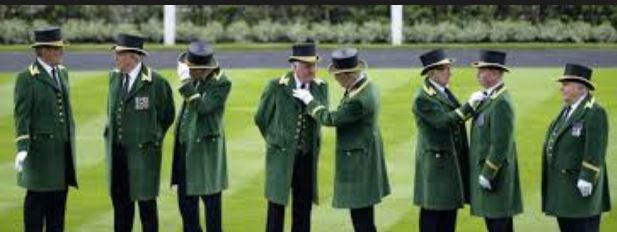
But the most important and lasting changes to Ascot undertaken by Wellesley-Pole related to the course itself. Wellesley-Pole recognised that the quality of racing was totally dependent upon the state of the racetrack, and set out to ensure that (whatever the weather) Ascot would rise to the occasion. His first action was to ensure that race-goers could not enter the running area. He did this by employing a host of security guards and police men who rigidly prevented any intrusion likely to damage the course, or worse still hinder the races when in progress.

yeoman prickers

‘Yeoman Prickers’ nowadays known as Greencoats -entrusted with keeping pedestrians off the course

By 1824 the course was closed to cattle grazing- only sheep were permitted onto the course when it was not in use. An extensive program of under-draining began so that by 1828 it could no longer be considered a ‘heath’ since standing water simply drained away. That same year Wellesley-Pole remodelled the turns at Swinley & Pike corners, creating a wider sweep, giving the horses more room for running with greater safety – immeasurably improving the race standards. Finally in 1829 £300 was spent forming a new gallop for the horses in training – meaning that the course was now pristinely preserved solely for the annual race meeting. The Morning Chronicle described these structural improvements as making ‘Ascot on of the most complete race courses in the Kingdom… which cannot fail of proving beneficial to the sport’.

Ceremonial

It was already a long-held tradition that the Royal Family attended Ascot Races. Since the 1750s the event was held once annually lasting four days. There was no fixed date in the calendar for Ascot, it seemed to be determined a fixed number of weeks after Easter- hence the meeting could fall in May, but was most commonly held in the early part of June. Attendances were always greater when it was known that the Royal Family would be there, so Wellesley-Pole set about adding a much-needed touch of pageantry to the occasion.

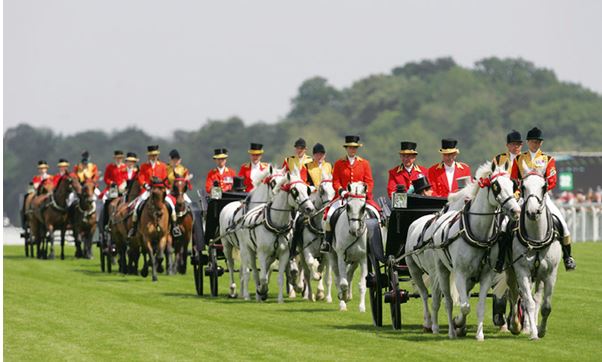
Royal Procession

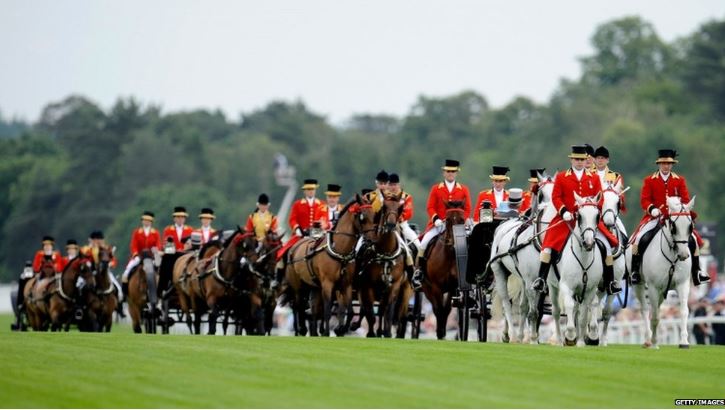
The Royal Procession – Inaugerated by Wellesley-Pole 1825

Wellesley-Pole decided that the Royal Family should arrive at the fixed time of 1pm, and that a ceremonial procession be devised to celebrate the occasion. Given that Ascot was open to all, and the King was genuinely fearful of public hostility – Wellesley-Pole ramped up the pomp to such a high level as to create a sense of awe. This had two effects – firstly it put the King at his ease to feel that he was partaking in a State Occasion – secondly it appealed to the patriotic fervour of the people. Yes, they may have resented George IV as a profligate wastrel – but the institution of the British Monarchy meant so much more than that, and Ascot was neither the time or the place to undermine it.

So, on 31st May 1825 his Majesty and a party of distinguished visitors emerged from trees within the Park and began a parade down the straight mile section of Ascot’s racecourse. The procession continued up to the newly built Royal Stand, and the newspapers reported

His Majesty was preceded by Wellesley-Pole and several yeomen prickers in their scarlet jackets, and came in his plain travelling-carriage drawn by four horses. Three carriages followed with the members of His Majesty’s suite. His Majesty, on alighting, was received by the Duke of York, who had previously arrived… and walked to the Stand with great firmness and appeared to be completely relieved from his recent attack of gout. On reaching the Royal Stand he instantly advanced to the window and on throwing up the sash was received with the customary demonstrations of loyalty and affection. He was highly delighted by the brilliant and numerous assemblage which was presented to his view.

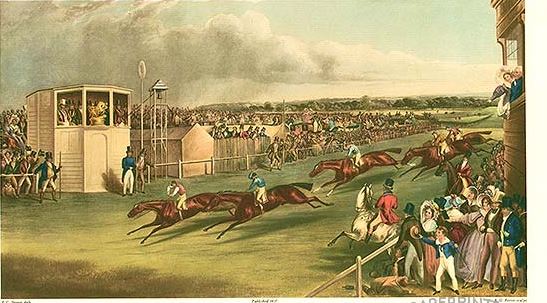
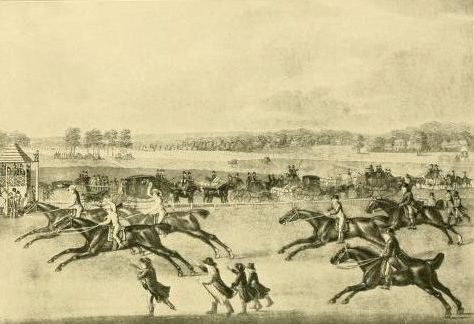
Ascot Heath Races

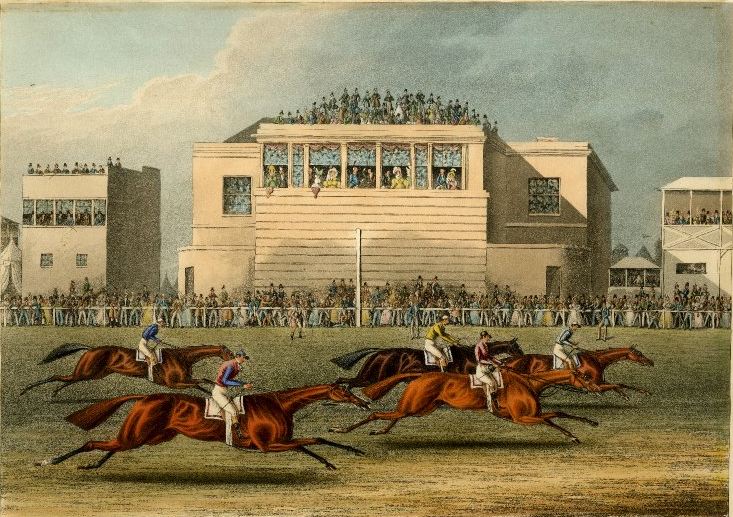
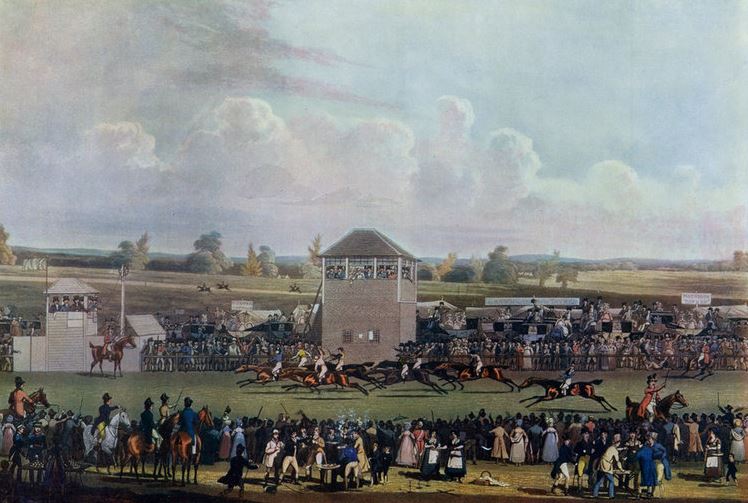
The Gold Cup 1829, King George IV’s final appearance at Ascot

At one o’clock precisely Lord Maryborough desired the bell for the first race to be rung, and at the same moment the Yeoman Prickers and Constables under his Lordship’s direction, and with great propriety forced every person to retire outside of the ropes and railings, thereby enabling his Majesty, and those in elevated situations, to command an uninterrupted view of the running, which began at 1-30pm sharp. Newspapers enthused that ‘the regulations adopted in this respect were most judicious, and were strictly adhered to throughout the day… It would be well if at Epsom so admirable a precedent were followed.’

So strikingly successful was the Royal appearance in 1825 that it was permanently adopted thereafter. Thus, as early as 1826 ‘Ascot Heath’ was no more, and the press hereafter referred to it as the ‘Royal Races’ at Ascot.

Rules and Regulations

Wellesley-Pole was a stickler for order and propriety, and his unremitting demands for conformity played a huge role in changing Ascot into a public occasion worthy of the Royal Court.

Ascot Heath Races 2

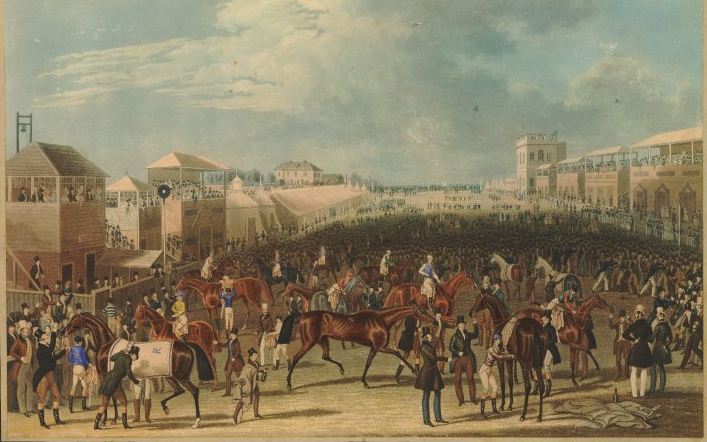
Determining race winners was never easy

We have seen that Wellesley-Pole laid down the rule that the Royal Family arrived at their Stand at 1 o’clock precisely via a procession down the straight mile. He employed hordes of security to keep the people off the race surface. As Steward he requested that all ranks of the aristocracy were on the course by 12 noon, emphasising that the new ‘Royal Procession’ was to become an integral part of the Ascot races.

When it came to the races themselves, Wellesley-Pole really came into his own. He insisted that all races start on time. A notice was fitted on the weighing room that every jockey not attending to weigh at the proper time would be fined.

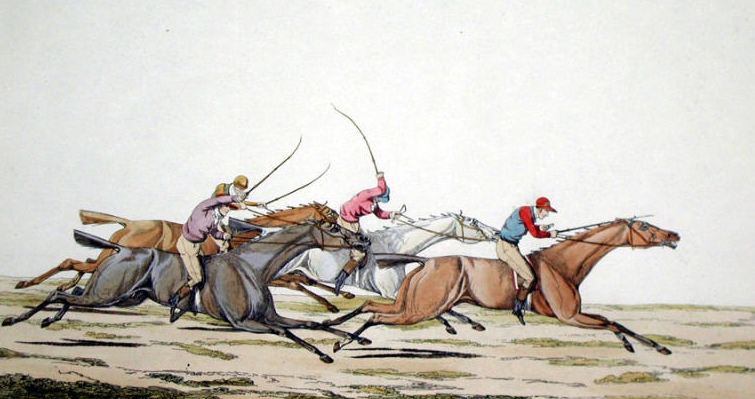
The outcome of races was often the subject of great controversy, so Wellesley-Pole employed Mr Clarke the well-renowned judge from Newmarket in order to raise the Ascot’s standards of professionalism to the highest level. He also made it a strict rule that all horses start from the same point as this was often the source of dispute and accusations of cheating. Finally Wellesley-Pole ended the practice of running heats for various prized events, since on one occasion it got too dark for the final races to be ran.

It was generally agreed that Ascot needed an officious and firm stewardship, and though Wellesley-Pole did not endear himself to anyone unlucky enough to breach his rules, there was a grudging admiration for what he had achieved.

Licensing & Security

One of Wellesley-Pole’s greatest attributes was his ability to involve all staff in the process of change. Adding the Yeoman Prickers to the Royal Procession gave them a very real sense of inclusion, and made it easier for Wellesley-Pole to encourage them to secure the racetrack from trespass. On race days each person employed was made fully aware of the importance of their contribution. Better still, Wellesley-Pole paid special bonuses to reward everyone involved in the successful outcome of each meeting.

From 1825 there was a noticeable decline in crime and illegal gambling. The Morning Chronicle enthused that ‘those ruffians with cups and balls, garters, and other swindling devices, by whom Epsom downs was infested, were altogether excluded from the course’. A large contingent of Bow Street Runners were on hand to deter pickpockets and other petty thieves. The aim was to make the occasion a safe one, but not to exclude ordinary folk who came there in their droves.

Public at Ascot - Sandhay 1809

Ascot was a great public occasion, and there was not a bed to be had for miles around during race week

As mentioned earlier, the betting circle was extended after 1826 – but a license charge of 5 guineas was set so that Ascot could benefit financially. Also a team of inspectors was engaged to proceed against all vendors intending to serve wines and spirits without purchasing the appropriate license – again at 5 guineas each.

Such was the effect of Wellesley-Pole’s reforms that the Morning Chronicle wrote

Ascot cannot be too highly praised. The precision in which the races were run the keeping of the course- and the spirit displayed by the principle supporters of them, cannot but have satisfied the most fastidious; for everything evinced liberality and good management. To [Wellesley-Pole] the public are indebted for the management and execution of those measures to which the excellence of the sport was owing.

So, by 1830 Ascot had truly transformed to become ‘Royal Ascot’. It was in fact so popular with the King that he ordered Wellesley-Pole to arrange a second meeting to be held just a few weeks later. In the King’s eyes Wellesley-Pole could do no wrong. But change was coming – the King was ailing and Wellesley-Pole himself was soon to overstep his authority and fall from grace.

Tune in for part 4 of Wellesley-Pole and Ascot to see how Wellesley-Pole’s hot temper and over-bearing rules & regulations combined to bring the curtain down on his illustrious Stewardship of Ascot race track.

My blog sheds light on the extraordinary life and times of the Wellesley-Pole family, including their three daughters (dubbed the three graces), and, of course ‘Wicked’ William his notoriously scandalous son. It is only when we learn the calibre and achievements of his family that the real scale of ‘Wicked’ William’s depravity is revealed.

I would be please to receive any comments or feedback and thank you for reading this blog!


Lord Liverpool’s Masterstoke

Creating Tradition – Wellesley-Pole and Ascot (Part 2)

How Wellesley-Pole came to be Master of the Buckhounds, 1823

Intro | Master of the Buckhounds | The Age of Reform | Anger Management | Legacy

buckhounds

Where’s Wellesley-Pole? Why, He’s Gone to the Dogs!

All things considered 1823 was not a great year for William Wellesley-Pole. After 9 successful years as Master of The Mint culminating in his deserved elevation to the peerage (under the title of Lord Maryborough) Wellesley-Pole fully expected to earn a senior Cabinet position upon Lord Liverpool’s ministerial reshuffle. But when the Prime Minister summoned Wellesley-Pole in January 1823 he dropped the bombshell that our man was surplus to requirements. To put it bluntly, Wellesley-Pole had reached the end of his useful life and the time had come for Liverpool to bring in new blood, such as Robert Peel and the racey and exciting William Huskisson,  who would help to bolster his unpopular administration

But Wellesley-Pole’s reaction placed Lord Liverpool in a quandary, for he flew into a rage and point blank refused to leave the Cabinet. Charles Arbuthnot recorded that Wellesley-Pole considered ‘the usage he has met with is quite atrocious & that he would not accept of any office but the one he has. He talked a great deal of stuff about the respect due to him as the Duke of Wellington’s brother, & in short, was like a madman.’ Such defiance of Prime Ministerial order threatened to undermine the very foundations of Liverpool’s Government. He had to get rid of Wellesley-Pole, but needed to devise a stratagem to achieve his aims without further rancour.

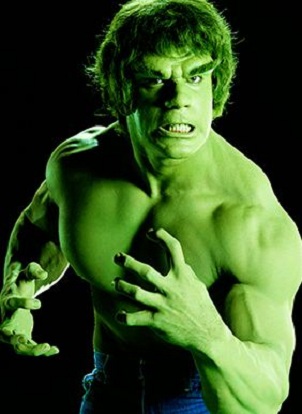
liverpool  wellesley-pole hulk

Lord Liverpool didn’t like Wellesley-Pole when he was angry

In the Autumn of 1823 Liverpool at last found the perfect opportunity to offload his angry Minister. He did this by exploiting Wellesley-Pole’s close relationship with King George IV. The death of Charles Cornwallis on 9th August created a vacancy in the Royal Household, in the office of Master of the Buckhounds. Wasting no time at all Liverpool wrote to the King suggesting that Wellesley-Pole wanted to apply for the job because he was practically George IV’s number one fan.The King was led to believe that Wellesley-Pole he always dreamt of having a country home near Windsor, but that he was far too modest to apply. Needless to say the King was receptive to such gushing adulation, took up his pen and wrote a plea for Wellesley-Pole to take the job. Perhaps with Liverpool’s connivance the salary offered was generous-  plus he was promised the gatehouse to Windsor Park upon which to make his establishment.

When Wellesley-Pole received the King’s letter has was surprised and flattered, but unsure as to whether a man of his age (60 years old) could be capable of taking on such a youthful and athletic role. However it was a place in the Royal Household dating back to the 1300s which appealed directly to Wellesley-Pole’s strong respect for of tradition. For Mrs Wellesley-Pole it was a no-brainer because she really did want a country retreat and this golden opportunity was quite simply too good to pass up. The King’s offer was therefore speedily and gratefully accepted.

It was only after the deal was done that Liverpool played his trump card. He wrote to Wellesley-Pole congratulating him on his appointment to the Royal Household but reminding him that an employee of the King could not be a Cabinet Minister – since the King would be embarrassedby the accusation of putting his own men into Government. This was a masterstroke leaving Wellesley-Pole no option but to fall on his sword – for he could not go back on his word to the King, still less dash his wife’s hopes of rural paradise. In private Wellesley-Pole roundly abused all in Government, not least the Duke of Wellington in whom he felt a keen sense of betrayal, but the fear of upsetting the King meant that ultimately Wellesley-Pole went quietly into political retirement.

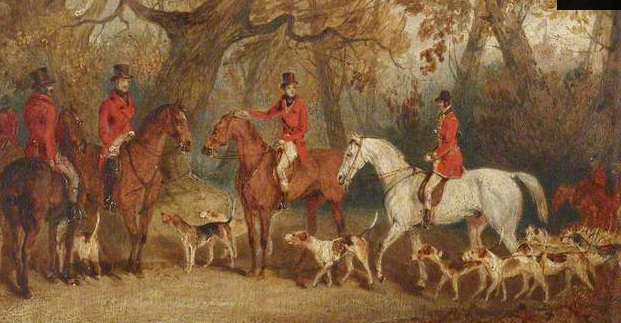
buckounds at salt hill

The Buckhounds at Salt Hill, near Windsor c.1850

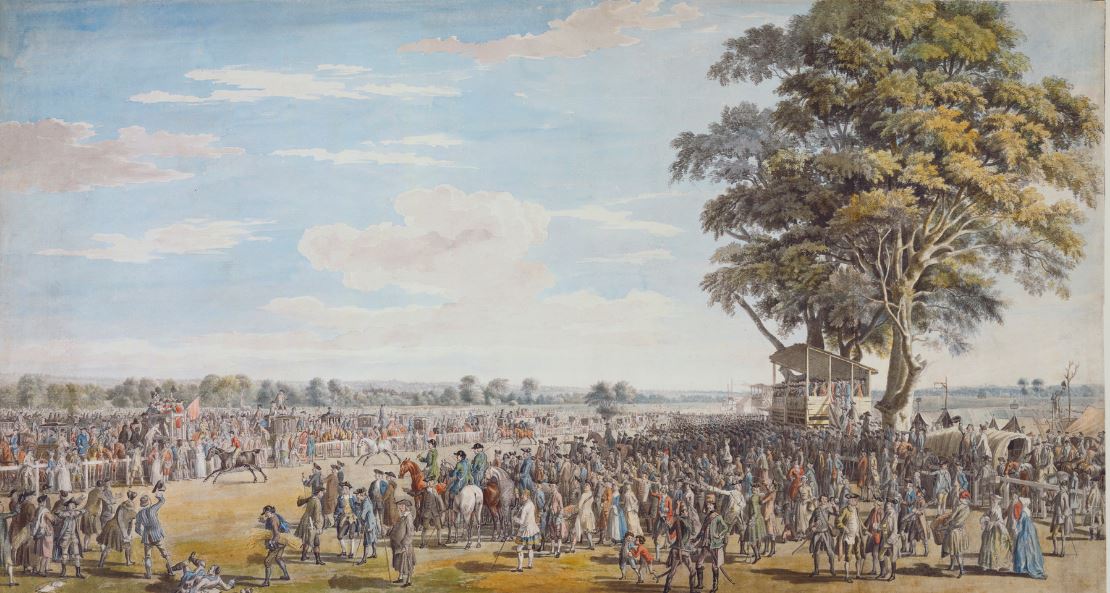
So just what was Wellesley-Pole letting himself in for? Well its fair to say his task largely involved acting as the Royal entertainments officer. This principally involved gathering the horse and hounds together for organised hunts, usually in Windsor Forest; but from the mid-1750s it began to embrace other sporting activities – particularly equine sports. Because the Royal Family controlled the wardenship of Windsor Forest, their patronage over horse-racing at Ascot Heath was long-established – dating back to Queen Anne (1711). Responsibility for ‘Royal Ascot’ really was the jewel in the crown of duties expected from the office of Master of the Buckhounds.

royalascotregency

Ascot Heath Races – The ‘Royal’ tag was to come much, much later

It is no secret that Wellesley-Pole had a hot temper, or that he could be a very fearsome adversary when roused. But his temper tantrums were never of long duration and, like his brother Wellington, he refused to let emotion become an obstacle to giving his all in service of his country.

Just a month after taking up his duties, Charles Bagot saw Wellesley-Pole ‘in light buckskins with a jockey cap and gold couples to his belt’ acting as Master of the Buckhounds. Wellesley-Pole insisted he was ‘exceedingly pleased with the appointment…he was getting tired of politics and the hounds were just the hobby he would most like.’ Whether this was bravado or the plain truth, it was obvious that Wellesley-Pole was going into this job enthusiastically. He quickly realised its possibilities went far beyond dog-minding,  offering him the chance to take control of Royal Ascot, a once great event whose reputation was tarnished by years of disorganisation  and neglect. Nearby racetracks (such as Epsom and Newmarket) threatened to leave Ascot in their wake. So, for Wellesley-Pole the task was on!!

So, on 13th October 1823 the King’s staghounds made their first appearance of the hunting season, near Winkfield Plain at Windsor. Several ladies in carriages and a great crowd of ordinary folk turned up to witness Lord Maryborough’s debut as Master of the Buckhounds- and to witness how a Cabinet Minister really had gone to the dogs.

To find out more about how brilliantly devious Lord Liverpool could be you should look no further than Norman Gash, whose The Life and Political Career of Robert Banks Jenkinson, Second Earl of Liverpool 1770–1828  was first published in 1984. Sadly Norman died in 2009 but a new paperback version of his book is due for publication in 2015.

For more on Wellesley-Pole’s hot-headedness, and how he turned anger into a positive energy, you may like to read his battle to save a tramp.

To find out how Wellesley-Pole ‘created’ Lord Wellington please read my guest blog on Number One London

I’d love to hear any comments or questions you may have about the Wellesley-Pole family, not least Wicked William, the blackest of all black sheep. So please contact me and I’ll be delighted to respond.


Creating Tradition: Wellesley-Pole & Royal Ascot


Tell Lord Maryborough that whatever may happen to me, I declare no interruption may be given to the races at Ascot

King George IV on his deathbed June 11, 1830

Intro | Master of the Buckhounds | The Age of Reform | Anger Management | Legacy

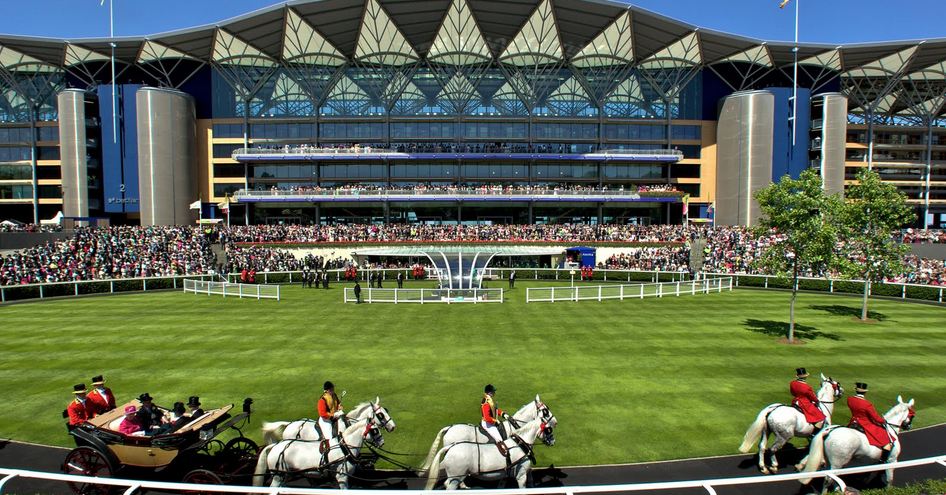
modernday royal ascot

Modern day Ascot -a beautiful race venue

A day out at Ascot Races earlier this month encouraged me to look into its history in the hope that Lord Maryborough (William Wellesley-Pole) would feature prominently. But despite his pivotal role in elevating Royal Ascot from a run of the mill race meeting to a must-see event in the British sporting calendar, I could find no commemorative picture or plaque adorning the walls of Ascot’s magnificent new stand. Ascot’s website is equally unforthcoming in its brief history page – meaning that Wellesley-Pole (as per usual) has been airbrushed from history.

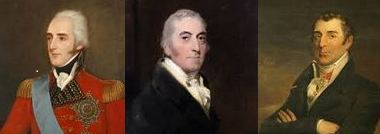
 brothers

Spot the nonentity? – Wellesley-Pole (Centre)

Sandwiched between successful brothers Richard (Marquis Wellesley – Governor General of India 1797-1805, Foreign Secretary 1809-1812) and Arthur (Duke of Wellington), Wellesley-Pole is destined to remain in the shadows. But this hardly justifies why numberless books about the Wellesley brothers feature Wellesley-Pole in a cameo only – He flits about like a kind of pantomime villain – a social climber, grasping opportunist and perpetually angry ‘with anything and anyone’ who gets in his way. I’m not sure what is worse about these assessments – the lazy complacency of poor historical research or the complete inability/unwillingness to place Wellesley-Pole in his correct context. Because the fact is that even a rudimentary study of Wellesley-Pole reveals the important role he played in establishing and consolidating the Wellesley family dynasty.

waterloo medal

Wellesley-Pole’s Waterloo Medal (1816)

coin


It doesn’t come more iconic than this! Wellesley-Pole’s Gold Sovereign (1817)

In his own right Wellesley-Pole was responsible for the Waterloo Medal (1816), opening of Waterloo Bridge (1817) and the iconic Britannia design for gold sovereigns (1817). As Master of the Mint (1814-1822) his finest achievement was the introduction of new silver currency in 1817, dubbed the ‘Great Recoinage’. Over a period of two weeks Wellesley-Pole organised the nationwide distribution of 2.6 million coins whilst simultaneously collecting up and melting down all the old currency – a task completed without a single mishap –at a time when there was only a rudimentary transport and communication system in Great Britain. Sir Joseph Banks enthused

The bold manner in which [Wellesley-Pole] devised, and… executed one of the most difficult works…during the present Reign, or possibly any former one, does honour to the name of Wellesley

This new silver coinage was to remain legal tender right up until 1971. That’s over 150 years in which Wellesley-Pole’s handiwork permeated every nook and cranny of British society – becoming a recognisable symbol of Britishness – His coins even outlasted the Beatles (whose last public performance was coincidentally held on the roof of Wellesley-Pole’s old family mansion in Savile Row). All this and no blue plaque!!

savilerow

No 3 Savile Row, Wellesley-Pole’s mansion & latterly Apple Studios

This series of blogs will look at Wellesley-Pole’s 7-year tenure as Steward of Royal Ascot, a time in of great change, during which Ascot’s place was embedded in the annual sporting calendar. This may not be the most important duty Wellesley-Pole undertook in his many years of public service– but it tells us a lot about him as a man – revealing both his brilliant and irrational nature. (Links will come live as they are added)

  1. Master of the Buckhounds – How Wellesley-Pole was unceremoniously dumped from the Cabinet and duped into accepting a role in the King’s Household – which included responsibility for Ascot races.
  2. The Age of Reform – Detailing structural, ceremonial, and organisational changes effected by Wellesley-Pole  as Chief Steward of Ascot between 1822 and 1830
  3. Anger Management – A look at the advantages and disadvantages of Wellesley-Pole’s hot temper, and how it led to his departure from Ascot
  4. Legacy – Why Ascot ought to re-examine its history and traditions to give Wellesley-Pole the credit he deserves

For more information on Ascot Racing visit their website or read the BBC’s brief history

For more equine-related japes on this blog you might like a brief history of the Epping Hunt


‘Uncle Arthur Wellesley? He’s not all that!’ – Wicked William goes to War


 wickedwilliamyoung         wellington

‘Wicked’ William and the Duke of Wellington were remarkably alike in appearance


Little has been written about ‘Wicked’ William Long-Wellesley beyond his role in the destruction of Wanstead House. My research (and this blog) will show that William’s long and turbulent life encompassed far more than the mere dozen years it took him to plunder Wanstead’s treasures and lay waste to its estates.

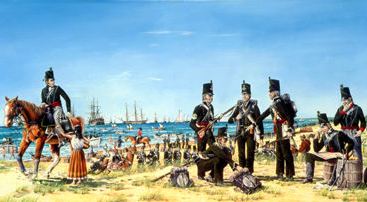
Today we go back to 1808; the place is Portugal and it is mid-summer. General Arthur Wellesley (later Duke of Wellington) has just landed at Mondego Bay leading a British expeditionary force numbering 14000 men – this being the very start of his 6-year fight to liberate the Iberian Peninsula from Napoleon’s occupying forces. Amongst Arthur’s considerable retinue we find one William Pole, a 20-year-old aide-de-camp on his first tour of duty. Considering Arthur’s already legendary reputation for precision, this seems an odd appointment. Yet closer scrutiny shows that even the greatest military strategists are often bound by family obligation – thus lumbered with errant relatives, in the hope some good may come of the exercise.

 mondego bay

 He’s out there somewhere – ‘Wicked’ William lands in Portugal, 1808


William Pole was one such stray – foisted upon Arthur by older brother William Wellesley-Pole. It was a kind of trade-off in favours because Wellesley-Pole was Arthur’s most reliable and trusted confidante, protecting his interests at home – therefore Arthur could hardly refuse taking this wild but spirited boy under his wing. So it came to pass that ‘Wicked’ William and Arthur Wellesley went off to war together, offering a possibly unique opportunity to see our greatest General on the battle front, through the eyes of his own family.


rolica

At Roliça & Vimeiro William’s role involved delivering messages between regiments


Without delving too deeply into events in the field, it was a very exciting beginning for William. He first saw action at the Battle of Roliça on 17th August, where Arthur’s men defeated an outnumbered French army under General Delaborde. The next day William wrote to his mother

 I seize this, the earliest opportunity; to send you such most pleasing intelligence. I have escaped unhurt; the action was most severe and cost many brave lives… We found ourselves led into a labyrinth of narrow passes and impassable mountains. Sir Arthur, cool and collected, ordered the artillery to advance; and shots for shots were frequently exchanged between us and the enemy… The volley of the shots became less frequent; our foes were cleared for the heights… at length abated and left us master of the field of battle.

Four days later the French returned in greater numbers hoping for the element of surprise– But they were again defeated at the Battle of Vimeiro – putting an end to the French invasion of Portugal.

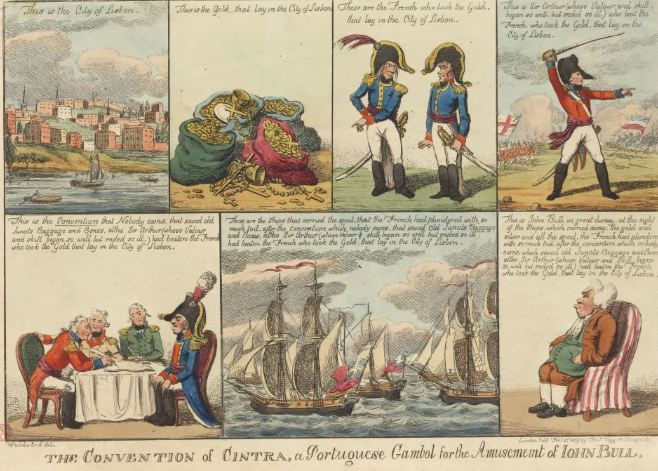
cintra

Arthur Wellesley was lambasted for his role in the Convention of Cintra

Yet this result would have been much more decisive but for the fact that two more senior British Generals arrived on the scene in the heat of battle, relieving Arthur Wellesley of his command. They prevented Arthur’s pursuit of the vanquished French armies and subsequently agreed an overly generous truce. The Convention of Cintra signed on August 30th allowed the entire French army free passage out of Portugal, and more importantly fit to fight another day. To add insult to injury the Royal Navy laid on ships to carry other French troops and munitions back home. This news was received with outrage in England, and Arthur blamed despite the fact he had not been a party to the agreement other than to sign it when ordered to do so by his superiors. Being demoted when in the throes of routing the opposition must have been a shattering blow for Arthur. He wrote to Wellesley-Pole on 26th August regarding his senior officers:

These people are really more stupid and incapable than any I have met with; & if things go on in this disgraceful manner I must quit them.

Naturally in the depths of such despair, Arthur was not to be trifled with. Into the firing line came William, whose bravery in the field had been reported in despatches, and whom Arthur had just a few days earlier remarked upon favourably. But with Arthur’s patience exhausted and his heckles up William was to become the fall-guy. This letter from the Raglan MS (dated Sept 6th) holds nothing back – as Arthur tells Wellesley-Pole exactly what he thinks of young William.

He is the most extraordinary person altogether I have ever seen. There is a mixture of steadiness and extreme levity, of sense & folly in his composition such as I have never met with… the nature of our relative situations, & the constant crowd with which I am surrounded prevents all intercourse between us… He is lamentably ignorant and idle… he talks incessantly and I hear of his topics from the others which sometimes do not appear to have been judiciously chosen… I have an opportunity of talking to him seriously of his situation; for he is gone off without Leave, which I must notice… In short I don’t know what to say about him. To educate him would be a desideratum… he will never be on a upon a par with the rest of society till he shall have educated himself

Historians regularly cite the above as a testament to Arthur’s black mood during this period. It is certainly true that Arthur’s anger made him excessively harsh towards his nephew. But given what we know about William’s subsequent behaviour at Wanstead – it is hard to disagree with this assessment.

maryborough

Wellesley-Pole received the news that William was ignorant without comment

What Wellesley-Pole must have made of Arthur’s character assassination of William we shall never know because the subject is not mentioned in subsequent correspondence. But, thanks to surviving archives, we do have the benefit of a right of reply from ‘Wicked’ William himself. We learn that William also wrote a letter home (on 27th August) in which he castigates uncle Arthur’s behaviour. The original has not survived – all we have is the reply from older sister Mary Bagot, which reveals that William actually expected more favourable treatment. To him being a relative transcended rules of rank and order within the army hierarchy. William’s vanity meant he could not grasp how such demands threatened to undermine Arthur’s authority.

My Dearest William – depend upon it, if it gets wind that you have differences with Arthur, you are ruined and undone… You must I seriously think have been drunk when you wrote to me. But I will answer every part of your complaints simply__

In the first place, you say Arthur “treats you distantly and never speaks to you”. I know, and have always heard, that when upon Service, he is notoriously distant with all his officers. Besides this, would a man of common sense be particularly free with his own nephew to disquiet every other person, make you hated, & an object of jealousy, & himself abused for favouring his nephew.

 You next say “he never employs you” – The general opinion here is that you were the person most employed & sent about with most messages in the actions. You say “you gain no credit” – To this I answer: The Times, The Oracle, & Courier have all had various eulogisms in them of you, for your activity and gallant behaviour… Everyone speaks the same language & all write in asking me, & hoping you intend following up the profession, as it is one you appear to shine in. So this is gaining no credit!

My dear William, you must recollect you are just 20. For many of those you are with, not only have a right to take the piss out of you & not only from superiority of years, but from rank, length of service & a thousand other things & can you expect to be employed & a preference given to you above them all. I cannot conceive how the idea of being employed conspicuously ever came into your head… Many work hard for years without gaining the credit you have gained in one month.

My love, your complaints are ungrateful to providence, & to Arthur… Give yourself common pains to gain an insight into the art of the profession you are now in. You began your career with one whose name & character stands unrivalled, & on with whom if you quarrel God help you is all I can say.

Above all this letter shows that William was by now a fully-fledged attention seeker. The mere fortnight that the British army rested following Vimeiro was clearly too dull– for William craved constant excitement and attention. He was obviously unprepared for the many months of inactivity and hardship facing most soldiers over the course of a campaign.

However, it must be said that William has identified traits in Arthur’s character which became the subject of debate and conjecture throughout his military career. This is perhaps best summed up by Arthur’s famous description of his troops as ‘scum of the earth’, which many observers then and since have considered insulting and unfeeling towards the many men who loyally served him & whose bravery was beyond reproach. As historian Christopher Duffy succinctly puts it

Wellington I think had this fundamental coldness in his heart. He would weep when he met casualties, but basically he was a cold-hearted bastard.

To sum up then, we can see that William’s immaturity was the root cause of his spat with Arthur. For all this though – he was unlucky to incur Arthur’s wrath at the very time when Arthur was considering his own future in the army. Had Arthur not been beset with such heavy troubles, this matter may have been resolved.

But such is the story of ‘Wicked’ William that another golden opportunity came to be wasted. Thus by the time Mary’s sensible advice reached William it was too late – he was already dismissed and heading home. To cap it all off  – ‘Wicked’ William’s chance to be mentored by Britain’s greatest general was taken by another rookie aide-de-camp named Fitzroy Somerset (later Lord Raglan) who not only went on to become Wellington’s closest military aide, but also to marry ‘Wicked’ William’s sister Emily.

emily        raglan

William’s Loss? Emily Wellesley-Pole & Wellington’s ‘chosen one’ –  Fitzroy Somerset


For more information on the Peninsular War (1808-1814), I would recommend http://peninsularwar200.org/

Rory Muir has recently written a very good biography of Wellington, which I would recommend not least because my own work is footnoted therein

For all things Wellington, and to partake in a tour why not visit Number One London

Finally, if you have enjoyed reading about ‘Wicked’ William acting the fool – please check out this earlier post entitled ‘Wicked’ William’s Hunt