Why Wellesley-Pole should be commemorated by Ascot

Creating Tradition – Wellesley-Pole and Ascot (Part 5)

The Importance of Wellesley-Pole’s Legacy

Intro | Master of the Buckhounds | The Age of Reform | Anger Management | Legacy
maryborough

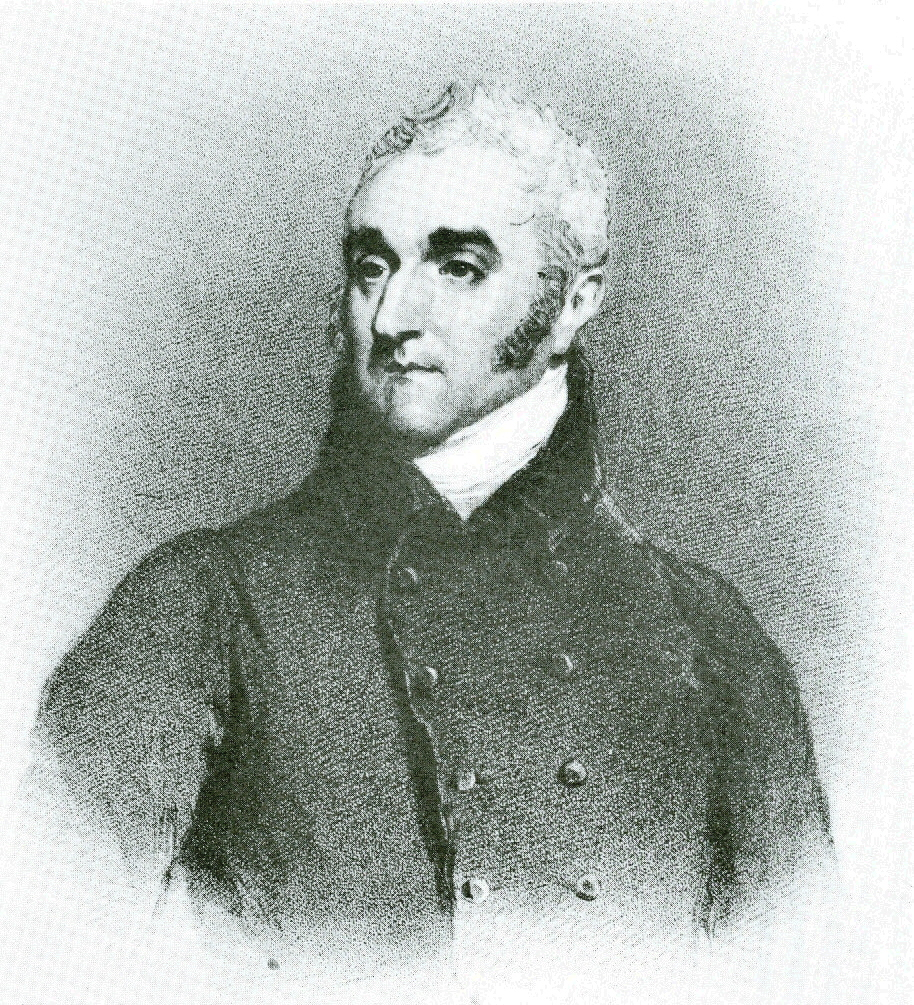
William Wellesley-Pole (Lord Maryborough) 1763-1845

It is tempting to turn the concluding part of my study of Wellesley-Pole’s impact upon Ascot into an open letter to the powers that be, in the hope that our man will finally gain the credit he deserves. Instead, however, I want to explain why the invention of tradition was not just about Ascot, but more to do with the relationship between the monarchy and the people.
Monarchy

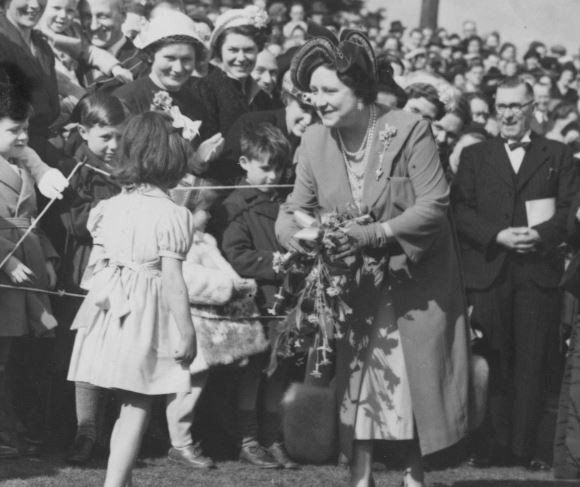
A Perfect Marriage : the Monarchy &  the People

We have seen how Wellesley-Pole’s structural and organisational changes transformed Ascot into the best race track in Britain, and how his rules of racing added a much-needed backbone of professionalism upon which horse racing (as a sport) has thrived. We must must acknowledge that great innovators can make mistakes, & there certainly were one or two wrong decisions made along the way.

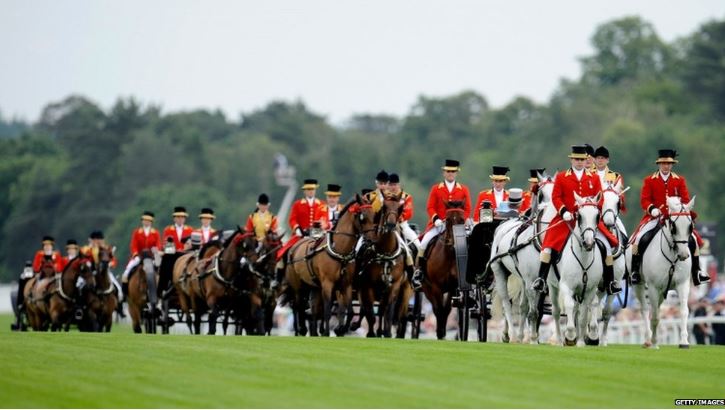
Wellesley-Pole’s true legacy, however, must lie in the adoption of ceremonial rituals via the ‘Royal Procession’ – an entirely new creation that gave the instant impression of being a long-held tradition- bringing the people and their King together as one joyous ensemble. It was a simple but brilliant idea that has served us right up to the present time.
Royal Procession

To illustrate this better I will firstly examine why ‘Royal Ascot’ meant so much to George IV, and secondly show how it played a significant role in popularising his successor, William IV.

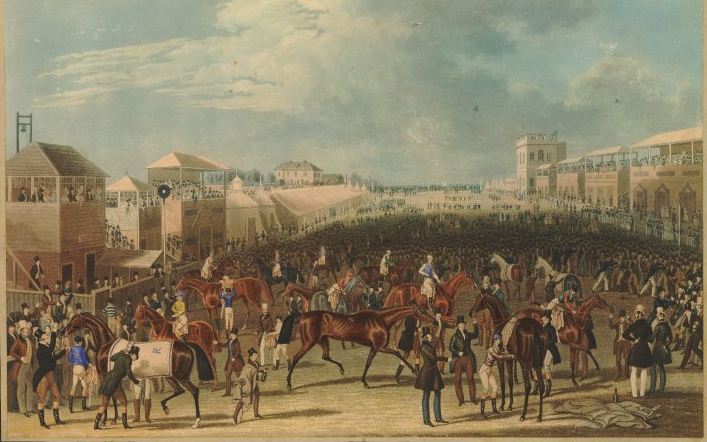
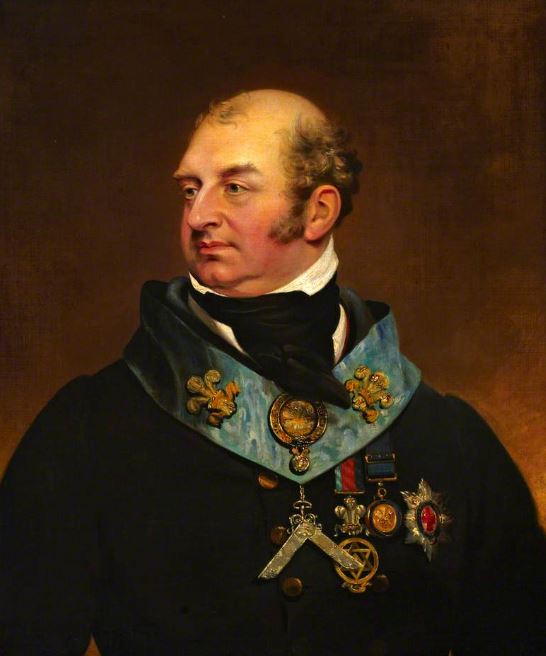
It must be clarified that Ascot was inaugurated under the reign of Queen Anne in 1711. This was more of a permit to hold meetings, and it was not until after 1750 that an annual 4-day meeting was held. The first royal to show a great interest in Ascot Heath was the Duke of Cumberland – who, as Lord Warden of Windsor Forest, was a enthusiastic and regular attendee. King George III also went frequently until his descent in madness in 1810. But it was his two eldest sons George (Prince of Wales) and Frederick (Duke of York) who really took Ascot to their hearts. The Duke of York was perhaps the most pivotal supporter of Ascot in this period as he regularly entered his own horses, sponsored races, and was always on the course. George, on the other hand, was more of a gambler than a participant – so much so that his debts led to exile from Ascot after 1807. Even after he became Prince Regent, George was remained wary of Ascot – principally because he was deeply unpopular and genuinely feared for his safety. The Duke of York by contrast was a soldier, widely respected, and loved by the people – amongst whom he could freely mingle.
york

Frederick, Duke of York – a massive fan of Ascot Heath Races

So, by 1820 when the Regency ended and George IV became King – Ascot Heath was certainly considered a race meeting frequented by Royalty – but there was no real glue to bind each together into one synonymous concept

George IV
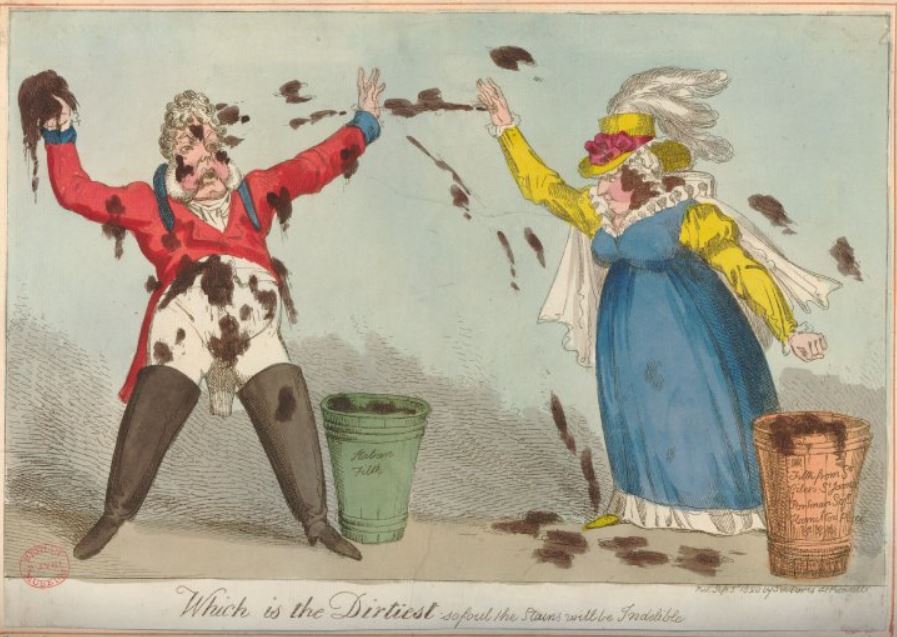
caroline

George IV’s early reign was marred by mud slinging

It is actually quite incredible to think that speculation about the King’s health was gauged throughout 1830 on the basis of whether he was likely to attend Ascot Races. On April 24th reports that the King spent three hours instructing the Royal Stud groom regarding horses to enter, was taken to mean his illness wasn’t serious. Yet as the weeks passed by and it became clear that George IV would miss Ascot the nation braced itself for bad news. This sense of foreboding reveals the bond that had formed between King and Royal Ascot and can be explained thus:
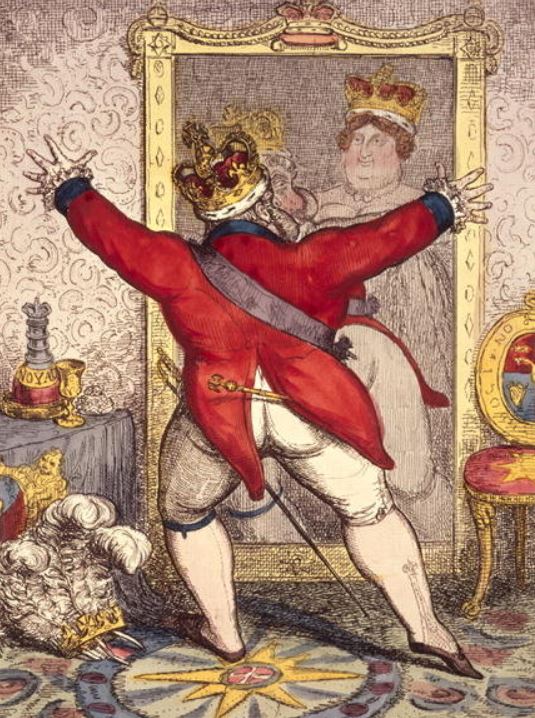
George Satire

The press loved to hate the King, and he became withdrawn

The first years of the King’s reign were dogged by social and political unrest, and problems with his estranged wife Queen Caroline of Brunswick. Her trail for adultery, exclusion from the Coronation and sudden death in 1822 combined to make George IV deeply unpopular at all levels of society. Not suprisingly by 1823, the King was largely reclusive – spending months on end at his Royal Cottage in Windsor Park. After his death it was revealed that aside from an occasional visit to the theatre, Ascot Races was the only public engagement at which the King appeared.
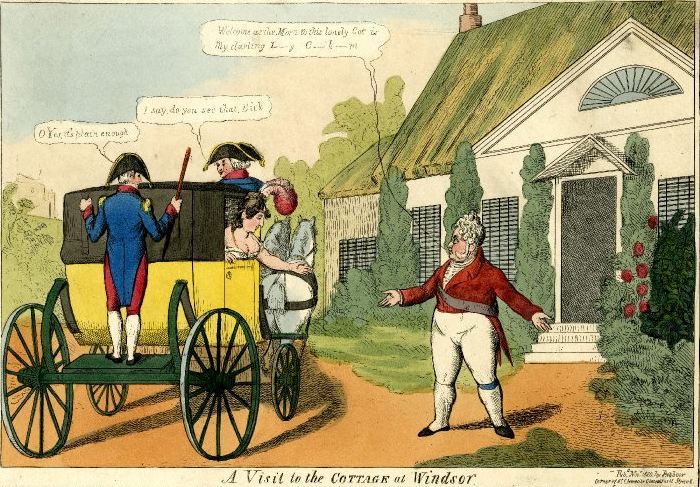
the Royal cottage at Windsor

Home from home – The Royal Cottage, Windsor Park

Ascot Races was to become a unique and pivotal occasion for the King. His decision to embrace and improve Ascot, by employing  Nash then Wellesley-Pole, was a bold move hoping to carve out one small corner of Britain where he could feel at home amongst his subjects. As an excercise in public relations, Wellesley-Pole’s newly devised ‘Royal Procession’ was a masterstroke. By 1826 it was reported

A little before one the heath was well filled, and the eyes of the spectators were then anxiously turned towards the straight mile, and the Royal Cavalcade approached amidst the cheerings of the people. The carriages stopped at the Royal Stand, and his Majesty alighted, and during the whole of the races was at the window, conversing with the noblemen of his suite… & was highly delighted at the affectionate demonstration of loyalty with which his progress was attended. He bowed repeatedly, and smiled upon the multitude in the most affable manner

If the King liked it, the public was just as enamoured, as this slightly offensive 1828 report shows

It cannot be denied that the popularity of these races arises more from the sanction afforded them by his Majesty, than from the mere running. Horses may be seen every day, but Kings are scarce; and the sight of one is something to talk of, and is recompense for an immensity of fatigue and expense. Of the thousands congregated at least three out of every five came to see the King; and it is a fortunate circumstance for his admiring subjects, that the Royal Person is sufficiently bulky not to be mistaken for that of any less personage

When Wellesley-Pole created the Royal Procession, therefore, he did an enormous service to the King, paving the way for his popular acceptance. In one fell swoop, Ascot Heath was permanently transformed into ‘Royal Ascot’ – for the benefit of both instititutions.

William IV

It is a curious thing that Ascot proved to be an important turning point for George IV’s successor, William IV  (even though Wellesley-Pole was no longer in charge). The new King was never much of a fan of horse-racing and seldom attended Ascot. However, one of his first engagements was at Wellesley-Pole’s second Ascot meeting in August 1830 where he received a rapturous reception.
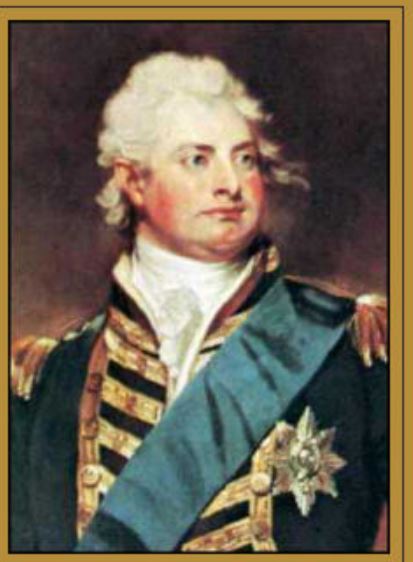
WilliamIV

William IV – the ‘Sailor King’

The following summer was less enjoyable as the King found himself snubbed by the aristocracy, who boycotted Ascot in protest at William IV’s support for the Reform Bill, reportedly ‘evincing the coldness of their feelings towards the Crown’. But when the public heard of this snub they turned out in even greater numbers than before. The Morning Chronicle wrote

It is clear that the expectation of seeing the King is paramount over every other consideration with three-fourths of those who visit Ascot; without this attraction, certain we are that the brilliant company assembled on the Heath would have been fewer by some thousands… the great popularity of the Sovereign excited an interest ensuring a full attendance.

In 1832 the Royal Procession ceremony provided one last final, and unexpected endorsement proving beyond question that Wellesley-Pole’s marriage of Ascot to Monarchy was both secure and permanent. When making his initial public salute at the balcony of the Royal Stand…

A ruffian, in the garb of a sailor suddenly threw a large flint stone directly at the King…striking our venerable Sovereign on the forehead, just above the rim of his hat… the sound was loud and the King fell back one or two paces and exclaimed ‘My God, I am hit’. Happily his Majesty soon relieved all anxiety… and appeared smiling at the front window of the Stand to huge cheers from the populace

Concluding Words

So we can see the pivotal role Ascot played in re-connecting one monarch (George IV) with his subjects, and reviving another (William IV) at a time when the ruling elite tried to slap him down. In both instances the Royal Procession provided a perfect platform for the exchange of affection needed between citizens and Kings. Wellesley-Pole therefore created a pageant that elevated Royal Ascot above the status of a mere sporting occasion into a popular celebration of the monarchy.

That Ascot became the venue for a vitally important patriotic affirmation, whilst at the same time undergoing unprecedented improvements in all aspects of horse-racing – is the reason why I think Wellesley-Pole ought to be thanked by today’s owners.
ascotroyale

If you have read and enjoyed this, I hope you will try to remember Wellesley-Pole next time you happen to see Ascot’s ‘Royal Procession’. At least that way his hard work will never be forgotten.

Recommended Links

The main Ascot website has detailed information on days out at Royal Ascot 

I would heartily recommend a stay in Windsor, as besides Ascot there is so much to do in this beautiful town
Anger Management? Wellesley-Pole’s Ascot Disaster (1829-1830)

Creating Tradition – Wellesley-Pole and Ascot (Part 4)

The Decline & Fall of Wellesley-Pole

Intro | Master of the Buckhounds | The Age of Reform | Anger Management | Legacy

By the end of the 1820s Royal Ascot was the most important occasion in the sporting calendar, attended by huge crowds from all levels of society. On racing week London was quite simply drained of its inhabitants, & a great many rival events and pastimes forced to reschedule or close their doors as they could not hope to compete. Other sports, such as boxing cleverly capitalised on Ascot’s success – as for a number of years it became customary for a big bout to be arranged to attract the returning hordes on the evening of the final day’s racing.

London’s loss was not only commercial and social, for there was a marked rise in both burglaries and fires in the many unattended homes. Criminals must have loved the absense of Bow Street Runners, many of whom were sequestered to Ascot by Wellesley-Pole.

 ascot 1836
Wellesley-Pole’s grandiosely remodelled Royal Stand

However, by 1828 Wellesley-Pole began to become a victim of his own success, and his control over Ascot unravelled

Second Meeting Syndrome

George IV was so delighted with ‘Royal’ Ascot that he commanded Wellesley-Pole to arrange a second meeting to be held from 1828 onwards- proposing that it be held a mere fortnight after the first one finished. It is easy to see why the King craved more of Ascot, given the rapturous reception he was now accustomed to receiving each day he attended.

george iv

George IV loved Ascot and was greedy for more

Wellesley-Pole was as anxious to make the King happy, as the King was willing to give Wellesley-Pole absolute authority over the new arrangements. But as the King’s health declined, Wellesley-Pole’s workload doubled, meaning that his temperament and judgement was to be sorely tested by these new arrangements.

A second meeting was duly held at Ascot from 1828 onwards, but it was soon apparent that the King’s enthusiasm was insufficient to overcome the many problems created by trying to replicate another ‘Royal Ascot’ a mere fortnight after its conclusion. In the first place the new meeting did not suit many of the leading horse owners, who were used to taking their horses on to Goodwood after ‘Royal Ascot’. Secondly there was an inevitable loss in quality of the main meeting as several high-prize races were transferred to the second meeting. Thirdly and most importantly, no allowance was made for the ordinary folk whose attendance at Ascot was crucial to its carnival atmosphere. In 1829 the Morning Post summed up the problem

After the first Ascot meeting the better horses generally leave… leaving a small quantity of bad horses for the second meeting… We do have other thoughts upon the subject which we also consider of consequence to the support of the race course- the middling classes of society are the principal frequenters, who cannot afford to give up so much time in so short a space.

It was obvious that a second meeting was a bad idea, but Wellesley-Pole still went ahead in 1830 – though he did push the date back to August. Wellesley-Pole went against his better judgement to avoid disappointing the King, instead of calling the whole thing off. In fact George IV died on 26 June 1830 so was not around to witness the demise of this failed experiment, and Wellesley-Pole was held responsible for the whole idea. Not surprisingly, as soon as Wellesley-Pole stepped down as Master of the Buckhounds, ‘Royal Ascot’ reverted back to its old single meeting format.

Don’t Question MY Authority

The most inevitable consequence of Wellesley-Pole’s increased power was the knock on effect it had upon his emotions.  As his temper began to overheat, decisions became rash and ill-considered & his well-ordered management system began to crumble and subside.

endofrace

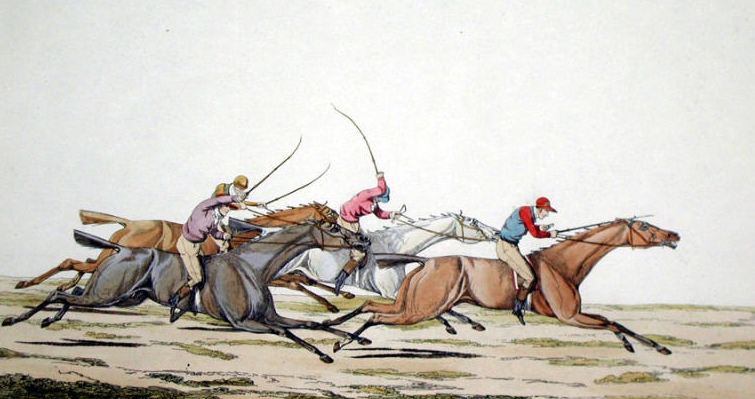
Arguments often flared up before the race had even set off

Wellesley-Pole’s megalomania boiled over during the Ascot Gold Cup in 1829. Prior to the race and to avoid any delay in his strict timetable, Wellesley-Pole made a rule that the horses gather together- setting off at the same time. The Morning Post wrote

When Mr Gully heard of [the new rule], after all the horses were brought to the post, knowing that his horse was of a frightful temper, he became apprehensive he might lose his chance of the prize, and hastily rode up to [Wellesley-Pole] to induce him to rescind the order. In doing so he passed the Royal Stand & neglected to take off his hat.

Wellesley-Pole seized on this breach of protocol to deny Gully a hearing and the race was run. Afterwards Gully sent a letter of apology to the King, which was graciously accepted, but this merely served to stir Wellesley-Pole’s resentment further. On the grounds that Gully’s explanation was not unsatisfactory to him as Lord Steward of Ascot – Wellesley-Pole decreed that Gully was henceforth forbidden to run a horse for the Gold Cup!!

Considering that the King had taken no offence for Mr Gully’s faux pas, Wellesley-Pole’s punishment was very mean-minded and personal. But it did not end there because Wellesley-Pole subsequently issued an edict declaring that from 1830 Ascot would only accept horses

The bona fide property of a member of the Jockey Club, a member of the Upper or Lower Rooms at Newmarket, or one of those clubs in London whose members may be admitted into the above clubs without a ballot

This was an extraordinary dictat, unilaterally imposed by Wellesley-Pole – and had immediate and far-reaching consequences. Most country-based owners suddenly found themselves excluded from entry meaning that by 1831 the Gold Cup was reduced to a ‘commonplace affair’. Royal Ascot was seriously damaged because of this. By this time both Wellesley-Pole and George IV were off the scene,  so it presented new King William IV with a perfect opportunity to boost his own popularity with Ascot patrons by rescinding this elitist rule.

donkey-pole

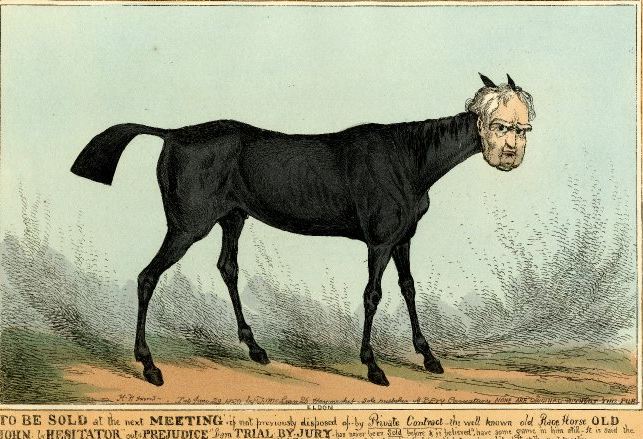
Wellesley-Pole was starting to act like a donkey.

You Damned Scoundrel!!

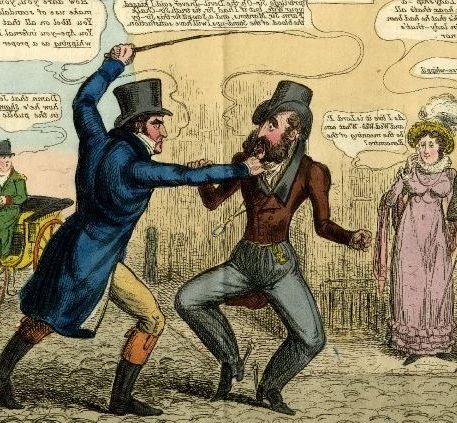
Perhaps the final straw for Wellesley-Pole came as a result of a moment of madness, as his fierce temper exploded and he resorted to violence. It must have been pure comedy to witness what occurred. During the second Ascot meeting of 1829 Wellesley-Pole observed a man dragging an old lady off the race track, and heard her shout ‘Murder’ as she tried to resist. In an instant he rushed from the Royal Stand and ‘struck the man two desperate blows with the butt end of a whip, hitting him on the forehead and damaging his cap.’ Not waiting for an explanation Wellesley-Pole then grabbed the man by his lapels, throwing him to the ground with the words ‘You damned scoundrel!’

horse whipped

Wellesley-Pole loses the plot, June 1829

All of this was quite a feat for a 66 year old man dressed in ceremonial garb, but Wellesley-Pole had totally mis-read the situation. For the lady in question was a blind beggar unaware of the danger she faced wandering onto the race track. Her ‘assailant’ was in fact a special constable from Windsor whose sole concern had been for for her safety. Not knowing why she had been grabbed the beggar had indeed cried ‘Murder,’ and this was what triggered Wellesley-Pole’s protective instincts.

Just a few days after King George IV’s death, Wellesley-Pole found himself before a judge at Abingdon where he was convicted of common assault, receiving a fine of £50. Several witnesses testified that Wellesley-Pole’s reaction was disproportionately violent and that his rage had got the better of him.

After this embarrassment Wellesley-Pole changed his mind about staying on to serve William IV and announced his departure by the end of 1830.

Such sequence of unfortunate events is one that sadly repeated itself throughout Wellesley-Pole’s life. Once again his achievement were subsumed by the ignominy of his departure, and the impression he left was of being volcanic in nature, liable to erupt at any time. When viewed like this, it is not so hard to see why his son ‘Wicked’ William turned out so bad.

horseraces

His race may have been run, but ‘Royal Ascot’ ultimately was the winner

Yet none of the above errors should detract from the permanent changes instigated by Wellesley-Pole, and the skilful way in which he welded ‘Royal’ into Ascot. Hence, in the final part of this blog I will sum up the Wellesley-Pole’s legacy as Steward, suggesting that Ascot really ought to find a place, any place, to honour his achievements.

For more about Wellesley-Pole’s defence of the poor you might like ‘She’s MY vagrant’ or to see Wicked William’s equine escapades read Wicked William’s Hunt

A great way to find out more about King George IV is via The Royal Pavilion Website

Or you could visit Rachel Knowles’ excellent Regency History Blogspot  & Sarah Murden’s Georgian Era

Last but not least look out for The Angel & The Cad Geraldine Roberts’ forthcoming true story of love & loss in Regency England, which will be published by Macmillan June 2015 & features more on Wellesley-Pole