Tally Ho! – A Brief History of The Epping Hunt Part 4 – Wicked William’s Hunt

Tally Ho! A Brief History of the Epping Hunt

Introduction | Origins | The Cockney Hunt | Wicked William’s Hunt | A Fond Farewell

Chav-Man Cometh – Wicked William’s Hunt, 1813

wansteadcolour

Wanstead House – Catherine Tylney-Long’s pièce de résistance

Wanstead House first came under ‘Wicked’ William Long-Wellesley’s control upon his marriage to Catherine Tylney-Long in March 1812. Miss Tylney-Long, of Draycot House in Wiltshire, was universally recognised as richest heiress in the realm. Wanstead House – a magnificent Palladian Mansion on the edge of Epping Forest, just 10 miles from London – was the crown jewel of her vast landed estate. Catherine’s intention to reside at Wanstead was clear from the outset, for she served notice on her French Royal tenants within weeks of coming of age. Thereafter Catherine presided over a programme of refurbishment to revitalise the mansion, and she used it extensively throughout 1811 – hosting a series of showpiece events attended by a myriad of suitors eager to win her hand, (and more importantly her purse).

wickedwilliam

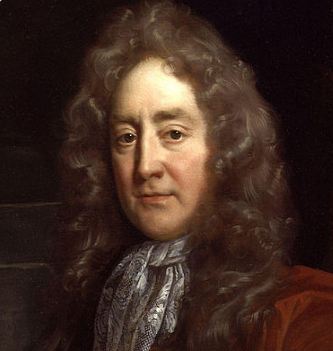
1st prize went to ‘Wicked’ William Wellesley-Pole (1788-1857) Booo!!!

After a chase worthy of the Epping Hunt, William emerged victorious from the pack when Catherine accepted his proposal in the autumn of 1811. Shortly before their marriage William added his wife’s name to his own and some – to form the ludicrously quadruple-barrelled new surname ‘Pole-Tylney-Long-Wellesley’. Not surprisingly this was soon abbreviated to Long-Wellesley by his friends, but rather pointedly to ‘Long’ by his Wanstead neighbours who rightly emphasised the surname he ought to have adopted when marrying into Catherine’s estate. An extract this contemporary ditty shows that William’s accession to Wanstead House was less than enthusiastically received.

LONG a tyrant, his neighbours presumed to annoy,

Their vexation and grief were his comfort and joy,

His greatest delight was to do others wrong

Till the people at length cried, “We won’t stand this LONG!”


From the outset the newlyweds craved acceptance from London’s fashionable elite. William believed Wanstead House could ignite his political career, enabling him to join his renowned Wellesley family relatives, whose power and influence was widely recognised. [See footnote below]

A few weeks after his marriage, and quite by chance, William discovered his hereditary entitlement to the role of Lord Warden of Epping Forest. This was an unlucky day for Essex because William’s assertion of the long-dormant Wardenship had a profound long-term affect on Epping Forest, for it shrank in size by over 5000 acres under his watch. But those years of destruction and land-grab came much later in William’s wreckless saga.

Because William believed he could never possibly spend the vast pile of cash he now possessed, his initially used the Wardenship for egotistical purposes. When he closed Wanstead Park to the public in the summer of 1812 there was a huge public outcry. Instead of negotiating with his neighbours, William reminded them that Lord Wardenship gave him powers to ‘appoint or sack forest officials’ thus sending an intimidating message to farmers and tradesmen alike – and anyone else dependent on his patronage. Despite this tangible threat to their livelihoods the people of Wanstead refused to be cowed, winning a landmark case in March 1813 – whereby the ancient rights of way were restored and William forced to reopen Wanstead Park. William lost the case because he did not appreciate the long-standing ties between Wanstead House, Epping Forest and its people, instead resorting to a crude attempt to bulldoze tradition purely for his own gain.

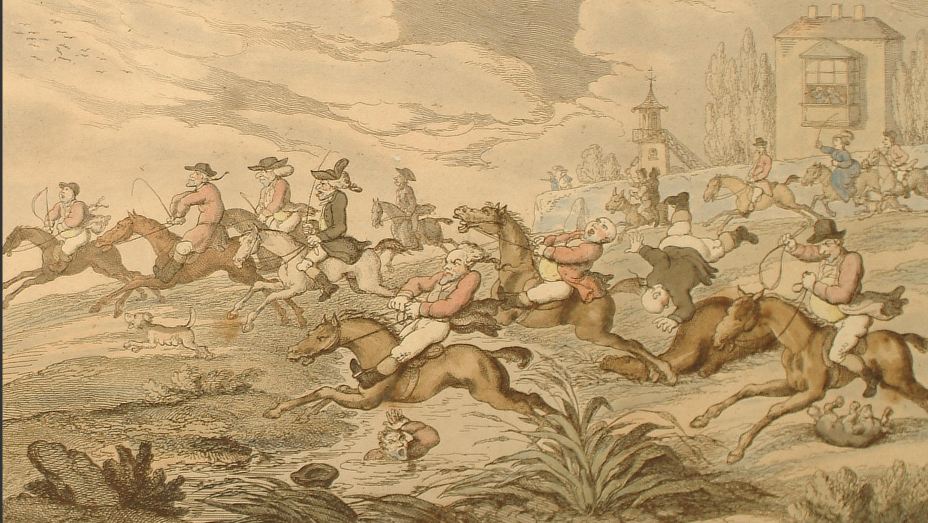
Easter Monday 1817 by Henry Thomas Aitken

 The Epping Hunt in ‘Wicked’ William’s day

The Lord Wardenship provided William with a second opportunity to flex his muscles, this time via spectacular gesture– a publicity stunt to convince rich and poor alike that he was worthy of admiration and respect. Yes, he decided to revive the Epping Hunt!  After all, what better way could there be to promote his equestrian prowess, style and up-to-the-minute fashion sense? This was a golden chance to be admired and envied, winning over his doubters in one fell swoop.

The problem was that William once again failed to do his homework, not realising the extent which the Epping Hunt had declined as a spectacle. William may have known the City of London abandoned the Common Hunt in 1807. In fact the Lord Mayor’s appearance at Buckhurst Hill had long-since been superseded by a new Easter Monday ‘tradition’ whereby the Lord Mayor and his retinue proceeded from Mansion House to Christchurch (Newgate) & heard the Spital sermon. But aldermen and stuffy City dignitaries held no interest for William. He wanted members of the beau monde, dandies, playboys and gadabouts – and intended to spend lavishly to ensure their attendance.
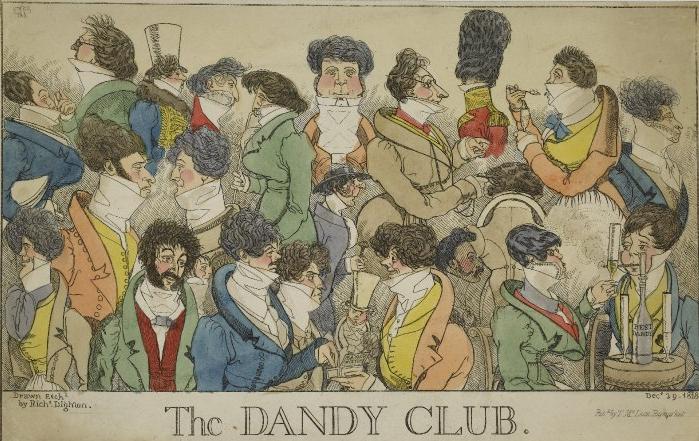
dandy club

William’s target audience was the fashionable London elite

Realising that a pack of hounds was an essential requisite of the Epping Hunt, William ordered the construction of new kennels on his land near the Eagle in Snaresbrook (then known as the Spread Eagle, now as the Toby Carvery). Instead of relying on foxhounds, William purchased a pack of stag-hounds especially bred for deer-hunting. At that time only the Prince Regent kept stag-hounds, and he only had a couple because of the enormous expense in acquiring them. William’s investment in a whole pack of hounds necessitated his appointment of Tommy Rounding, a widely respected local man fondly described as ‘father of the Hunt’. As far as adherence to tradition and quality of event, this was a promising start.

snaresbrook house

Modern-day Snaresbrook House stands on the site of William’s kennels

For the day in question William’s men were decked out in coats of Lincoln green with high-top boots. As for William, he was described in Bailey’s Magazine as

faultless alike in dress and symmetry, and style…With his spotless white waistcoat… and the ample tie of dark silk, perfectly adjusted and in true keeping with his dark coat.. [William] was the embodied perfection of a man of fashion, and carried his dress with that easy determination of style which is peculiar to high birth and high breeding.

One newspaper reported the sequence of events:

An uncommonly numerous assemblage of genteel company attended the Epping Easter Hunt this year. Those in carriages were chiefly of the first classes of Nobility and Gentry, and the horsemen in general capitally mounted. Mr. Pole Wellesley, of Wanstead House, having his stag-hunting establishment in this district, he is become patron of the Easter Hunt, and sent a deer to be turned out before the company. He was present on his famous chestnut horse. His Lady, Mrs. Long- Wellesley, was there also –she came in an open carriage, drawn by four greys, and two postillions with out-riders &c.; and with her company, took her station in an apartment for her at the Rein Deer, before the stag was turned out. It ran for about two hours, and was afterwards lost.


Elsewhere it was reported that while out with the hounds William scattered money freely among the village folk. He was said to have flung dozens of gold sovereigns into the throngs of spectators waiting outside the kennels upon his return. He then footed the bill for an enormous feast for participating huntsmen at the Eagle, and brought his more select guests back to Wanstead House for further hospitality and entertainment.
sovereigns

Sovereigns were thrown to bystanders at the kennels and the surrounding fields


As an event William Long-Wellesley’s Epping Hunt lived long in the memory and did a great deal to restore his reputation locally. But such wild and reckless flinging of sovereigns around the distressed community was more the act of a show-off than of somebody genuinely concerned for his tenants or the attending peasantry. Also his decision to begin the Hunt from the Rein Deer in complement to Mrs Long-Wellesley was reported to have caused ‘great mortification amongst numerous ladies and others in carriages arranged on the brow of the hill near the Roebuck, the customary place of turning out.’ This may have been a faux pas too far for William as it showed that spending prodigiously does not guarantee guest satisfaction.

the eagle

The Eagle at Snaresbrook – where being treated to a meal once really meant something


Perhaps the most telling thing about the whole event is that within a few weeks after the Epping Hunt it was announced that William Long-Wellesley intended ‘to give up his hunting establishment entirely’ and place the hunters, stag-hounds &c up for sale. This more than anything proves that Wicked William had no long-term intentions regarding the Epping Hunt. He just wanted to make a gesture, & boy did he waste a colossal sum in doing so.

I’d like to say that lessons were learnt, but I’m afraid we all know that the spending continued and that this crazy hedonistic occasion was merely the first warning that Wanstead House’s days were numbered. It is important to clarify that William continued to hunt regularly in Epping Forest during his tenure of Wanstead House, but this was by invitation only and nothing to do with the ‘Common Hunt’ which he turned his back on..

Wicked William was powerless to stop a few feeble re-runs of the Epping Hunt in the years to 1820, though perhaps his only permanent contribution to Hunt tradition was to make the Eagle pub at Snaresbrook the primary meeting place for a strange new breed of cockney visitors on Easter Monday for many years to come
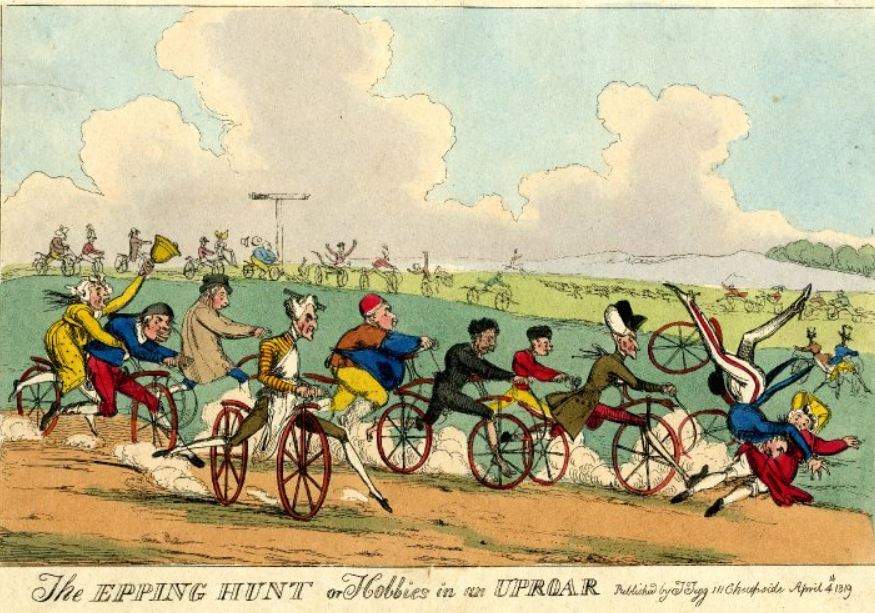
hobbies in an uproar


It is hard to believe that the famous cycle meet at the Eagle, which was still going strong in the 1940s, could be traced back to ‘Wicked’ William’s days at Wanstead House, and that it evolved to replace the Epping Hunt as a regular feature of the annual calendar. As London became more urbanised, the ‘cockney’ desire to master horsemanship declined, and the age of machines accelerated their separation from country-dwellers

So by the 1820s with Wicked William in exile, Wanstead house torn down and the onset of the steam age – the Epping Hunt was not only dead, but there were no mourners in attendance. Or were there? Enter one Thomas Hood…


Footnotes:

[1]

At the time of his marriage, Marquess Wellesley (an uncle) had just resigned as Foreign Secretary in order to challenge Spencer Perceval’s for Prime Minister, Wellesley-Pole (his father) was Secretary of State for Ireland, and Lord Wellington (an uncle) was in the Peninsular leading the British forces against Napoleon.

Tally Ho! – A Brief History of the The Epping Hunt Part 3 – The Cockney Hunt

Introduction | Origins | The ‘Cockney Hunt’ | Wicked William’s Hunt | A Fond Farewell

Cockneys in Essex? Well I never!

1741 - cockneys ridiculing countryfolk

Rivalry between town and country folk is a long-established tradition


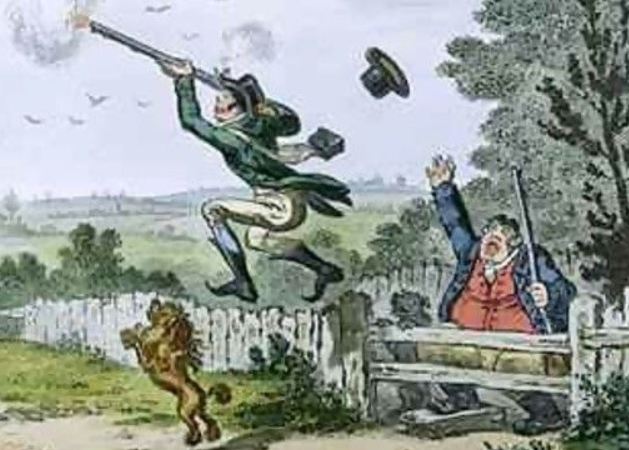
The origins of ‘cockney’ can be traced back as far as C14, when it had a middle-English meaning of ‘cocks-egg’. It was not until around 1600, when Samuel Rowland coined the phrase ‘Bowe-bell Cockney,’ that the word adopted specific geographical connotations. However, long before this time ‘cockney’ had already been adopted by country people as a derogatory reference to London-dwellers, whom they considered bereft of the manly attributes of horsemanship, hunting and civility. By the 1700s, as London rapidly increased in size and population, divisions between town and country folk widened. The above print from 1741 shows that Londoners (or cockneys) considered country folk to be slow, badly dressed, and backward. This particular yokel is waiting for ‘Mr Stuart’ to get off his horse before addressing him, unaware he is referring to a well-known statue. Rustic gullibility and simple-mindedness was a common theme throughout the Georgian era, used by satirists such as Hogarth and Rowlandson and perpetuated by urban domination of the press.

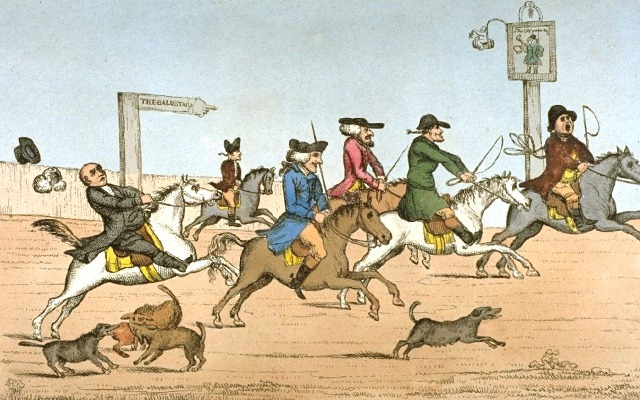
What a godsend it must have been therefore when the Epping Hunt began to attract large numbers of Londoners, providing a much-needed opportunity to redress the balance between town and country lifestyles. Notwithstanding its association with Bow bells, as the century wore on the phrase ‘cockney’ increasingly became linked with ‘townies’ attempting to partake in country pastimes. This is demonstrated by searching print media after the 1750s, & especially satirical prints, where there are numerous instances of clownish ‘cockney’ sportsmen. The Epping Hunt was perhaps the most high-profile event at which ‘cockney’ behaviour was lampooned.

cockney sportsman

Rowlandson portrayed the perceived stupidity of Cockneys in rural settings

As stated in part 2 the Epping Hunt reached its apogee in terms of ceremonial importance in 1749.  As late as 1753 the London Daily Advertiser recorded that the Lord Mayor ‘set out at 5am from Mansion House for Chigwell Row’ to attend the Epping Hunt, but thereafter London’s dignitaries increasingly shied away. Also when the Lord Warden of Epping Forest, (Lord Tylney of Wanstead House), went abroad to Italy, the Hunt lost its chief patron and became less of an attraction for London’s elite. Given that the Epping Hunt was by tradition a ‘Common Hunt’ it began to fall upon ordinary Londoners to fill the void. In order to do this they relied on the assistance of Essex landowners and tradesmen who were loath to see this lucrative tradition die out.

Just off The Highway in Wapping (or Ratcliffe’s Highway as it was once known) is a small lane adjacent to Tobacco Dock named ‘Chicwell Street’.This is named so  according to legend, because it was the the site from where cockney sportsmen annually congregated on early on Easter Monday to make their pilgrimage to Chigwell in Essex. Located close to East India House and the heart of mercantile London, this became a more proletarian departure point for the Epping Hunt when the Lord Mayor lost interest in attending. By the 1770s organisation of the Epping Hunt fell upon William Mellish, MP for Essex, ably assisted by his brother Joseph, who was responsible for providing the pack of hounds on the day. They had an inauspicious start in 1774 when two horses died in a direct collision, though their riders escaped unscathed. The following year in a bid to attract back the fairer sex and lessen the perception of a cockney monopoly, the event was promoted as a ‘Lady’s Hunt’. This backfired because a young gentleman was thrown from his horse and killed on the spot prior to the stag being turned out. Then the stag headed down Bucket’s Hill towards Smitham Bottom ‘to the great disappointment of the cocknies who wanted him driven towards London’- thus no sport was had that day.

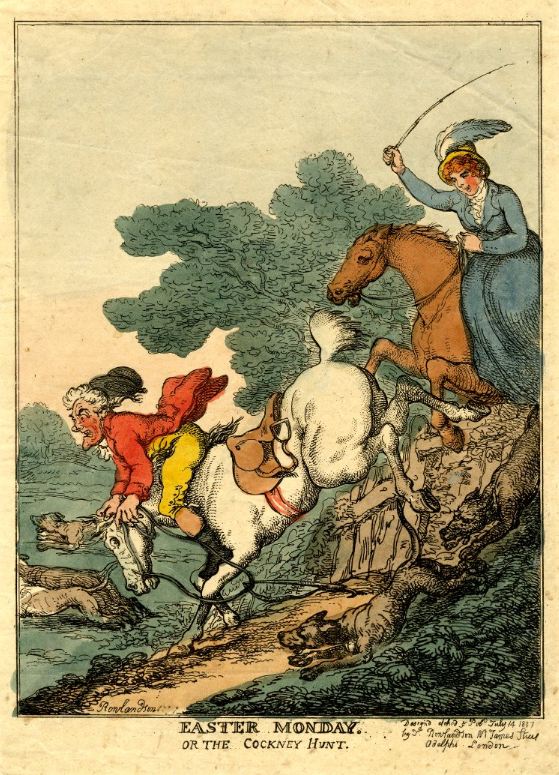
Rowlandsons Cockney Hunt 1811

In an attempt to upgrade its image Epping became a ‘Lady’s Hunt’

However the attempted feminisation of the Epping Hunt continued right up to 1800. In 1785 The London Chronicler reported

Soon as gloomy night had withdrawn her veil from the smiling face of morn, the keen sportsman quitted his warm bed, and was mounted on his high-mettled steed before the sun spread his beams into the neighbouring vale: not a horse was to be seen East of Temple-bar, whose head was not turned towards Epping, not a citizen, who could procure a palfrey for love or money, who was not mounted and posting away to the Ladies Hunt. It is well for those who live on the road, that this important day comes but once a year, as it would be impossible for them to exist, were they to be frequent spectators of such a grotesque assemblage. [Huge numbers] arrived at the spot from whence the poor stag was to be liberated, however, there were many mishaps between that and town… The place was very much crowded with post-chaises and glass-coaches for the day, filled with sober cits and their loving dames; and notwithstanding the accidents which happened, the attendants of the chase were very numerous, both male and female, all, seemingly determined to be in at the death, but so elate they were with the idea of distancing their neighbour, they forgot they were to manage their horses, and so became distanced themselves. The stag had been turned out but a few moments before the plain was covered with the riders, ladies rolling over the beaux, and the beaux over ladies, and the horses left at full liberty.

The above-described hunt ended tragically for a Mr Humphries, a taylor from Tower Hill, who broke his neck when riding under a tree.

By 1788 Epping Hunt was openly described as ‘The Cocknies Hunt’ and its participants included ‘mercers, taylors, barbers, bakers and even bruisers – for Mendoza (a famous wrestler) and several of his tribe were there.’ The Literary Chronicle published the following insight into the excitement roused in London by the Epping Hunt

For weeks before Easter in every year, all the riding schools are filled with cockney Nimrods; every nag is employed on the Sundays; the visits to Hyde Park, in order to see the deer, and thus be able to identify the Epping stag, when they catch a glimpse of him, become frequent; and nothing is read at the London Institution but Daniel’s ‘Rural Sports’ or Beckford on ‘Hunting’… When the important day arrives early in the morning all the livery stables were so cleared… and every kind of vehicle was in requisition. There were horses of all colours and sizes… not were their riders less various, they included all orders and degrees of men; some went to share in the diversion of the hunting, others to laugh at the hunters. A friend from Epping invited me down and [when] the stag was let out, within five minutes I could have had my choice of fifty horses, who have just thrown their riders… while the forest was strewn with hats, and various contents from the pockets of hunters.

easterhunt1807

By 1795 the Epping Hunt was almost universally derided as a parody of what an organised hunt should be. Despite this condemnation The Times reported ‘tens of thousands of spectators and participants from the metropolis.’ Yet just when it seemed that nothing could diminish public enchantment with the Hunt, a piece of lawlessness jeopardised its future. Early in 1798 hunt-organiser Joseph Mellish was killed by highwaymen on the road near Woodford, thus with no pack of hounds available (and possibly as a mark of respect) the hunt was cancelled. Then two years of extremely wet weather led to a Hunt washout, meaning that a hiatus unwittingly set in during which cockney hegemony was wrested by the resumption of interest from Wanstead House.

In 1802 Wanstead House was leased to the Duc de Conde, who was a member of the exiled French Royal Family. In tribute to these French guests, 1802’s Epping Hunt was switched to the Bush at Wanstead, and over the next 3 years held at the Bald Faced Stag in Bucket’s Hill. For security reasons ‘cockney’ participation very much curtailed. When the City of London abolished the Common Hunt in 1807 it was thought that the Epping Hunt would end. But the ordinary citizens of London were not quite ready to give up this tradition, and attempted to keep it alive. Tommy Rounding, a publican from the Horse and Wells in Woodford was nominated to provide stag, venue and hounds for all-comers once more. But he could not emulate the golden years and by 1810 the Morning Post reported an event lying on its deathbed

To drive the deer with hound and horn, The Cocknies took their way

Yesterday, previous to the buck being enlarged, there was an immense concourse of sportsmen appeared on the ground, the majority of whom were mounted on animals not capable of keeping up with a lame goat. Then buck’s horns were adorned with ribands; and as the scent did not lie in consequence of the warm and dry weather, the hounds were once or twice at fault, to the great delight of the lazy hunters and bad horsemen. The hounds did not run a mile before several of the Cockney sportsmen were thrown out, while they were mortified by the gibes and jeers of those who followed on foot. Such a scrambling up hedges, and falling into ditches, was never before witnessed, and the old buck soon gave the hounds and the hunters the go by. There were some of the company exceedingly well mounted and well understood the chase: but, on the whole, the equestrian display was highly ludicrous and laughable.

Rowlandsons the city hunt 1810

Rowlandson’s The City Hunt – 1810


Given the farcical level at which the Epping Hunt languished, and its association with lower-class ‘cockney’ yobs, it would have taken a complete fool to consider reviving it as a high-calibre event. Step forward ‘Wicked William’ Long-Wellesley….


Tally Ho! – A Brief History of the The Epping Hunt Part 2 – Origins & Tradition

Introduction | Origins | The ‘Cockney Hunt’ | Wicked William’s Hunt | A Fond Farewell

Origins & Establishment of Tradition

henryvii at royal hunt epping forest

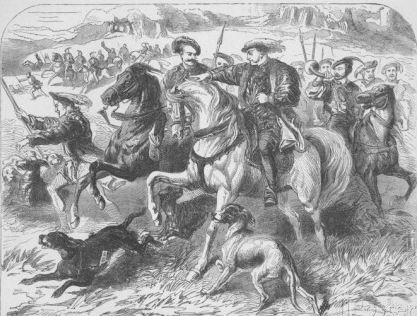
Henry VII hunting in Epping Forest


From the time of William the Conqueror, forest law was imposed by royal prerogative. Its principal aim was to protect game for hunting. Forest laws applied to any type of land private or common, cultivated or forested within a designated area, which was set by officials who carried out a ‘perambulation’ to establish and fix forest boundaries. Anything inside the area was considered to be ‘afforested’ – therefore liable to forest law. Within afforested areas deer could freely roam. Commoners could forage for wood, berries and other edible plants, but only the King was allowed to hunt there. Around the year 1130 Epping Forest came under forest law and it was noit until 1226, under the reign of Henry III that citizens of London were first granted free warren or liberty to hunt one day annually in what became known as ‘the common hunt’. Epping Forest came under the jurisdiction of a Lord Warden, and quite often this role was held by the ruling monarch.

From ancient times the Manor of Wanstead acted as an important venue for royal use of Epping Forest. Wanested Hall, as it was then known, was an established hunting lodge by 1499, and was a much-loved retreat for Henry VII. This love of Wanstead was shared by the King’s son Henry, who became Henry VIII, and it was he who first enclosed Wanstead Park around 1512. As can be seen above, Epping Forest became a royal playground and this continued under Queen Elizabeth’s reign & well into the 17th century. Whilst royal hunting could go on at any time, the ‘common hunt’ quickly became associated with Easter Monday. It is assumed that this date was set partly because it was traditionally a holiday and also because Easter marked the first time of year when the forest was deemed dry enough to stage a decent stag hunt.


Up until the 1680s the Epping Hunt as treated as a solemn almost ceremonial occasion. The Lord Mayor of London presided over the hunt, which was attended by aldermen, landed gentry and aristocrats. A deer was taken to an area of flat land at either the Bald Faced Stag or The Roebuck and let out of its cart. Participating riders usually formed a circle around the cart allowing the stag just one exit route, which was often set towards the city to avoid getting lost deep into Essex countryside. Royal patronage over the event came to an end in the 1680s when Josiah Child (1630-1699) purchased Wanstead House. As Governor of the East India Company Child used his enormous wealth and influence to bribe Charles II into allowing him to seize and enclose a large portion of Epping Forest surrounding his new estate. One of the ‘gifts’ Child received in return for payments of up to £10,000 per annum into Charles’ back pocket, was the hereditary title of Lord Warden of Epping Forest. Thus for the first time a commoner was now charged with responsibility for the forest, and though he used this privilege to his own advantage – he also made steps to influence and improve traditions such as the Epping Hunt.

josiah child

Child’s backhanders ensured Wanstead House controlled Epping’s forest and its Hunt

Josiah Child’s son Richard (1680-1750) became Lord Tylney in 1732, and is credited with formalising the Epping Hunt and making it into the occasion it became. As early as 1740 Lord Tylney took charge of events and thereafter the Lord Mayor of London became more of an honorary guest than organiser of the hunt. By this time the dignitaries set off from Whitechapel early in the morning in what evolved into the pre-hunt procession to ‘Buckets Hill’ (Buckhurst Hill as it is today).

The poet Tom D’Ursey, writing in 1719, encapsulated how Epping Hunt had become an established fixture in the sporting calendar

Once a year into Essex go, to see them pass along, O! tis a pretty show!


Old England newspaper reported in 1749:

At Wanstead in Essex yesterday Lord Tylney opened the hunt upon Epping Forest, where at least 70 coaches, most of them of six, assembled at the chace. The tents were pitched as usual by his Lordship’s direction, &c An elegant dinner was prepared for the ladies & in two of the largest tents, and a band of musick attended. The whole was concluded with a Ball Alfresco. The tees were decorated with flowers and illuminated in a circle round the area they danced in. The brilliancy of the ladies, who were very numerous, was the greatest ornament.


1749 proved to be a high watermark in the history of the Epping Hunt, because Lord Tylney died the following year. His son John, 2nd Lord Tylney, was a passionate advocate of Epping Forest, but not keen on hunting and seldom exercised his rights to organise the event. Tylney’s idea of sport was far more dangerous. Indeed his discovery in bed with a couple of manservants in the 1750s meant that Lord Tylney had to escape into exile to avoid criminal prosecution, and remained there until his death iun 1784


But so long as commoners enjoyed the right to hunt on Easter Monday, there were always going to be demand for the Epping Hunt to continue. Thus beckoned an era typified by ‘Cockney Nimrods’…


Wicked William – The Last Word

“This is not an epitaph”

wickedwilliam


‘Wicked’ William Long-Wellesley (1788-1857) was one of the best-known characters of the Regency period. His rollercoaster life played out like a primordial soap opera through a multitude of satirical images, newspaper reports, books, pamphlets, and journals. His antics were commented upon throughout the world. When he was at his most arrogant, the mob cornered him in the street baying for blood. Yet when he was beaten down they rallied to his defence. Eventually debts and a failed political career forced him into exile. He remained in the news but the public tired of him. He had come to epitomise the worst excesses of a corrupt and unloved era, whose values were an anathema to early Victorian society. From the 1840s Long-Wellesley was consciously marginalised, his removal from contemporary memoirs the equivalent of a literary ‘social cut’.

My blog will show that Long-Wellesley directly contributed to his own notoriety in his pursuit of celebrity. For three decades he adeptly harnessed the power of the press to his own advantage, feeding newspapers tantalising details that kept the public enthralled.

But, as we all know, public opinion and press sympathy can easily change. Therefore with no little irony these last words about ‘Wicked William’ appeared in the Morning Chronicle the day after his death (4th July 1857):

The mockery of heraldry was never more displayed than in the case of this most unworthy representative of the honour of the elder house of Wellesley. A spendthrift, a profligate, and gambler in his youth, he became a debauchee in his manhood [and] his children, whose early tastes and morals he wickedly endeavoured to corrupt, from a malicious desire to add to the agonies of their desolate and broken-hearted mother. Redeemed by no single virtue – adorned by no single grace – his life has gone out, without even a flicker of repentance – his “retirement” was that of one who was deservedly avoided by all men. We have no wish, further, to illustrate such a theme by writing what should be his epitaph.

Luckily for me, so many outrageous events from the scandalous life and times of ‘Wicked William’ were recorded for posterity, that I will have ample opportunity of detailing them over time via this forum.