Tally Ho! – A Brief History of the The Epping Hunt Part 3 – The Cockney Hunt

Introduction | Origins | The ‘Cockney Hunt’ | Wicked William’s Hunt | A Fond Farewell

Cockneys in Essex? Well I never!

1741 - cockneys ridiculing countryfolk

Rivalry between town and country folk is a long-established tradition


The origins of ‘cockney’ can be traced back as far as C14, when it had a middle-English meaning of ‘cocks-egg’. It was not until around 1600, when Samuel Rowland coined the phrase ‘Bowe-bell Cockney,’ that the word adopted specific geographical connotations. However, long before this time ‘cockney’ had already been adopted by country people as a derogatory reference to London-dwellers, whom they considered bereft of the manly attributes of horsemanship, hunting and civility. By the 1700s, as London rapidly increased in size and population, divisions between town and country folk widened. The above print from 1741 shows that Londoners (or cockneys) considered country folk to be slow, badly dressed, and backward. This particular yokel is waiting for ‘Mr Stuart’ to get off his horse before addressing him, unaware he is referring to a well-known statue. Rustic gullibility and simple-mindedness was a common theme throughout the Georgian era, used by satirists such as Hogarth and Rowlandson and perpetuated by urban domination of the press.

What a godsend it must have been therefore when the Epping Hunt began to attract large numbers of Londoners, providing a much-needed opportunity to redress the balance between town and country lifestyles. Notwithstanding its association with Bow bells, as the century wore on the phrase ‘cockney’ increasingly became linked with ‘townies’ attempting to partake in country pastimes. This is demonstrated by searching print media after the 1750s, & especially satirical prints, where there are numerous instances of clownish ‘cockney’ sportsmen. The Epping Hunt was perhaps the most high-profile event at which ‘cockney’ behaviour was lampooned.
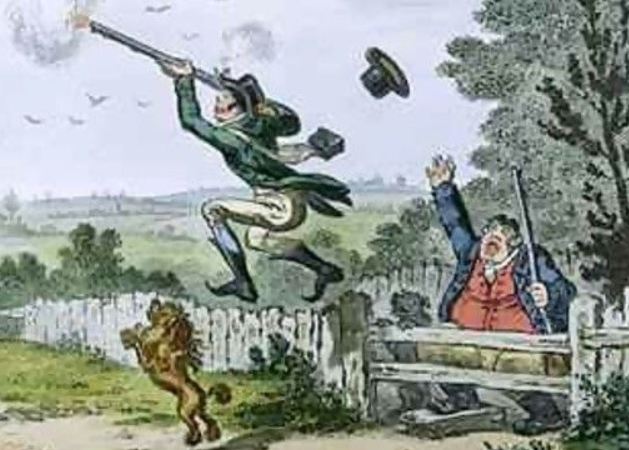
cockney sportsman

Rowlandson portrayed the perceived stupidity of Cockneys in rural settings

As stated in part 2 the Epping Hunt reached its apogee in terms of ceremonial importance in 1749.  As late as 1753 the London Daily Advertiser recorded that the Lord Mayor ‘set out at 5am from Mansion House for Chigwell Row’ to attend the Epping Hunt, but thereafter London’s dignitaries increasingly shied away. Also when the Lord Warden of Epping Forest, (Lord Tylney of Wanstead House), went abroad to Italy, the Hunt lost its chief patron and became less of an attraction for London’s elite. Given that the Epping Hunt was by tradition a ‘Common Hunt’ it began to fall upon ordinary Londoners to fill the void. In order to do this they relied on the assistance of Essex landowners and tradesmen who were loath to see this lucrative tradition die out.

Just off The Highway in Wapping (or Ratcliffe’s Highway as it was once known) is a small lane adjacent to Tobacco Dock named ‘Chicwell Street’.This is named so  according to legend, because it was the the site from where cockney sportsmen annually congregated on early on Easter Monday to make their pilgrimage to Chigwell in Essex. Located close to East India House and the heart of mercantile London, this became a more proletarian departure point for the Epping Hunt when the Lord Mayor lost interest in attending. By the 1770s organisation of the Epping Hunt fell upon William Mellish, MP for Essex, ably assisted by his brother Joseph, who was responsible for providing the pack of hounds on the day. They had an inauspicious start in 1774 when two horses died in a direct collision, though their riders escaped unscathed. The following year in a bid to attract back the fairer sex and lessen the perception of a cockney monopoly, the event was promoted as a ‘Lady’s Hunt’. This backfired because a young gentleman was thrown from his horse and killed on the spot prior to the stag being turned out. Then the stag headed down Bucket’s Hill towards Smitham Bottom ‘to the great disappointment of the cocknies who wanted him driven towards London’- thus no sport was had that day.
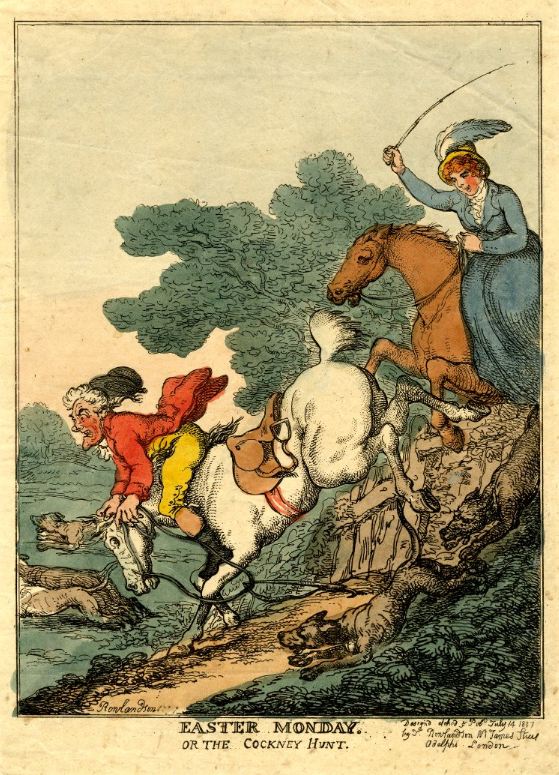
Rowlandsons Cockney Hunt 1811

In an attempt to upgrade its image Epping became a ‘Lady’s Hunt’

However the attempted feminisation of the Epping Hunt continued right up to 1800. In 1785 The London Chronicler reported

Soon as gloomy night had withdrawn her veil from the smiling face of morn, the keen sportsman quitted his warm bed, and was mounted on his high-mettled steed before the sun spread his beams into the neighbouring vale: not a horse was to be seen East of Temple-bar, whose head was not turned towards Epping, not a citizen, who could procure a palfrey for love or money, who was not mounted and posting away to the Ladies Hunt. It is well for those who live on the road, that this important day comes but once a year, as it would be impossible for them to exist, were they to be frequent spectators of such a grotesque assemblage. [Huge numbers] arrived at the spot from whence the poor stag was to be liberated, however, there were many mishaps between that and town… The place was very much crowded with post-chaises and glass-coaches for the day, filled with sober cits and their loving dames; and notwithstanding the accidents which happened, the attendants of the chase were very numerous, both male and female, all, seemingly determined to be in at the death, but so elate they were with the idea of distancing their neighbour, they forgot they were to manage their horses, and so became distanced themselves. The stag had been turned out but a few moments before the plain was covered with the riders, ladies rolling over the beaux, and the beaux over ladies, and the horses left at full liberty.

The above-described hunt ended tragically for a Mr Humphries, a taylor from Tower Hill, who broke his neck when riding under a tree.

By 1788 Epping Hunt was openly described as ‘The Cocknies Hunt’ and its participants included ‘mercers, taylors, barbers, bakers and even bruisers – for Mendoza (a famous wrestler) and several of his tribe were there.’ The Literary Chronicle published the following insight into the excitement roused in London by the Epping Hunt

For weeks before Easter in every year, all the riding schools are filled with cockney Nimrods; every nag is employed on the Sundays; the visits to Hyde Park, in order to see the deer, and thus be able to identify the Epping stag, when they catch a glimpse of him, become frequent; and nothing is read at the London Institution but Daniel’s ‘Rural Sports’ or Beckford on ‘Hunting’… When the important day arrives early in the morning all the livery stables were so cleared… and every kind of vehicle was in requisition. There were horses of all colours and sizes… not were their riders less various, they included all orders and degrees of men; some went to share in the diversion of the hunting, others to laugh at the hunters. A friend from Epping invited me down and [when] the stag was let out, within five minutes I could have had my choice of fifty horses, who have just thrown their riders… while the forest was strewn with hats, and various contents from the pockets of hunters.
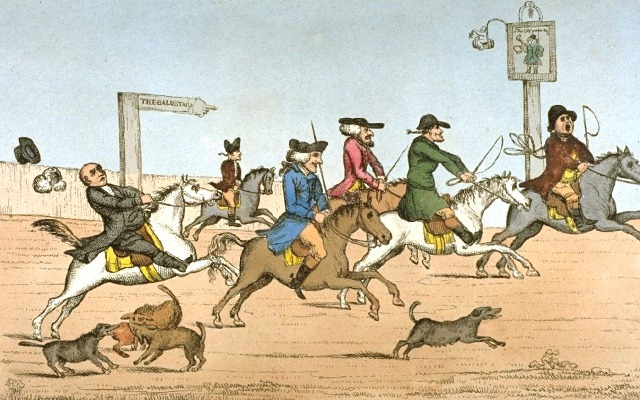
easterhunt1807

By 1795 the Epping Hunt was almost universally derided as a parody of what an organised hunt should be. Despite this condemnation The Times reported ‘tens of thousands of spectators and participants from the metropolis.’ Yet just when it seemed that nothing could diminish public enchantment with the Hunt, a piece of lawlessness jeopardised its future. Early in 1798 hunt-organiser Joseph Mellish was killed by highwaymen on the road near Woodford, thus with no pack of hounds available (and possibly as a mark of respect) the hunt was cancelled. Then two years of extremely wet weather led to a Hunt washout, meaning that a hiatus unwittingly set in during which cockney hegemony was wrested by the resumption of interest from Wanstead House.

In 1802 Wanstead House was leased to the Duc de Conde, who was a member of the exiled French Royal Family. In tribute to these French guests, 1802’s Epping Hunt was switched to the Bush at Wanstead, and over the next 3 years held at the Bald Faced Stag in Bucket’s Hill. For security reasons ‘cockney’ participation very much curtailed. When the City of London abolished the Common Hunt in 1807 it was thought that the Epping Hunt would end. But the ordinary citizens of London were not quite ready to give up this tradition, and attempted to keep it alive. Tommy Rounding, a publican from the Horse and Wells in Woodford was nominated to provide stag, venue and hounds for all-comers once more. But he could not emulate the golden years and by 1810 the Morning Post reported an event lying on its deathbed

To drive the deer with hound and horn, The Cocknies took their way

Yesterday, previous to the buck being enlarged, there was an immense concourse of sportsmen appeared on the ground, the majority of whom were mounted on animals not capable of keeping up with a lame goat. Then buck’s horns were adorned with ribands; and as the scent did not lie in consequence of the warm and dry weather, the hounds were once or twice at fault, to the great delight of the lazy hunters and bad horsemen. The hounds did not run a mile before several of the Cockney sportsmen were thrown out, while they were mortified by the gibes and jeers of those who followed on foot. Such a scrambling up hedges, and falling into ditches, was never before witnessed, and the old buck soon gave the hounds and the hunters the go by. There were some of the company exceedingly well mounted and well understood the chase: but, on the whole, the equestrian display was highly ludicrous and laughable.
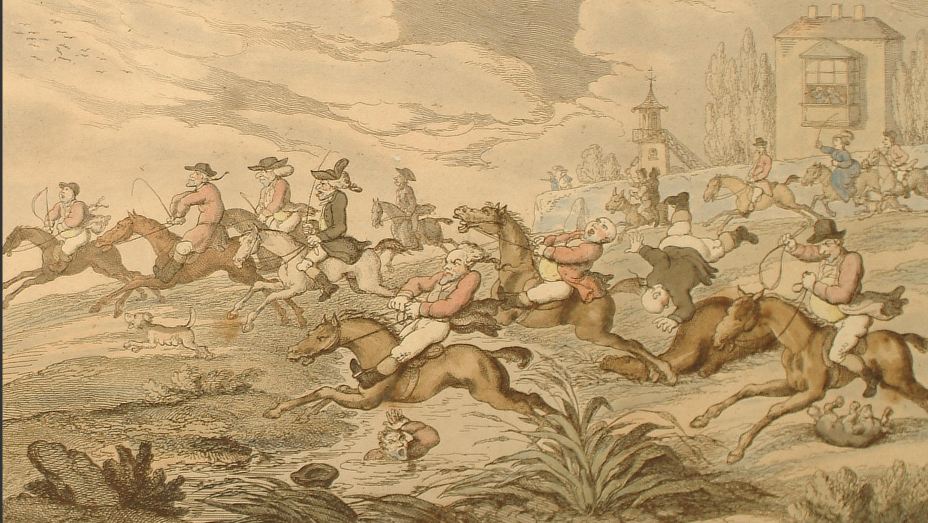
Rowlandsons the city hunt 1810

Rowlandson’s The City Hunt – 1810


Given the farcical level at which the Epping Hunt languished, and its association with lower-class ‘cockney’ yobs, it would have taken a complete fool to consider reviving it as a high-calibre event. Step forward ‘Wicked William’ Long-Wellesley….


Tally Ho! – A Brief History of the The Epping Hunt Part 2 – Origins & Tradition

Introduction | Origins | The ‘Cockney Hunt’ | Wicked William’s Hunt | A Fond Farewell

Origins & Establishment of Tradition

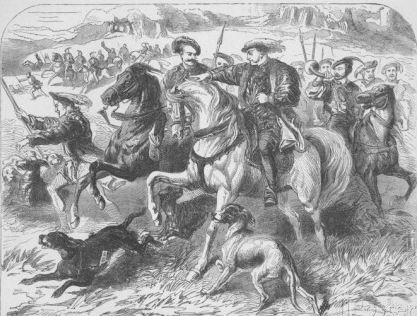
henryvii at royal hunt epping forest

Henry VII hunting in Epping Forest


From the time of William the Conqueror, forest law was imposed by royal prerogative. Its principal aim was to protect game for hunting. Forest laws applied to any type of land private or common, cultivated or forested within a designated area, which was set by officials who carried out a ‘perambulation’ to establish and fix forest boundaries. Anything inside the area was considered to be ‘afforested’ – therefore liable to forest law. Within afforested areas deer could freely roam. Commoners could forage for wood, berries and other edible plants, but only the King was allowed to hunt there. Around the year 1130 Epping Forest came under forest law and it was noit until 1226, under the reign of Henry III that citizens of London were first granted free warren or liberty to hunt one day annually in what became known as ‘the common hunt’. Epping Forest came under the jurisdiction of a Lord Warden, and quite often this role was held by the ruling monarch.

From ancient times the Manor of Wanstead acted as an important venue for royal use of Epping Forest. Wanested Hall, as it was then known, was an established hunting lodge by 1499, and was a much-loved retreat for Henry VII. This love of Wanstead was shared by the King’s son Henry, who became Henry VIII, and it was he who first enclosed Wanstead Park around 1512. As can be seen above, Epping Forest became a royal playground and this continued under Queen Elizabeth’s reign & well into the 17th century. Whilst royal hunting could go on at any time, the ‘common hunt’ quickly became associated with Easter Monday. It is assumed that this date was set partly because it was traditionally a holiday and also because Easter marked the first time of year when the forest was deemed dry enough to stage a decent stag hunt.


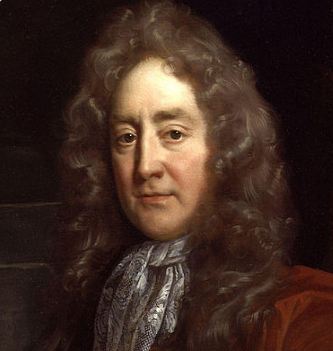
Up until the 1680s the Epping Hunt as treated as a solemn almost ceremonial occasion. The Lord Mayor of London presided over the hunt, which was attended by aldermen, landed gentry and aristocrats. A deer was taken to an area of flat land at either the Bald Faced Stag or The Roebuck and let out of its cart. Participating riders usually formed a circle around the cart allowing the stag just one exit route, which was often set towards the city to avoid getting lost deep into Essex countryside. Royal patronage over the event came to an end in the 1680s when Josiah Child (1630-1699) purchased Wanstead House. As Governor of the East India Company Child used his enormous wealth and influence to bribe Charles II into allowing him to seize and enclose a large portion of Epping Forest surrounding his new estate. One of the ‘gifts’ Child received in return for payments of up to £10,000 per annum into Charles’ back pocket, was the hereditary title of Lord Warden of Epping Forest. Thus for the first time a commoner was now charged with responsibility for the forest, and though he used this privilege to his own advantage – he also made steps to influence and improve traditions such as the Epping Hunt.

josiah child

Child’s backhanders ensured Wanstead House controlled Epping’s forest and its Hunt

Josiah Child’s son Richard (1680-1750) became Lord Tylney in 1732, and is credited with formalising the Epping Hunt and making it into the occasion it became. As early as 1740 Lord Tylney took charge of events and thereafter the Lord Mayor of London became more of an honorary guest than organiser of the hunt. By this time the dignitaries set off from Whitechapel early in the morning in what evolved into the pre-hunt procession to ‘Buckets Hill’ (Buckhurst Hill as it is today).

The poet Tom D’Ursey, writing in 1719, encapsulated how Epping Hunt had become an established fixture in the sporting calendar

Once a year into Essex go, to see them pass along, O! tis a pretty show!


Old England newspaper reported in 1749:

At Wanstead in Essex yesterday Lord Tylney opened the hunt upon Epping Forest, where at least 70 coaches, most of them of six, assembled at the chace. The tents were pitched as usual by his Lordship’s direction, &c An elegant dinner was prepared for the ladies & in two of the largest tents, and a band of musick attended. The whole was concluded with a Ball Alfresco. The tees were decorated with flowers and illuminated in a circle round the area they danced in. The brilliancy of the ladies, who were very numerous, was the greatest ornament.


1749 proved to be a high watermark in the history of the Epping Hunt, because Lord Tylney died the following year. His son John, 2nd Lord Tylney, was a passionate advocate of Epping Forest, but not keen on hunting and seldom exercised his rights to organise the event. Tylney’s idea of sport was far more dangerous. Indeed his discovery in bed with a couple of manservants in the 1750s meant that Lord Tylney had to escape into exile to avoid criminal prosecution, and remained there until his death iun 1784


But so long as commoners enjoyed the right to hunt on Easter Monday, there were always going to be demand for the Epping Hunt to continue. Thus beckoned an era typified by ‘Cockney Nimrods’…


Tally Ho! A Brief History of the Epping Hunt – Part 1 Introduction

Introduction | Origins | The ‘Cockney Hunt’ | Wicked William’s Hunt | A Fond Farewell

Introduction to the Epping Hunt

Believe it or not, there was a time when country-folk from Buckhurst Hill, Loughton and Woodford found themselves inundated with Cockneys, but it was only for one day annually. That day was Easter Monday and the occasion was the Epping Hunt. It is more than a little ironic that an area nowadays considered the epicentre of ‘cockneyism’ (thanks to TV shows like TOWIE) should have once gaped and sniggered at the ‘Oh Gaw Blimey’ accents and godawful clothing worn by these town-dwelling visitors, who were exercising an ancient right granted to the City of London – allowing ordinary citizens one day’s hunting in Epping Forest.

eppinghunt wolstenhome

The Essex Hunt, near Epping by Dean Wolstenhome (1757-1837)

Throughout the 1700s Easter Monday provided ordinary Londoners with three options for holiday entertainment. Firstly there was a fair at Greenwich Hill where there were organised picnics where excellent ginger bread and other delightful treats on offer, and you could enter the prestigious ‘rolling down the hill’ competition and win a prize. This tame sounding pastime was undoubtedly a rough and tumble affair taken seriously by the competitors. For those hedging their bets against inclement weather, a second option was Sadlers Wells, which offered performances of new musicals and pantomimes throughout the day[i].

But for sportsmen and spectators alike, there was nothing to beat the Epping Hunt, whose rituals embraced the entire community from the heart of London’s metropolis into the Essex countryside. First established during the reign of Henry III in 1226, the Epping Hunt was more than just a chase. It began with an early morning breakfast near the Tower of London, followed by a 10-mile procession from London, through Mile End, Stratford and Wanstead. Along the way new participants swelled its ranks until they all arrived at either the Roebuck or Bald Faced Stag Inns in Buckets Hill (nowadays Buckhurst Hill), where the stag was traditionally turned out. The finest carriages from London and the surrounding area occupied prime positions on the hill, attended upon by a myriad of food and drink vendors. Whilst the men saddled up and joined the hunt, the ladies had ample opportunity to display their fashionable attire –  enjoying music, promenading and engaging in gossip.

At a typical Epping Hunt thousands of ordinary folk lined the streets to catch a glimpse of the noble elite, or manned stalls selling a variety of produce to the visiting hordes. This undoubtedly proved a massive boost to the local economy proving that it really was an occasion to remember.

Over these next four blogs I will examine the history and traditions of the Epping Hunt and add links between each blogs as and when they are posted:

  1. Origins and Establishment of Tradition (1226-1750) – Here I will look at how Epping Hunt was established as an aristocratic event under the patronage of the Lord Mayor of London, alongside the Lord Warden of Epping Forest.


  1. Gor‘ Blimey Mate!! (1750-1810) – By 1787 Epping Hunt was generally regarded as the ‘Cockney Hunt’ because its participants were increasingly drawn from London’s merchant classes. In this period there was the tremendous comedy value of watching a collection of badly-dressed city-folk chase about the forest in the fruitless pursuit of their goal. Not surprisingly the Epping Hunt became an object of public ridicule and by 1810 the consensus was that it would soon die a natural death – a relic of a bygone age.


  1. Wicked William’s Hunt (1813) – In 1813 William Long-Wellesley of Wanstead House hosted an extremely extravagant event, reckoned to be the most lavish ever –  in an incredible attempt to restore tradition and quality to the Epping Hunt. I will look at the day in question plus the ramifications it had for the future of Wanstead House.


  1. A Fond Farewell (1820-1850s) – More than any one person Thomas Hood is responsible for restoring the Epping Hunt in a positive way for future generations to recall. His eponymous poem (1828) served as a gentle reminder of the mirth and pleasure to be had on such an occasion, whilst at the same time acknowledging its inevitable demise.


eppinghunt-4

One of Rowlandson’s plates from Thomas Hood’s The Epping Hunt poem (1828)


The Epping Hunt might be best remembered by this quote taken from Hunting in the Olden Days by William Scarth Dixon, which was published in 1912:

It was one of the ironies of Fate that the Epping Hunt should be chiefly remembered [in caricature]…For the Epping Hunt was the common hunt of the City of London, and as such its rights were jealously guarded. It was the most important of those city hunts of which we have had so many in England…. So though the Epping Hunt outlived its usefulness… let us look kindly on those good city sportsmen of a bygone age. Let us remember that they helped to foster the general love and admiration of sport without which, I make bold to say, hunting would have been seriously curtailed in our day, if not abolished altogether.


[i] Perhaps the most enduringly popular Easter Monday performance at Sadlers Wells was in fact entitled The Epping Hunt – which was put on by popular demand for a great many years. So, whether you went in person or witnessed a hilarious reproduction at Sadlers Wells, the Epping Hunt was a pivotal component in the Easter calendar for Londoners.


“She may be a vagrant, but she’s MY VAGRANT..”

       Gentleman & The Tramp

Tramp                          maryborough

For centuries London was filled with a plethora of poor, invalid or destitute people living day-by-day, scraping an existence by any means possible.  But then a middle-class inspired march to morality (which found its origins in the 1790s) sought to clear the poor from the streets and out of plain sight. The instrument for this purge was the Vagrancy Act (1824) whereby it became an offence throughout England and Wales to sleep rough or beg. Critics including William Wilberforce denounced the rigidity of the Act because it made no allowance for circumstances as to why someone might be on the streets, leaving magistrates with no power of discretion – no matter how unjust their rulings became.

One such case involving Lord Maryborough occurred in 1826. Lord Maryborough (or William Wellesley-Pole, 1760-1845), was a man often berated for being ‘angry at all times… advancing in age without improving in reputation’. Being the father of notorious rake ‘Wicked Willam’ Long-Wellesley can’t have helped, but the fact is that Maryborough garnered negative sentiments throughout his life and since, as he is still considered a ‘nonentity’ by modern historians. However, this blog will over time provide sufficient examples of Maryborough’s achievements, loyalty and personal integrity to counter such unbalanced views. This case in particular shows that Maryborough was far from being a reactionary old Tory, and that his ethos was always one of Christian charity, even if he did think everyone belonged in their rightful place in the social hierarchy.

On 17th August 1826 a poor blind woman named Ellen Goodall was arrested and charged with acts of vagrancy, appearing before Marlborough Street Magistrates a few days later when the full extent of her ‘crimes’ were revealed. On that day the prosecution declared that begging was the least of 70-year-old Ellen’s nefarious activities. The court heard that Goodall was living in sin with a man of 80 and that this state of ‘unlawful wedlock’ had gone on for 22 years. This evil woman needed to be ‘separated from this paramour with whom she lived in prostitution, by removing her to the workhouse’. For all her poverty, however, Goodall was rich in loyalty and steadfastly refused consent to be placed in the workhouse because she would not sacrifice her aged companion.

Lord Maryborough appeared before the Magistrate explaining that he had already procured Ellen’s discharge on two or three occasions before, suggesting that she was effectively targetted for arrest. He explained that he had known her for over 20 years and she was in the habit of coming to his house in Savile Row from where she often received ‘broken victuals, and also clothes’. Also, ‘to enable her to earn a little extra money the family provided Ellen with a basket filled with cakes’ which she sold in or about the streets locally. Maryborough challenged the court to prove that Ellen was begging as he had never seen her do so.

Then the very Dickensian-named Mr Fagan, a beadle of the parish, and member of the Society for the Suppression of Vice, spoke for the prosecution. His hostility towards Ellen was entirely to be expected given his membership of a group of zealots who believed that punishment was the only way to make the poor mend their ways.

Fagan asserted that Goodall was guilty of ‘constructive begging’ for she was clearly witnessed ‘holding out her hand whilst holding a basket’. He added that her refusal to give up the lodgings and enter a workhouse proved her guilt and immorality beyond question.  Fagan conceded he had been ordered by members of the Society for Suppression of Vice to bring Ellen and her partner to justice. Given these facts, the magistrate stated his belief that the old woman before him could have been bending down to do her shoelaces, yet the outcome of her arrest would have been the same.

Maryborough replied that the case was ‘nonsense, talking about an old woman, nearly 70 years of age, living by prostitution, and that to support a man of 80; and because she will not enter into a workhouse, to lose by that act all her little comforts, she is to be persecuted…. Supposing they are living together, what is that to any person? Where is the immorality of such, then?’

During a lengthy discussion that followed, the Magistrate pointed out that he had no room for manoeuvre, therefore the law must apply. Goodall was sent to Newgate Prison for 15 days.  As he left the Court, Maryborough stated that he did not care what trouble and expense he would be put to, on behalf of this poor woman, and if the Magistrate could not oblige he would go to a higher authority.

A few days later Maryborough was finally thwarted when senior Magistrate Mr Roe informed him that he had no power of pardon under the Vagrancy Act, and Goodall remained in prison.  Sadly we do not know what became of this unfortunate woman, but her ageing partner got the worst of all outcomes in that he was discharged but thrown out of their lodgings. Yet, thanks to Maryborough’s involvement  Ellen’s case did come to the attention of the public.

A letter to the Editor of the Morning Post on 25th August declared Lord Maryborough  ‘a man of feeling actuated by motives which do him honour… At this moment, when distress stalks about the land, every latitude ought to be allowed to those who, not able to pay shop rent, make the street their bazaar – where an honest penny may be gained to keep a life together… Lord Maryborough is an honour to his country for the humane interference he has shewn in a case that really demands serious enquiry’.

The Morning Chronicle decried that fact that the Vagrancy Act allowed ‘parish beadles and the like to tyrannise the poor, to wound their feeling, and to pry into their affairs… Because Ellen Goodall was old and poor, it was presumed naturally that she could be nothing less than a vagrant.

Finally, on 27th August an open letter to Home Secretary  Sir Robert Peel was published in The Examiner asking how it can be right to ‘punish the poor for being so, for suffering under a state of things they could not avoid?  Who would remain poor if he could avoid it? Who would be a burthen on others if they could be independent? Who would ask for charity or vend cakes in Savile Row, if he could sell jewellery in Bond Street?  The Vagrancy Act denies one thing that the very poorest in this land has rights to: and that is justice’.

When we consider the changes to the benefit system brought about since the Lib/Tory Coalition in 2010, the above seems peculiarly relevant today.

Lady Westmoreland’s Rebuke


If such behaviour were to be countenanced by Lady Westmoreland it would become a disgrace to the English Nation…


The following letter transcribed in full from the Sneyd family papers at Keele University alludes to a social faux pas perpetrated by Ralph Sneyd when visiting Rome in the winter of 1821. Ralph seems to have misunderstood the sphere of social and domestic pleasure, and that he needed to follow strict rules of engagement when dealing with elite ladies. His protagonist, Lady Westmoreland outranks him in age, wealth and status. She certainly displays very fixed opinions about the rules of gossip-mongering.

But far from being an impressionable youth Sneyd was in fact 28 years old, so perhaps he ought to have known better than to rile such a high-ranked hostess. He appears to have been warned twice already before the redoubtable Lady Westmoreland finally excludes him from her concert party, sending this letter explaining her reasons.  Yet Lady Jane Westmoreland was not your archetypal crusty old matriarch, and was actually a staggeringly attractive 32 year old blonde with a far-from spotless reputation of her own. This letter of censure reveals that Lady Westmoreland had not in fact followed her own rules of confidentiality and that her animosity to Mr Sneyd arose at least in part because she herself had been upbraided by Lord Kinnaird for repeating the allegations Sneyd made against the un-named Lady. I think, however, that Sneyd’s real crime was his failure to appreciate the character of Lady Westmoreland – for he must have known that her presence in Rome was entirely on account of social exclusion and gossip resulting in her effective exile from London society

jane huck-saunders

Lady Westmoreland (1783-1857)

Versus

NPG D20641; Ralph Sneyd by Frederick Christian Lewis Sr, after George Richmond

Ralph Sneyd (1793-1870)


Born Jane-Huck Saunders in 1783, at the age of 17 she became second wife to awkward and cantankerous 41-year-old John Fane, 10th Earl of Westmoreland.  She bore him three children but her wealth and lack of inhibition provided Lady Westmoreland opportunities to conduct a series of secret liaisons with men of her own age. Around 1810 Lady Westmoreland caused a sensation by leaving her marital home (including children and 5 additional stepchildren) and setting up her own establishment in London. Leaving her children behind may seem callous in today’s terms, but Lady Westmoreland would have had no legal right to take them and could not have quit the household any other way. In fact the legality of her actions was so questionable that her husband commenced action to have her committed (to a sanatorium) on the basis of ‘irresponsible conduct’. The truth was that Lady Westmoreland’s new home served as a magnet for those on the edge of society – for example Lord Byron who first saw Caroline Lamb in her house,  – and she was becoming an embarrassment. Damned by public opinion Lady Westmoreland was compelled to go abroad in 1814, establishing herself in Rome and living in style. From her magnificent residence she dominated the social scene and became a  renowned patron of the arts. One of her protégés was John Severn who extricated himself from her romantic overtures in 1821 by suggesting she take up with his friend Frederick Catherwood. She replied: “My dear Mr Severn, I do not know this young man , but I would take anyone of your commending, because I feel you understand me.” Consequently Catherwood became her lover and moved into her palace for several months until the relationship petered out. Lady Westmoreland’s position at the head of Rome’s ex-pat community endured because of her wealth and ability to control the social calendar. She had well-deserved reputation as a brilliant conversationalist, generous when it suited her, yet also unstable and domineering in character. 

Perhaps Lady Westmoreland’s real objection to Sneyd was his decision to judge the tantalisingly un-named Lady without holding a shred of evidence to back up his story. In doing so he struck at the heart of Lady Westmoreland’s own exclusion from London society, something that was bound to raise her heckles. Had Sneyd reflected upon the reputation of Lady Westmoreland before he opened his mouth, he might have avoided her wrath and her subsequently brutal put-down of his own character and status.

This letter provides a marvellous insight into Lady Westmoreland’s views on this important facet of aristocratic social etiquette, with a few choice insults thrown in to boot. Please notice that Lady Westmoreland refers to herself in the third-person throughout, probably to emphasise the gulf in class between her and Sneyd.


Letter Reference 20/235 – Sneyd MS, Keele University Libary

 [Marked in pencil:  ‘Jane, 2nd wife of 10th Earl of Westmoreland’]

Lady Westmoreland having been asked by several persons why she did not ask Mr Sneyd to her concert thinks it right to acquaint Mr Sneyd that the following is the explanation she has given of her reasons

About 5 weeks ago Lady Westmoreland met Mr Sneyd at dinner at Lady Sandwich’s & suffering every man she saw in Lady Sandwich’s house to be a person of gentlemanly honour, she conversed with Mr Sneyd respecting a Lady latterly arrived at Rome & whose name has been the subject of discussion in several houses where Mr Sneyd has obtained admittance. Mr Sneyd gave it to Lady Westmoreland confidentially as his opinions that the stories as circulated in London concerning the Lady were of so unpleasant a nature & had obtained so much credit in public opinion, that it would be improper and impossible to cause that Lady to be received in general society.

Lady Westmoreland answered Mr Sneyd that (being in ignorance herself upon the subject) if she should find that to be the general sentiment of the English Ladies & Gentlemen at Rome she should not make any effort to persuade those who entertained that opinion to act inconsistently with it, but she stated also to Mr Sneyd that it would make no difference in her own conduct regarding the Lady who had been introduced to her in terms of such respectful recommendation, as would decide her at once to give the protection that was requested. & the more so, if that protection became manifestly necessary from the general sentiment of Rome being unfavourable to the Lady. – Lady Westmoreland explained that she intended to invite the Lady in question to her house with such of her friends as would not object to meet her. & Lady Westmoreland told Mr Sneyd that she thought all the single gentlemen at Rome ought to offer their respects & protection, to this their countrywoman, a Lady, of highest rank, defenceless, in a foreign land – most especially if they thought it their duty to recommend an opposite line of conduct to those Ladies who might be influenced by their testimony.

As the answers of Mr Sneyd were extremely positive & decided regarding the reputation of the Lady, the questions of Lady Westmoreland were few.

It happened however that after the lapse of a fortnight or three weeks, various circumstances came to the knowledge and observation of Lady Westmoreland, that caused her to remark that calumnies so readily uttered seemed sanctioned by very little proof & that indeed the very existence of some of them, was a presumptive disproof of others.

Lady Westmoreland therefore a second time (at Lady Bute’s) addressed herself to Mr Sneyd & resumed her enquiries more particularly. She asked him if he had ever had any means of authenticating the charges advanced.

Mr Sneyd distinctly answered that he knew nothing whatever but the gossiping stories tattled in the world of the foundation of which or the real circumstances, he had not the slightest knowledge or information.

Lady Westmoreland asked Mr Sneyd if he knew any ill opinion to be expressed of this Lady by the direct assertion of any man of honourable name or if any man of honourable name did, or ever had given his authority to any charge or distinct censure brought against her by others.

Mr Sneyd again distinctly replied that there was the total absence of any such information, that he was possessed of nothing but stories, which he supposed were believed, but which he had never traced to any honourable or credible authority & which he had only alluded to in his conversation with Lady Westmoreland from believing himself to be communicating in “strict honour and confidence”.

Lady Westmoreland answered Mr Sneyd that she also had considered the conversation to be one of strict honour and confidence & therefore she had made a point of not mentioning Mr Sneyd’s name.

(In truth Lord Kinnaird had called upon Lady Westmoreland to give up the names of the persons who slandered the honour of the Lady concerned & Lady Westmoreland informed Lord Kinnaird that without first asking their permission she did not feel at liberty so to do).

Lady Westmoreland stated to Mr Sneyd at this second conversation, that having herself received the same answers, of their entire ignorance of the truth, from all the persons who had been the loudest in defaming the Lady in question, she was of opinion that there was not cause brought forward to justify hostile conduct against the Lady nor ground sufficient to give implicit faith to the assertions that had been so positively and publicly made to her discredit. Lady Westmoreland therefore repeated more strongly than before, & as a request from herself that Mr Sneyd should in the manly character assist Lady Westmoreland in giving that protection which it became more and more the duty of Lady Westmoreland not to withdraw, & of her countrymen to assist her in according since the accusations increased in virulence against the Lady in proportion as they were acted upon, while the proofs receded upon enquiry and investigation.

Mr Sneyd answered Lady Westmoreland with the appearance of embarrassment & alarm that he wished to decline what she proposed to him as it was not an acquaintance he should have wished to form under the circumstances, & in the present ones, he feared the Lady might require some service such as request him to introduce her to some other person etc. Lady Westmoreland abruptly terminated the subject saying that “Mr Sneyd must judge for himself”, & thinking that any gentleman who when asked for protection to a woman, expresses fear, whatever may be the nature of his apprehensions, can be an acquaintance, the loss of which, is no disadvantage to the Lady.

It is with pain and surprise, & not without indignation that Lady Westmoreland has since heard, that during all these weeks that Mr Sneyd has been sheltering himself under her honour & decency, he has been permitting his tongue the greatest licence & levity in the public mention of the Lady whose name he attacks, & in promulgating with the most persuasive intention all the evil impressions that such statements are calculated to convey.

Lady Westmoreland considers that she should become the accomplice herself in such proceedings if she were to allow them her sanction.

Such behaviour is not only to defame, but to belie a Lady’s honour. For he who repeats with the authority of truth scandalous accusations that he does not positively know to be true, debases what he does positively know may be false. & when the object and result of that is to expose to infamy, contempt and insult, a woman of his own Nation, alone, and undefended in a foreign country, it is the very worst action by which a man can degrade his own character.

Lady Westmoreland has been told by several persons that she is making Mr Sneyd of too much consequence & acting with too much condescension in deigning to communicate with him at all. But Lady Westmoreland is not of this opinion. On the contrary it is one of her maxims in life by which she has constantly regulated her actions, to consider the honour of every individual as of equal value & of the same value as each individual ought to consider it himself & to the most inconsiderable person in society Lady Westmoreland would give the same opportunity of justification, & would become herself his defender if she had accused him unjustly, with the same alacrity that she would do to the first in station and honour.

Lady Westmoreland knows scarcely anything of Mr Sneyd, and not enough to have any prejudice either in his favour or against him. She does not think she has ever heard him mentioned since about 6 or 7 years ago, when she recollects having a cursory view of a copy of verses of his performance the subject of which she did not comprehend, nor did the verses themselves invite a very attentive perusal as she remembers they gave her but a mediocre idea of the natural talents of the author in a composition which seemed to convey a desperation to lampoon Lord and Lady Burghersh.  Neither did Lady Westmoreland appreciate much more highly the judgement of the person who displayed a very blunt attempt to ridicule the Lord and Lady of a house in which Mr Sneyd had probably been received with Lord Burghersh’s accustomed hospitality.

As however Lord and Lady Burghersh could at Florence have crushed Mr Sneyd pleasantly with a glance, Lady Westmoreland would have conceded from good nature what she in truth suppressed from forgetfulness. For she does not recollect that from that hour to this the subject has ever recurred to her recollection nor does she think it ever would have done so if she had not now heard that Mr Sneyd has again come forth in the character of a public jester; & that he is going about from house to house talking loosely with levity upon those slanders which he tells Lady Westmoreland he only alludes to in “strict honour & confidence”, thus exposing the name of a Lady while he avails himself of the integrity of persons of honour, to serve his own.

Lady Westmoreland is sorry that Mr Sneyd should misuse a capacity that might tend to better objects than employments so degrading – Lady Westmoreland has had many years’ experience of the world herself and has acquired in consequence great contempt for all its empty contrivances. In that long experience too she has constantly observed that the jester at length becomes the joker, & those who introduce themselves into the society of persons of higher rank than themselves by deigning to amuse the community at the expense of others, generally end by diverting it at their own.

It is too great condescension to men of distinction by the mention of high sounding names & it is a much better calculation in the end to act so as to command respect then to confine the brain to the humble occupation of seeking to awaken laughter.

Lady Westmoreland is very sorry that Mr Sneyd in having communicated with her confidentially upon this subject & then having acted entirely contrary to the spirit of honourable communication, has compelled Lady Westmoreland to manifest her sense of his conduct.

In the present state of the case it is only disgraceful to one young man who may mend his manners by experience. But if such behaviour were to be countenanced by Lady Westmoreland it would become a disgrace to the English Nation.

As Lady Westmoreland considers the conduct of Mr Sneyd to be a failure in gentlemanly honour she declines any immediate conversation with him herself. But if Mr Sneyd has any statement to make in intimation of the accusation which Lady Westmoreland brings against him in this letter, she should listen to it with the kindest attention through the medium of any of the respectable married men at Rome if there should be any one of them who after reading this letter of Lady Westmoreland, will charge himself with any excuse for the conduct of Mr Sneyd

Palazzo [Rockingham], Monday 24th December 1821


Footnote

Sneyd’s first cousin by marriage was Sir Charles Bagot whose wife Mary was the sister of Priscilla, Lady Burghersh – whose husband was English Minister at Florence and Lady Westmoreland’s stepson, John Fane. This explains why she alludes to her annoyance at Sneyd poking fun at the hospitality of the Burghersh family via his ‘mediocre verses’.


Follow my blog with Bloglovin