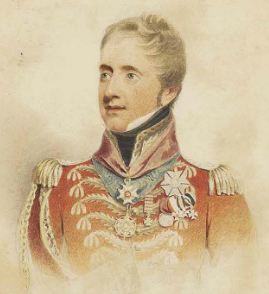
Creating Tradition: Wellesley-Pole & Royal Ascot


Tell Lord Maryborough that whatever may happen to me, I declare no interruption may be given to the races at Ascot

King George IV on his deathbed June 11, 1830

Intro | Master of the Buckhounds | The Age of Reform | Anger Management | Legacy
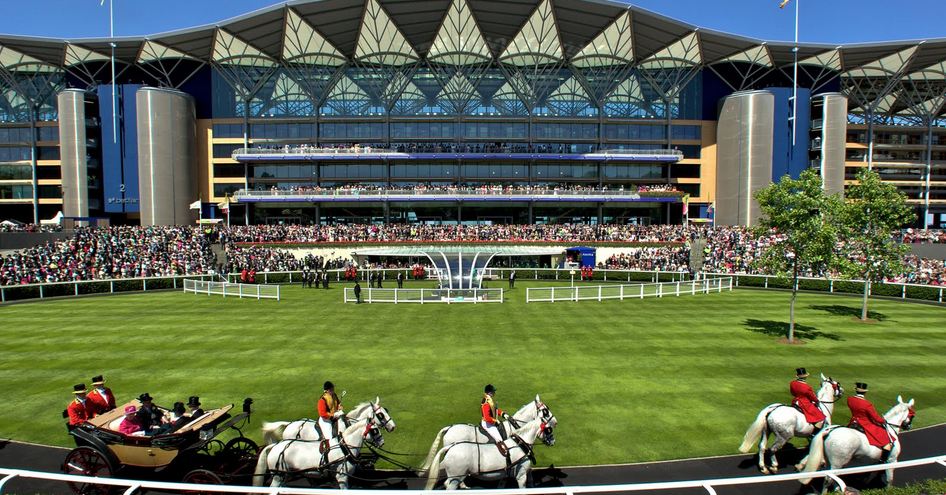
modernday royal ascot

Modern day Ascot -a beautiful race venue

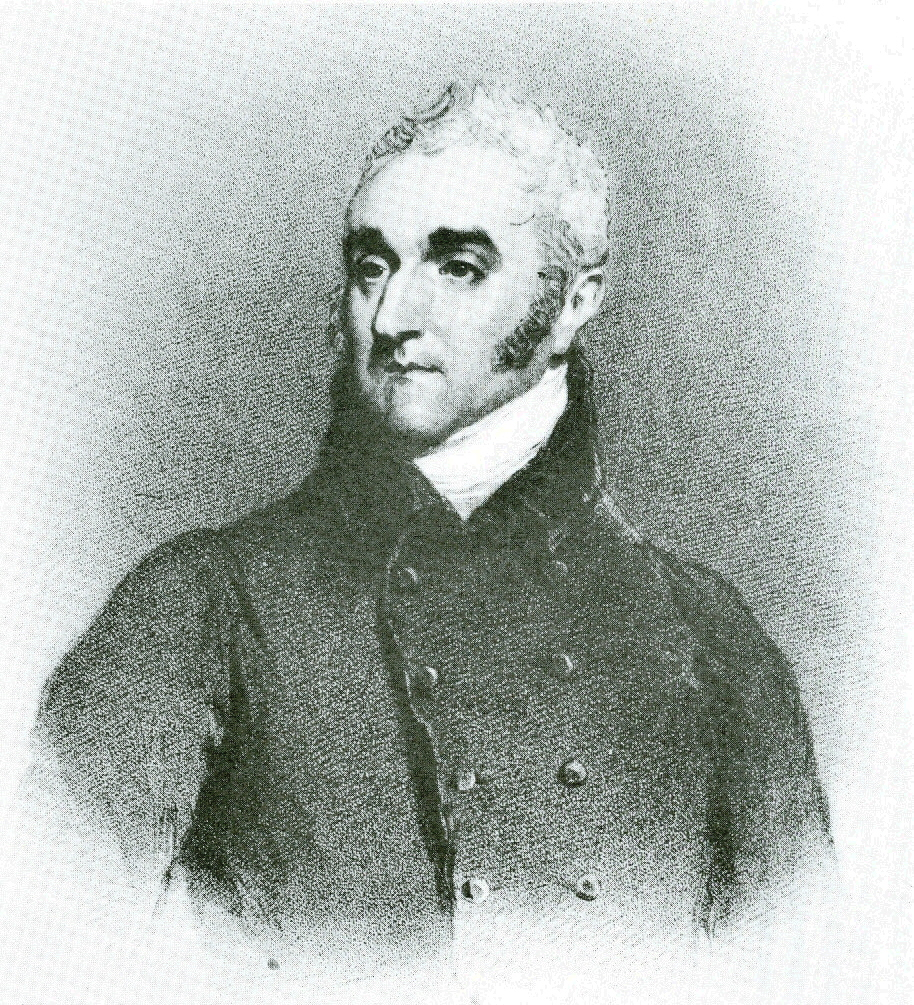
A day out at Ascot Races earlier this month encouraged me to look into its history in the hope that Lord Maryborough (William Wellesley-Pole) would feature prominently. But despite his pivotal role in elevating Royal Ascot from a run of the mill race meeting to a must-see event in the British sporting calendar, I could find no commemorative picture or plaque adorning the walls of Ascot’s magnificent new stand. Ascot’s website is equally unforthcoming in its brief history page – meaning that Wellesley-Pole (as per usual) has been airbrushed from history.
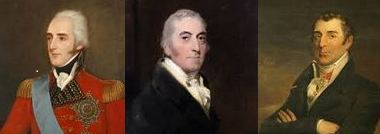
 brothers

Spot the nonentity? – Wellesley-Pole (Centre)

Sandwiched between successful brothers Richard (Marquis Wellesley – Governor General of India 1797-1805, Foreign Secretary 1809-1812) and Arthur (Duke of Wellington), Wellesley-Pole is destined to remain in the shadows. But this hardly justifies why numberless books about the Wellesley brothers feature Wellesley-Pole in a cameo only – He flits about like a kind of pantomime villain – a social climber, grasping opportunist and perpetually angry ‘with anything and anyone’ who gets in his way. I’m not sure what is worse about these assessments – the lazy complacency of poor historical research or the complete inability/unwillingness to place Wellesley-Pole in his correct context. Because the fact is that even a rudimentary study of Wellesley-Pole reveals the important role he played in establishing and consolidating the Wellesley family dynasty.

waterloo medal

Wellesley-Pole’s Waterloo Medal (1816)

coin


It doesn’t come more iconic than this! Wellesley-Pole’s Gold Sovereign (1817)

In his own right Wellesley-Pole was responsible for the Waterloo Medal (1816), opening of Waterloo Bridge (1817) and the iconic Britannia design for gold sovereigns (1817). As Master of the Mint (1814-1822) his finest achievement was the introduction of new silver currency in 1817, dubbed the ‘Great Recoinage’. Over a period of two weeks Wellesley-Pole organised the nationwide distribution of 2.6 million coins whilst simultaneously collecting up and melting down all the old currency – a task completed without a single mishap –at a time when there was only a rudimentary transport and communication system in Great Britain. Sir Joseph Banks enthused

The bold manner in which [Wellesley-Pole] devised, and… executed one of the most difficult works…during the present Reign, or possibly any former one, does honour to the name of Wellesley

This new silver coinage was to remain legal tender right up until 1971. That’s over 150 years in which Wellesley-Pole’s handiwork permeated every nook and cranny of British society – becoming a recognisable symbol of Britishness – His coins even outlasted the Beatles (whose last public performance was coincidentally held on the roof of Wellesley-Pole’s old family mansion in Savile Row). All this and no blue plaque!!

savilerow

No 3 Savile Row, Wellesley-Pole’s mansion & latterly Apple Studios

This series of blogs will look at Wellesley-Pole’s 7-year tenure as Steward of Royal Ascot, a time in of great change, during which Ascot’s place was embedded in the annual sporting calendar. This may not be the most important duty Wellesley-Pole undertook in his many years of public service– but it tells us a lot about him as a man – revealing both his brilliant and irrational nature. (Links will come live as they are added)

  1. Master of the Buckhounds – How Wellesley-Pole was unceremoniously dumped from the Cabinet and duped into accepting a role in the King’s Household – which included responsibility for Ascot races.
  2. The Age of Reform – Detailing structural, ceremonial, and organisational changes effected by Wellesley-Pole  as Chief Steward of Ascot between 1822 and 1830
  3. Anger Management – A look at the advantages and disadvantages of Wellesley-Pole’s hot temper, and how it led to his departure from Ascot
  4. Legacy – Why Ascot ought to re-examine its history and traditions to give Wellesley-Pole the credit he deserves

For more information on Ascot Racing visit their website or read the BBC’s brief history

For more equine-related japes on this blog you might like a brief history of the Epping Hunt
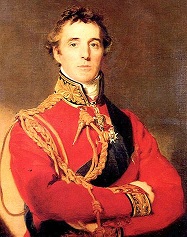


Fitzroy Somerset gave his right arm for Wellington – but was it reciprocated?

wellingtonsmall   fitzroy somersetsmall

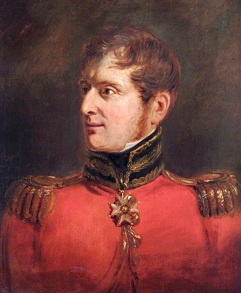
Brothers in arm? Wellington & Fitzroy Somerset

Perhaps the biggest cloud hanging over the military career of Arthur Wellesley, 1st Duke of Wellington is the perception that he was cold and unfeeling to his troops. Countless biographies remind us that the Iron Duke rarely showed his emotion. He was said to be prone to condescension to anyone that he deemed inferior – which was practically everyone. For many the legendary description of his men as ‘scum of the earth’ in 1813 underlines Wellington’s ruthless reputation – yet when the quote is used in full context the picture become less clear:

[these men are] the scum of the earth; it is really wonderful that we should have made them to the fine fellows they are

The above seemingly blatant insult could now be reinterpreted as Wellington’s appreciation for how far such lowly men had progressed under his command, though it was hardly a glowing compliment.  In fact there are many instances of Wellington’s sense of feeling in the arena of battle – and just how keenly he felt the loss of men under his command. Despite these occasions an over-riding sense remains that Wellington was never quite willing or able to give credit where it was due – even towards his closest military aides.

waterloo

Wherever Wellington went, Fitzroy was sure to follow (Waterloo 1815)

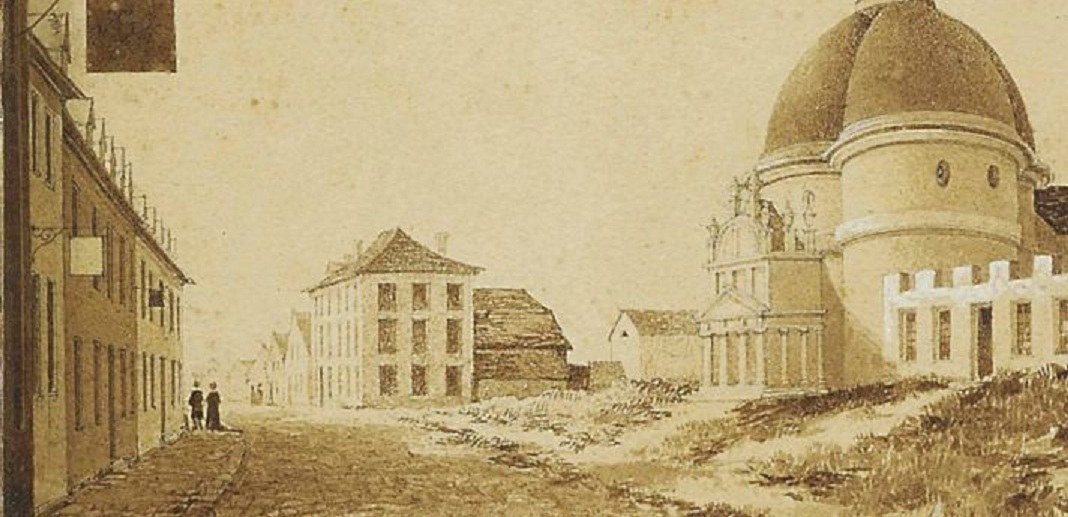
One such stalwart was Fitzroy Somerset, youngest son of the 5th Duke of Beaufort, who joined Wellington’s staff in 1807 and became his military secretary in 1811. In August 1814 Fitzroy married Emily Harriet Wellesley-Pole, Wellington’s niece (and Wicked William’s sister).  She was in Brussels with him and gave birth to a baby daughter just weeks before the battle of Waterloo. In the heat of the battle Fitzroy was shot in the arm by a French sniper, whilst he was fighting alongside Wellington. He was taken to a nearby farmhouse where the arm was amputated – but not before he insisted on removing a ring his wife had given him.


arm-loss siteAfter Waterloo, Fitzroy’s arm was amputated in this terrace (left)

One of the first duties Wellington had to perform on his return to Brussels was informing Emily of her husband’s situation, which can hardly have been the easiest news to impart to a young mother wrought with anxiety.

Shortly afterwards Wellington penned this letter to Fitzroy’s brother:

To His Grace to Duke of Beaufort
Bruxelles, June 19th 1815

My dear Lord
I am sorry to have to acquaint you that your brother Fitzroy is very severely wounded, and has lost his right arm. I have just seen him, and he is perfectly free from fever and as well as anybody could be under such circumstances.
You are aware how useful he has always been to me; and how much I shall feel the want of his assistance, and what regard & affection I feel for him; and you will readily believe how much concerned I am for his misfortune.
Indeed the losses I have sustained have quite broken me down, and I have no feeling for the advantages we have acquired. I hope however that your brother will soon be able to join me again; and that he will long live to be as he is likely to become, an honour to his country, as he is a satisfaction to his family and friends.
Believe me my dear Lord ever your most faithful servant
Wellington

It is plain how desperately sad Wellington was for the injuries sustained by his young protégé – and very touching (with the benefit of hindsight) to know that Fitzroy went on to fulfil his destiny as ‘an honour to his country’.
But questions arise as to the true measure of their relationship when we look at the many years of service that Fitzroy gave to Wellington  – suggesting that Wellington received much more than he was prepared to reciprocate.
Having endured Wicked William’s antics at the battlefront for two months in 1808, it must have come as a relief for Arthur Wellesley to find someone as reliable and discreet as Fitzroy Somerset amongst his aide-de-camp staff.  Over the course of 6 the next years Fitzroy became as essential part of Wellington’s command.

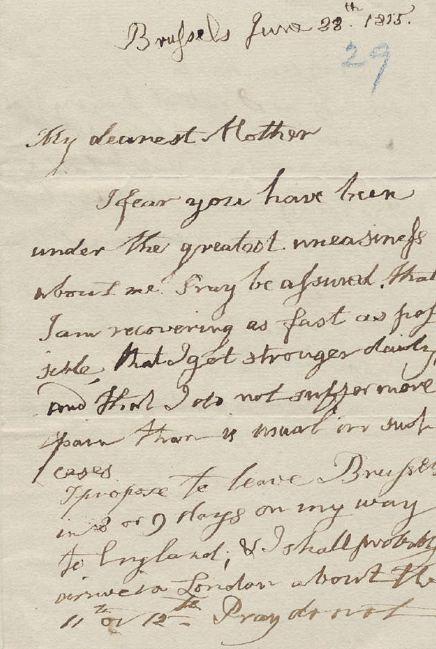
Even after the calamity of Waterloo, Fitzroy quickly learned to write with his left hand and remained part of Wellington’s inner circle. Following a stint as aide de camp to the Prince Regent, he returned as Wellington’s secretary in the latter’s new capacity as Master-General of the Ordnance in 1819. When Wellington became Commander-in-Chief of the Forces in January 1827, Fitzroy duly followed to become Military Secretary.  But hereafter came a parting of the ways since Wellington was obliged to relinquish command of the army when he became Prime Minister in January 1828. Fitzroy stayed on as Military Secretary until 1852 (the year Wellington died) – effectively becoming the Duke’s eyes and ears in army-related matters.

letter home to mum

Fitzroy’s first shakey left-handed letter to his mother

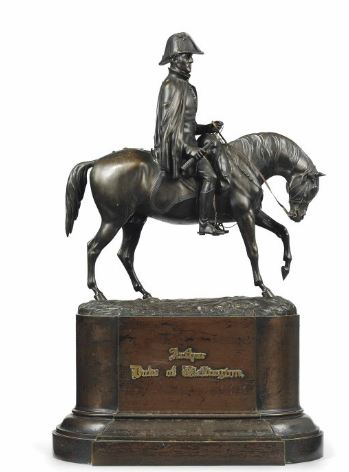
On the face of it there is plenty to suggest that Wellington took a very keen interest in Fitzroy’s career, and he certainly ensured that Fitzroy’s disability proved no hindrance to high office.  When we look at the recently auctioned Raglan Collection, there are many items that could only have been gifts bestowed on Emily and Fitzroy through Wellington’s personal generosity.
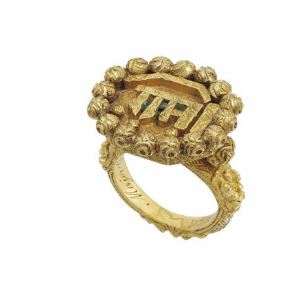
For example Lot 10, a ring allegedly taken from Tipoo Sultan’s finger after the Battle of Seringapatem in 1799, or Lot 78 which originally stood in Apsley House

tippo ring bustof wellington

But here’s the rub – Wellington’s private generosity ran counter to his preparedness to intervene in matters of public concern.  For we find that Fitzroy’s willingness to serve, his loyalty and commitment was rewarded with mediocre pay.

Throughout his life Wellington was exasperated by constant demands upon his patronage, privately acknowledging that his refusal to bow to such pressure when forming his first cabinet in 1828 lost him many friends. Even Charles Arbuthnot sulked for days on that occasion, but the Duke held firm and kept his friend from office. Why was this?

Wellington often said:

I am nimmukwallah, as we say in the East; that is…I conceive it my duty to serve with unhesitating zeal and cheerfulness, when and wherever the King or his government may think proper to employ me.   

This rigid sense of duty compelled Wellington to suppress private needs wherever they impinged upon matters of Government and state. It made him circumspect not only in regard to patronage for others, but also in terms of his own rewards.  For example in the aftermath of Waterloo when the nation was happy to lavishly treat their conquering hero, Wellington modestly opted for Stratfield Saye House – & returned £100,000 to state coffers. We can therefore see that Wellington’s over-riding desire to maintain high standards of decorum in office, created the dichotomy between private generosity and public mean-spiritedness.

bunker mentaility

In public life Wellington often felt isolated, but saw approachability as a weakness

Another factor separating Wellington’s private and public image was his hostile attitude towards the press, of which he once wrote… ‘blackguard editors of newspapers [attempt to] deprive us of our reputation by their vulgar insinuations’. Wellington repeatedly declared that he would never have anything to say to the ‘gentlemen of the Press’.  Acting like this he developed a bunker mentality, going out of his way to avoid accusations of impropriety in public office – making him appear hard-hearted towards genuine appeals for placement.

It is therefore unsurprising that Fitzroy Somerset was not raised to the peerage until after Wellington’s death, or that he remained a relatively poor man throughout his life. Both of these could (and perhaps should) have been tackled through Wellington’s influence. Fitzroy was created Baron Raglan in 1852 and given command of the British troops sent to the Crimea in 1854. He died there in 1855 from complications brought on by an attack of dysentery. Even in his final cruel days at the battlefront Raglan was heard exclaiming ‘What would Wellington have done, if he had been here?’  This poignant plea reveals how much Raglan appreciated the comradeship and ability of his old commander in arms.

raglan crimealarge

Dear Arthur, Wish you were here. Fitzroy x

In conclusion we must consider Raglan’s feelings when examining Wellington’s commitment to their friendship. We see that Lord Raglan idolised Wellington and seems to have had no sense of being taken for granted. The plain truth is that the Iron Duke would not have given his right arm for anyone, and those who knew him intimately would have accepted this unequivocally – because Wellington’s private character could never usurp his desire to serve the nation.

This blog does not shed more light on the complexities of Wellington’s character – but it does show that he was loyal and dependable, whilst also aloof and ungenerous. This combination is the crux of the continuing debate about Wellington the man.

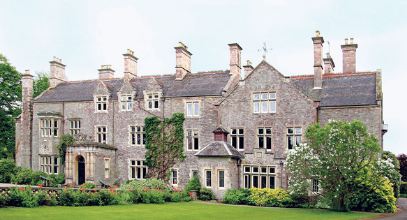
As for Lord Raglan, his death proved him a wealthy man indeed for in 1858 some 1800 friends, admirers and comrades purchased Cefntilla house and estate in Monmouthshire, presenting it to his family in perpetuity – a fitting memorial to a man who indeed was ‘an honour to his country’.

cefntilla

Cefntilla Court, Raglan’s ancestral home

If you are interested in more about Wellington’s character you may like Wicked William goes to war or find out whether Emily Somerset was Wellington’s favourite niece.

Christie’s auction catalogue for the Raglan Collection (London, 23 May 2014) really is a triumph of academic research containing a veritable treasure trove of items of interest.

Raglan Rescue is an ongoing campaign to save Lord Raglan’s collection for the nation

I cannot recommend highly enough the superb new archive in Ebbw Vale and its helpful staff, where the Raglan MS is housed.

There are so many excellent internet and archival resources devoted to Arthur Wellesley, Duke of Wellington. However it is impossible to ignore the forthcoming Wellington Congress which will be staged at the University of Southampton from 9-12 April 2015. This is a great way to hear many diverse papers about the life and times of the Duke of Wellington, and it is not too late for those wishing to submit a paper and be part of this event celebrating the bicentennial of Waterloo. Who knows? I might even be there!


‘Uncle Arthur Wellesley? He’s not all that!’ – Wicked William goes to War


 wickedwilliamyoung         wellington

‘Wicked’ William and the Duke of Wellington were remarkably alike in appearance


Little has been written about ‘Wicked’ William Long-Wellesley beyond his role in the destruction of Wanstead House. My research (and this blog) will show that William’s long and turbulent life encompassed far more than the mere dozen years it took him to plunder Wanstead’s treasures and lay waste to its estates.

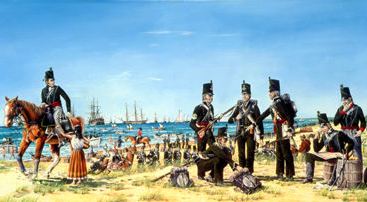
Today we go back to 1808; the place is Portugal and it is mid-summer. General Arthur Wellesley (later Duke of Wellington) has just landed at Mondego Bay leading a British expeditionary force numbering 14000 men – this being the very start of his 6-year fight to liberate the Iberian Peninsula from Napoleon’s occupying forces. Amongst Arthur’s considerable retinue we find one William Pole, a 20-year-old aide-de-camp on his first tour of duty. Considering Arthur’s already legendary reputation for precision, this seems an odd appointment. Yet closer scrutiny shows that even the greatest military strategists are often bound by family obligation – thus lumbered with errant relatives, in the hope some good may come of the exercise.

 mondego bay

 He’s out there somewhere – ‘Wicked’ William lands in Portugal, 1808


William Pole was one such stray – foisted upon Arthur by older brother William Wellesley-Pole. It was a kind of trade-off in favours because Wellesley-Pole was Arthur’s most reliable and trusted confidante, protecting his interests at home – therefore Arthur could hardly refuse taking this wild but spirited boy under his wing. So it came to pass that ‘Wicked’ William and Arthur Wellesley went off to war together, offering a possibly unique opportunity to see our greatest General on the battle front, through the eyes of his own family.


rolica

At Roliça & Vimeiro William’s role involved delivering messages between regiments


Without delving too deeply into events in the field, it was a very exciting beginning for William. He first saw action at the Battle of Roliça on 17th August, where Arthur’s men defeated an outnumbered French army under General Delaborde. The next day William wrote to his mother

 I seize this, the earliest opportunity; to send you such most pleasing intelligence. I have escaped unhurt; the action was most severe and cost many brave lives… We found ourselves led into a labyrinth of narrow passes and impassable mountains. Sir Arthur, cool and collected, ordered the artillery to advance; and shots for shots were frequently exchanged between us and the enemy… The volley of the shots became less frequent; our foes were cleared for the heights… at length abated and left us master of the field of battle.

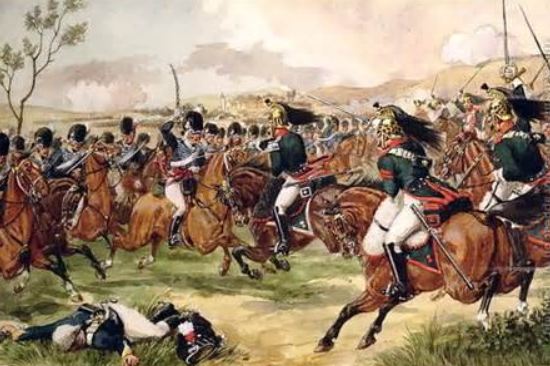
Four days later the French returned in greater numbers hoping for the element of surprise– But they were again defeated at the Battle of Vimeiro – putting an end to the French invasion of Portugal.

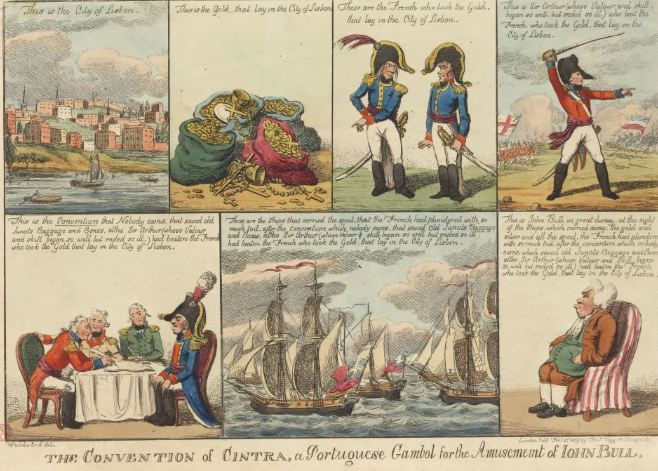
cintra

Arthur Wellesley was lambasted for his role in the Convention of Cintra

Yet this result would have been much more decisive but for the fact that two more senior British Generals arrived on the scene in the heat of battle, relieving Arthur Wellesley of his command. They prevented Arthur’s pursuit of the vanquished French armies and subsequently agreed an overly generous truce. The Convention of Cintra signed on August 30th allowed the entire French army free passage out of Portugal, and more importantly fit to fight another day. To add insult to injury the Royal Navy laid on ships to carry other French troops and munitions back home. This news was received with outrage in England, and Arthur blamed despite the fact he had not been a party to the agreement other than to sign it when ordered to do so by his superiors. Being demoted when in the throes of routing the opposition must have been a shattering blow for Arthur. He wrote to Wellesley-Pole on 26th August regarding his senior officers:

These people are really more stupid and incapable than any I have met with; & if things go on in this disgraceful manner I must quit them.

Naturally in the depths of such despair, Arthur was not to be trifled with. Into the firing line came William, whose bravery in the field had been reported in despatches, and whom Arthur had just a few days earlier remarked upon favourably. But with Arthur’s patience exhausted and his heckles up William was to become the fall-guy. This letter from the Raglan MS (dated Sept 6th) holds nothing back – as Arthur tells Wellesley-Pole exactly what he thinks of young William.

He is the most extraordinary person altogether I have ever seen. There is a mixture of steadiness and extreme levity, of sense & folly in his composition such as I have never met with… the nature of our relative situations, & the constant crowd with which I am surrounded prevents all intercourse between us… He is lamentably ignorant and idle… he talks incessantly and I hear of his topics from the others which sometimes do not appear to have been judiciously chosen… I have an opportunity of talking to him seriously of his situation; for he is gone off without Leave, which I must notice… In short I don’t know what to say about him. To educate him would be a desideratum… he will never be on a upon a par with the rest of society till he shall have educated himself

Historians regularly cite the above as a testament to Arthur’s black mood during this period. It is certainly true that Arthur’s anger made him excessively harsh towards his nephew. But given what we know about William’s subsequent behaviour at Wanstead – it is hard to disagree with this assessment.

maryborough

Wellesley-Pole received the news that William was ignorant without comment

What Wellesley-Pole must have made of Arthur’s character assassination of William we shall never know because the subject is not mentioned in subsequent correspondence. But, thanks to surviving archives, we do have the benefit of a right of reply from ‘Wicked’ William himself. We learn that William also wrote a letter home (on 27th August) in which he castigates uncle Arthur’s behaviour. The original has not survived – all we have is the reply from older sister Mary Bagot, which reveals that William actually expected more favourable treatment. To him being a relative transcended rules of rank and order within the army hierarchy. William’s vanity meant he could not grasp how such demands threatened to undermine Arthur’s authority.

My Dearest William – depend upon it, if it gets wind that you have differences with Arthur, you are ruined and undone… You must I seriously think have been drunk when you wrote to me. But I will answer every part of your complaints simply__

In the first place, you say Arthur “treats you distantly and never speaks to you”. I know, and have always heard, that when upon Service, he is notoriously distant with all his officers. Besides this, would a man of common sense be particularly free with his own nephew to disquiet every other person, make you hated, & an object of jealousy, & himself abused for favouring his nephew.

 You next say “he never employs you” – The general opinion here is that you were the person most employed & sent about with most messages in the actions. You say “you gain no credit” – To this I answer: The Times, The Oracle, & Courier have all had various eulogisms in them of you, for your activity and gallant behaviour… Everyone speaks the same language & all write in asking me, & hoping you intend following up the profession, as it is one you appear to shine in. So this is gaining no credit!

My dear William, you must recollect you are just 20. For many of those you are with, not only have a right to take the piss out of you & not only from superiority of years, but from rank, length of service & a thousand other things & can you expect to be employed & a preference given to you above them all. I cannot conceive how the idea of being employed conspicuously ever came into your head… Many work hard for years without gaining the credit you have gained in one month.

My love, your complaints are ungrateful to providence, & to Arthur… Give yourself common pains to gain an insight into the art of the profession you are now in. You began your career with one whose name & character stands unrivalled, & on with whom if you quarrel God help you is all I can say.

Above all this letter shows that William was by now a fully-fledged attention seeker. The mere fortnight that the British army rested following Vimeiro was clearly too dull– for William craved constant excitement and attention. He was obviously unprepared for the many months of inactivity and hardship facing most soldiers over the course of a campaign.

However, it must be said that William has identified traits in Arthur’s character which became the subject of debate and conjecture throughout his military career. This is perhaps best summed up by Arthur’s famous description of his troops as ‘scum of the earth’, which many observers then and since have considered insulting and unfeeling towards the many men who loyally served him & whose bravery was beyond reproach. As historian Christopher Duffy succinctly puts it

Wellington I think had this fundamental coldness in his heart. He would weep when he met casualties, but basically he was a cold-hearted bastard.

To sum up then, we can see that William’s immaturity was the root cause of his spat with Arthur. For all this though – he was unlucky to incur Arthur’s wrath at the very time when Arthur was considering his own future in the army. Had Arthur not been beset with such heavy troubles, this matter may have been resolved.

But such is the story of ‘Wicked’ William that another golden opportunity came to be wasted. Thus by the time Mary’s sensible advice reached William it was too late – he was already dismissed and heading home. To cap it all off  – ‘Wicked’ William’s chance to be mentored by Britain’s greatest general was taken by another rookie aide-de-camp named Fitzroy Somerset (later Lord Raglan) who not only went on to become Wellington’s closest military aide, but also to marry ‘Wicked’ William’s sister Emily.

emily        raglan

William’s Loss? Emily Wellesley-Pole & Wellington’s ‘chosen one’ –  Fitzroy Somerset


For more information on the Peninsular War (1808-1814), I would recommend http://peninsularwar200.org/

Rory Muir has recently written a very good biography of Wellington, which I would recommend not least because my own work is footnoted therein

For all things Wellington, and to partake in a tour why not visit Number One London

Finally, if you have enjoyed reading about ‘Wicked’ William acting the fool – please check out this earlier post entitled ‘Wicked’ William’s Hunt


Wellington’s Favourite Niece? You Decide

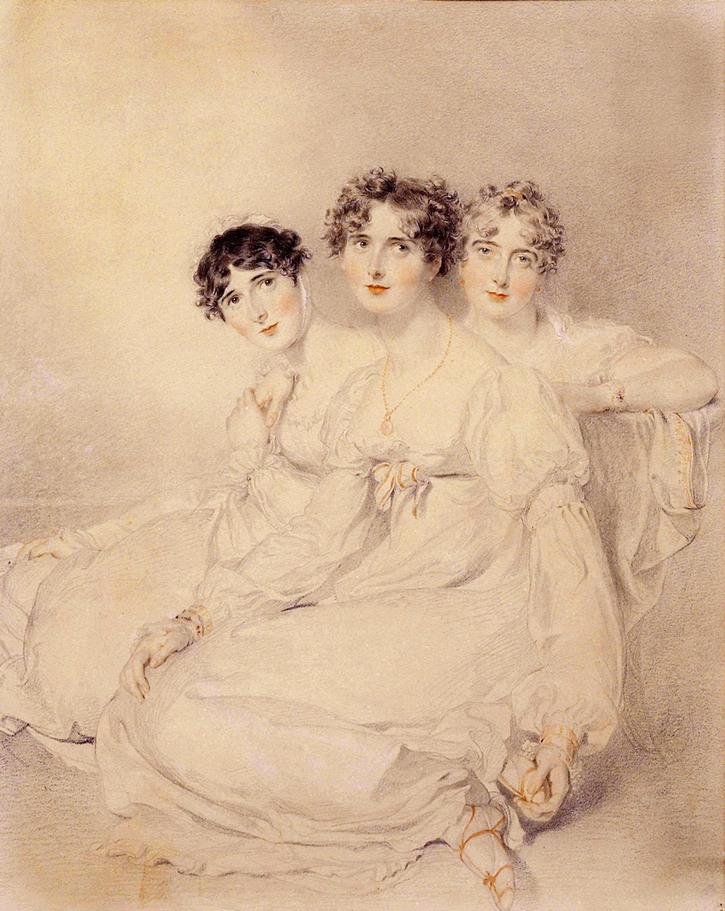
Mary-Emily-Priscilla by Lawrence 3 Graces

With the sad news that Lord Raglan’s collection is up for auction at Christie’s in London on 22-23 of May, this is an opportune time to explore the runners and riders in the race for recognition as The Duke of Wellington’s favourite niece.

Lot 40 of the Raglan sale (above) contains all three candidates for this special place in the affections of our greatest military general. As the item is likely to fetch upwards of £50,000 there is a distinct possibility that it will leave the UK once the gavel has fallen next week. So if you have a chance to get to King Street prior to auction, I would recommend you seize the moment, and view first hand this wonderful portrait of three women collectively dubbed ‘the three graces’. From left to right we have Mary Bagot, Emily Raglan and Priscilla Burghersh. These ladies more than compensated for the stress and disruption Wellington endured at the hands of their only brother ‘Wicked’ William Long-Wellesley, and for distinct reasons each one has been attributed by differing historians the honour of being Wellington’s favourite niece.

Let’s examine each claim individually


Contestant No 1 – Mary Bagot (Age in picture -28)

mary


Credentials

As Wellesley-Pole’s eldest daughter Mary was old enough to remember her kindly uncle as a lodger at the family home in Hanover Square before he set off for India in 1797. She was a wild child like her brother William, and brought a fair degree of scandal upon the Wellesley family even after her marriage to society hunk Charles ‘Beauty’ Bagot.


Link to Wellington

Mary really came into her own after 1816 when she went to Washington when her husband was appointed Ambassador to America. It was here she became close friends with the Caton family whose three wealthy daughters Marianne, Bess, Louisa were intending to visit England and Europe. It was Mary Bagot that directed the Caton sisters to her parent’s house in Savile Row, where Marianne first met Arthur Wellesley and became perhaps the single most important relationship of his life. However, this was one battle that Wellington ended up losing, and the victorious suitor who deprived him of Marianne’s love was none other than Richard, his oldest brother. Wellington never really came to terms with the loss of this great love of his life to a brother he regarded with suspicion and contempt.

When Wellington went to St Petersburg for the funeral of Czar Alexander in 1825 he was guaranteed a great reception not only because of his exploits at Waterloo but also on account of Mary Bagot’s popularity in the Russian court during her husband’s 3 year stint as ambassador to Russia

Championed by

Jehanne Wake, who has written an excellent book on the Caton sisters entitled Sisters of Fortune, identifies Mary as Wellington’s favourite.

Arguments Against

Mary’s husband Charles was very closely allied to George Canning, with whom Wellington had a long history of animosity. This would have made it awkward for Mary to have been the chosen one

Interesting Fact about Mary

When Napoleon returned to Paris in 1814, he spotted Mary at Notre Dame Cathedral and had her carriage moved to the front steps so that she could not leave without acknowledging him.


Contestant No 2 – Priscilla Burghersh (Age in picture 22)

priscilla


Credentials

Priscilla is widely regarded as Wellington’s favourite niece not least because there is a plenty of correspondence between her and the Duke of Wellington. Though she was only 5 when Uncle Arthur went to India, she vividly remembered that his first port of call upon his return in 1805 was to the Wellesley-Pole house in Blackheath where he insisted that Priscilla was roused from her bed so he could see her.

Priscilla was a very straight-laced woman who firmly believed in decorum at all times.

Link to Wellington

She met and married Wellington’s aide-de-camp Lord Burghersh, who was a talented musician and sensitive man, not cut out for military life. However Burghersh was a brave soldier met his bride having been sent home injured from the Peninsular and was told to visit Wellesley-Pole by Wellington during his convalescence. Once married Priscilla joined her husband travelling with the Allied forces from Germany towards France right up until Napoleon’s defeat and exile in 1814. She kept a journal recoding events of the war which was published by John Murray in 1822.

Priscilla spent many years abroad as her husband became an established diplomat. After her return to England in the late 1820s she spent a lot of time in her uncle’s company, sharing his views on morals and standards in public life. Her uncompromising character and inflexibility drew comparisons with Wellington.

Championed by

Historians such as John Severn and Elizabeth Longford, as well as the curators of Apsley House, which was Wellington’s London home. Priscilla can be found standing in a doorway in the Waterloo Banquet painting in the lobby of Apsley House looking kindly over her uncle as he hosts the veterans’ annual dinner. A very good copy of that iconic print is amongst the lots for sale this week, together with some paintings by Priscilla, who was a very competent artist in her own right.

Arguments Against

It is hard to believe that Wellington could confide in Priscilla considering her uncompromising principles

Interesting Fact about Priscilla

When Napoleon escaped from Elba and made his return to France he travelled under the false name of ‘Lord Burghersh,’ which if nothing else proves that the Emperor had a great sense of humour


Contestant No 3 – Emily Raglan (Age in picture – 21)

emily


Credentials

Youngest of the Wellesley-Pole sisters, Emily was present at Brussels, about to give birth, on the day of the Battle of Waterloo. She married Wellington’s most famous aide-de-camp Fitzroy Somerset in 1814 having travelled to Paris with her father to visit her victorious uncle Arthur following Napoleon’s defeat and exile. Whilst there she met and fell in love with Fitzroy Somerset, though she was besieged with suitors for several years before and right up to the day of her marriage.

Link to Wellington

As we all know, Fitzroy Somerset (or Lord Raglan as he became) lost his arm at the Battle of Waterloo. As Wellington’s closest military confidante and now family-member, Raglan continued to enjoy a close relationship with the Duke long after they left the arena of warfare. Naturally Wellington was very familiar with his niece whom he saw regularly for a great many years

Championed by

John Sweetman, who has written the definitive biography of Lord Raglan, emphasises the special relationship between the Duke and Emily as wife to his closest companion. Also the very knowledgeable staff at Christie’s in King Street, who have prepared a truly sumptuous auction guide, are very much in favour of Emily’s claim.

Arguments Against

Emily was a bit of a hypochondriac and there is plenty of evidence to suggest she could be a real pain in the butt at times moaning about various ailments. Her own husband found her a little wearing for this reason. This might explain why Emily burned all the Raglan private correspondence after her husband’s tragic death in the Crimea in 1855

Interesting Fact about Emily

Emily was pestered for a time by Charles Arbuthnot, who was dazzled by her renowned beauty. Then, when she went to Paris in 1814 a young prince became besotted and followed her round like a love-sick puppy. The Wellesley-Poles took pity on him because they knew that Emily had fallen for Fitzroy Somerset. So they brought him back to England and Emily introduced this handsome admirer named Leopold of Saxe-Coburg to her good friend Princess Charlotte. But for Charlotte’s tragic death, Emily could have been the maker of a new royal dynasty, though Leopold did go on to become King of Belgium, which for some must be considered a booby prize.


Verdict

It’s a close one to call especially as both Mary Bagot and Emily Raglan destroyed their private correspondence, but on balance I would have to opt for Priscilla as there seems to be a definite bond between herself and Wellington in the pages of their surviving published letters, that seems to indicate a mutual love and understanding. Of course you must decide for yourselves, as this 200-year old debate will continue to divide opinion!

I hope this blog has shed some light on some very interesting WOMEN in the Wellesley family, each of whom I am sure you will agree are worthy of greater attention.

Even if they don’t receive any recognition on their own right, I hope at least we can continue to appreciate their beauty via Lawrence’s work,  if a white-knight comes forward to buy this fascinating drawing for the nation


For more information on the dispersal of Lord Raglan’s collection visit http://www.raglanrescue.co.uk/